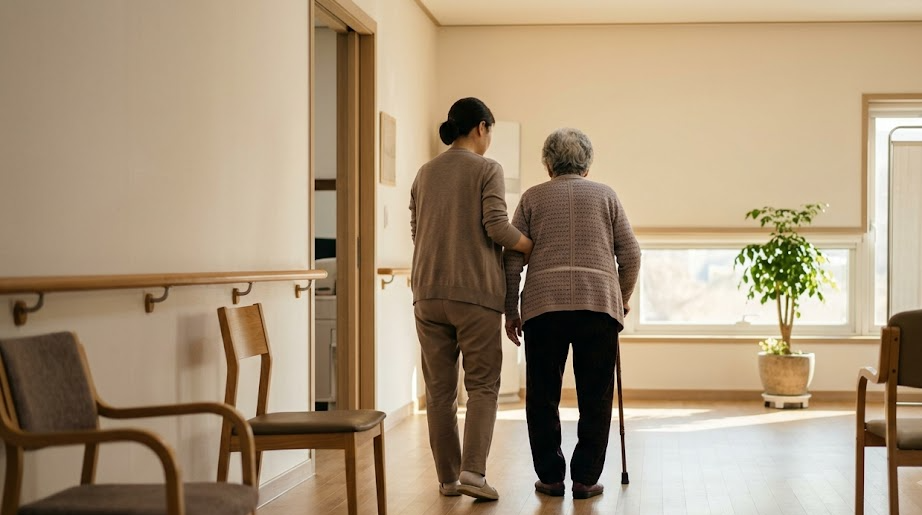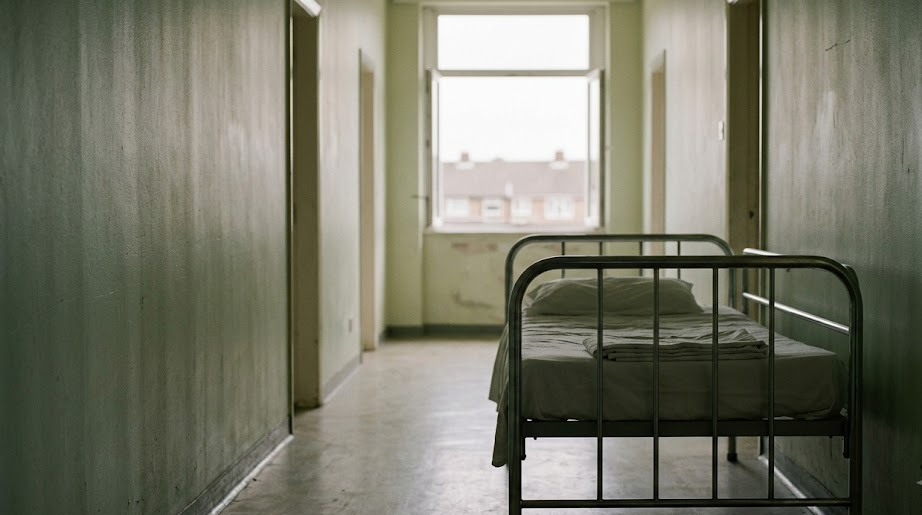
At one psychiatric hospital, a patient died after being secluded and restrained for 252 hours. At another hospital, five patients lost their lives over five years, and four of them had severe intellectual disabilities. In April, the National Human Rights Commission of Korea released the results of its ex officio investigation into Bangudae Hospital in Ulsan and filed a complaint with the prosecution against the hospital director and others, and the Ulsan Metropolitan Police Agency is also looking into the hospital.
After deaths come to light one after another, attention usually turns to the hospital's wrongdoing. But without asking why people with developmental disabilities had to stay in that ward for so long, punishing one hospital still leaves the next person lying in the same corridor. The common backdrop to these cases is that there is a place where people end up when neither residential facilities for people with disabilities nor ordinary psychiatric hospitals will take them.
Psychiatric medicine has its own term for such hospitals. They are called "last hospitals," meaning the final place that will accept people with severe developmental disabilities accompanied by serious behavioral disorders, and the Shinsegae Hospital group in Gimje, North Jeolla Province, and Bangudae Hospital in Ulsan are cited as leading examples. Shinsegae Hospital and Shinsegae Hyo Hospital in Geumsan-myeon, Gimje, belong respectively to a private practice and the Jiseok Medical Foundation, and they are cooperating "sibling hospitals" that operate wards exclusively for people with severe developmental disabilities.
In the intensive wards here, diagnoses are divided by the form of a person's speech. According to the hospital's explanation, someone who can convey their intent in a word or two is assessed as "severe," while someone who repeats the same syllable is given the higher-level designation of "most severe intellectual disability accompanied by serious behavioral disorder." The clothes they wear are not ordinary hospital gowns either. The hospital explains that these are simplified garments meant to reduce the risk of taking them off, tearing them, or self-harm.
Park Min-cheol, director of Shinsegae Hospital, said he remembers bringing a person with a severe developmental disability who had been bound in chains at a nursing home to the hospital in the mid-1980s and caring for them there. Over the 40 years since, the tools used for binding have changed, but whether society has prepared a way for these people to live in their communities is a separate matter.
Kwon Mi-jin, 45, an investigator in the Disability Discrimination Investigation Division 2 of the commission's Discrimination Remedy Bureau, has visited nearly 100 psychiatric hospitals over eight years. Counting field investigations, ex officio investigations, status surveys, and visit inspections all together, that is how many she has been to, and it amounts to about a quarter of the 388 psychiatric medical institutions nationwide with inpatient beds (as of December 31, 2024). Visit inspections of 20 hospitals were carried out after the Chuncheon Yehyeon Hospital case became known in 2024 alone. The only people who can legally enter a hospital are public health center staff, commission investigators, and police.
Institutional moves are continuing as well. A research team commissioned by the commission, headed by Kim Sung-wan, a professor of psychiatry at Chonnam National University Medical School, conducted visit surveys of 27 psychiatric hospitals from May to December 2025, including 17 in Korea and five each in Taiwan and Japan, and the "2026 Presentation and Forum on the Findings of the Survey on Facilities and Environments at Psychiatric Medical Institutions," based on those results, was held on April 17. Hwang Tae-yeon, chairman of the Korea Foundation for Suicide Prevention, moderated. It is not known when recommendations based on this survey will be put forward.
This is also a moment when mental health policy as a whole is being discussed again. At a Cabinet meeting on May 6, President Lee Jae-myung noted that Korea has had the highest suicide rate among Organisation for Economic Co-operation and Development (OECD) countries for more than 20 years. In an analysis of suicide deaths nationwide from 2016 to 2020, mental health problems ranked as the leading cause of suicide deaths for five consecutive years.
The voices of those directly affected and of experts are also being heard. Lee Jeong-ha, head of Padoson, a group for people with psychosocial disabilities and human rights, works as a person with lived experience who has been hospitalized twelve times for schizophrenia. Lee Jong-guk, 65, former director of the National Center for Mental Health in Gongju, worked 19 years at Yongin Mental Hospital and 10 years at the Gongju hospital as medical director and hospital director before retiring in July 2025, and he now practices as head of the psychiatry department at Green Hospital, affiliated with the Wonjin Foundation. Having experienced both public and private wards, he says concentrated investment in psychiatric care is needed.
It was not any one hospital director who locked the hospital doors. A society that failed to provide places to go during the day, rooms to return to at night, and people to stay by their side pushed people into the wards. In the meantime, the commission's investigator opened the iron gate of her 100th hospital, and inside that gate someone is sitting in simplified garments today as well. If one thing has changed, it is that the time inside has now begun to be counted from the outside.