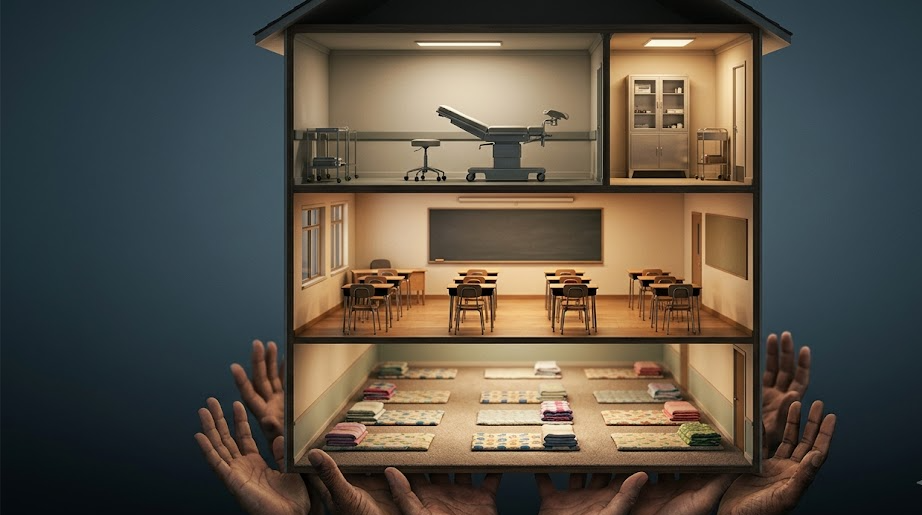
On the afternoon of the 13th, Hyun Soo-yeop, First Vice Minister of Health and Welfare, visited the Songgwang Community Welfare Center in Gwangsan-gu. After touring a site where services link older people to housing and care, the vice minister also attended the opening ceremony held the same day for "Halfway House-Seonun," a converted daycare center. The ministry described it as "the first case converted with residents' consent."
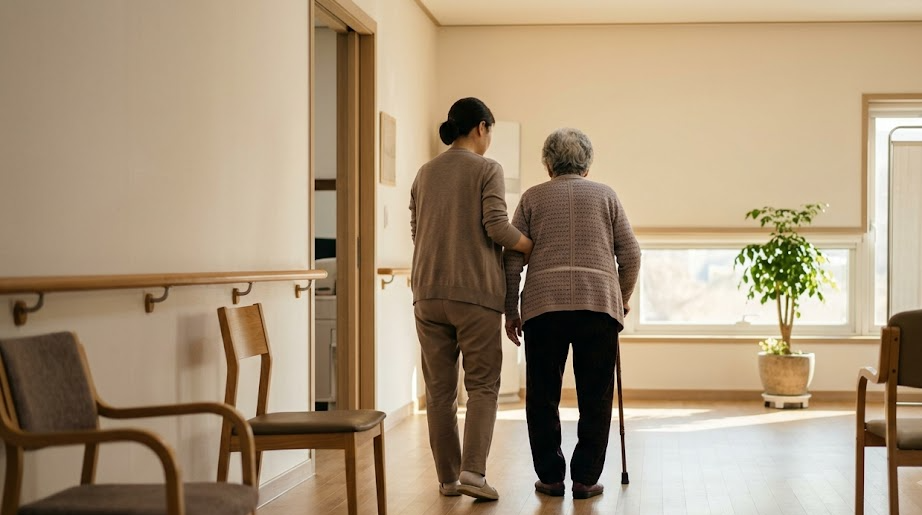
A halfway house is short-term supportive housing. Older adults discharged from hospital usually stay for up to three months while they recover, receiving care services.
There is now a place to stay between hospital and home, within the neighborhood.
The ministry also released the results of its "Community Integrated Care Survey" on the same day. The survey is conducted every five years under Article 7 of the "Act on Integrated Support for Community Care, Including Medical and Long-Term Care," and this was the first. It examined care needs among older people and people with disabilities across all 229 cities, counties and districts, and compared supply levels, regional distribution and accessibility for 16 services. Supply conditions differed depending on the type of service and where people live.
The announcement did not say which services are lacking, or by how much, in each city, county or district. The government said it would reflect the survey results in the basic plan for integrated care and in local governments' regional plans, and pursue regional upgrade plans through 2030.
The Gwangsan-gu halfway house is linked to a pilot project that has been under way since 2025. The ministry is running a "pilot project for care services linked to housing infrastructure" in four local governments, centered on complexes where older people live together, such as senior welfare housing and permanent rental apartments. Gwangsan-gu operates the project in permanent rental housing, while Hongcheon County in Gangwon Province and Gunsan and Gochang in North Jeolla Province operate it in senior welfare housing. The visit was also meant to assess whether the project could be expanded nationwide.
Some point out that care workers' employment is insecure, their wages are low and the skills they have built up go unrecognized, and that this reality has not improved. If the basic plan is to examine the supply base of 229 cities, counties and districts, it should also look at the working conditions of the people who will actually provide that supply.
Closing the regional gaps revealed by the first survey falls to the regional plans that each city, county and district will draw up through 2030.