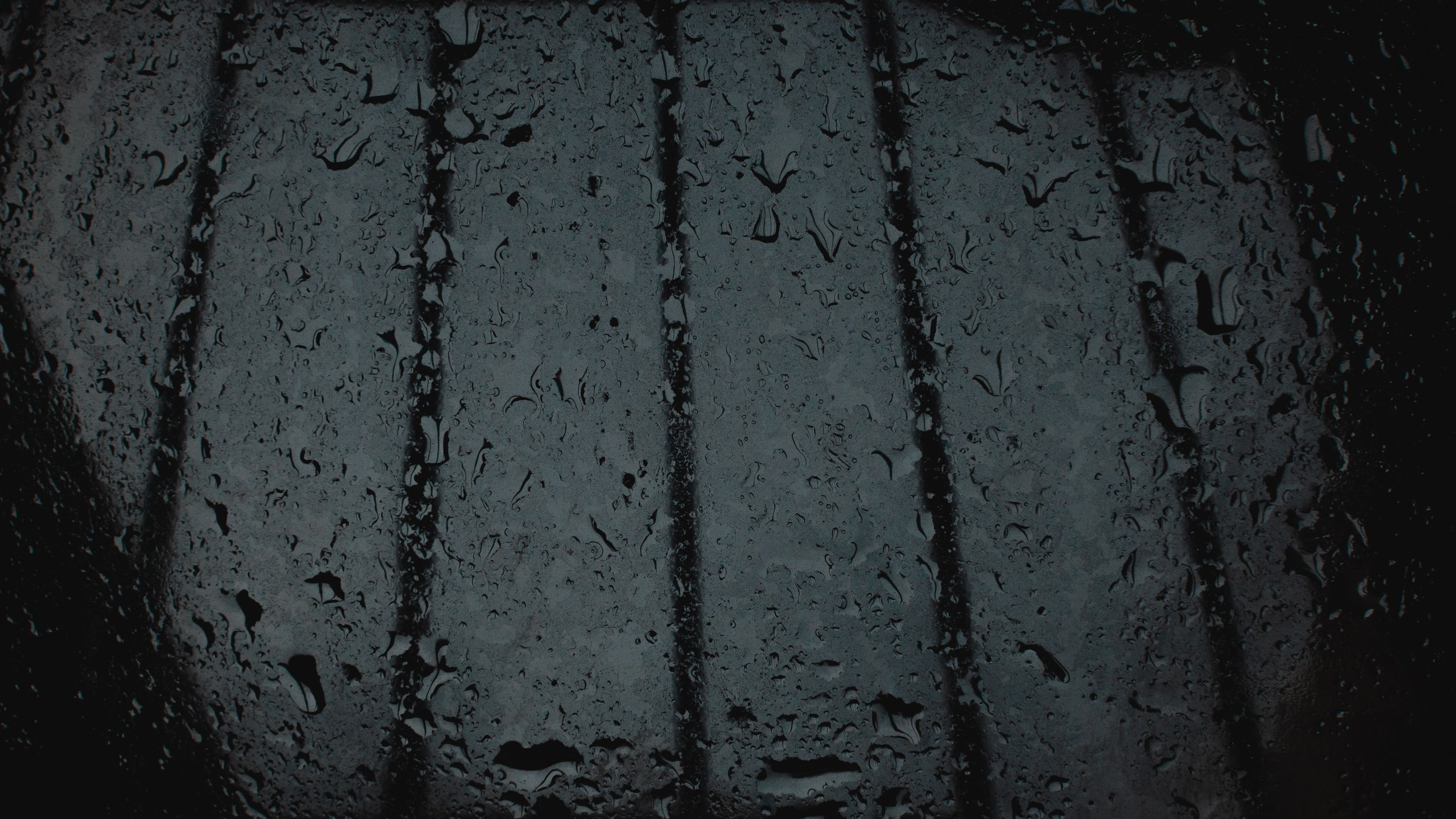
The bluish gray left after sunset spreads faintly beyond a single pane of glass. Five black vertical lines divide that light evenly, and the four corners of the frame are eaten into by darkness from the outside in. Hundreds of water droplets, large and small, hang on the glass, a few have stopped with their tails trailing downward, and near the bottom edge three or four fat drops have gathered together and spread out flat.
Facing a window like this, the eyes hesitate for a moment over where to focus. They look at the stripes outside, are pulled in to the droplets on the glass right in front of the nose, and drift away again. As they go back and forth a few times, the tension between the brows eases a little, and shoulders that had crept up toward the ears come down by a notch.
The breath grows neither longer nor shorter on its own. It simply comes in and goes out.
Around dusk, the mind usually holds on to one task left unfinished from the day and cannot let it go, hanging on like those drops clinging to the glass, neither running down nor drying.
Pull the chair half a hand's width toward the window and rest your left palm on the lower part of the cold glass, and the sound of the rain outside trembles very faintly into your fingertips. Even without telling the heavy patter apart from the fine, scattered sounds, the evening does not fall apart while you give your ears to the rain for about a minute.
While washing the dishes, you can also shift your ears to the sound of tap water striking the bottom of the sink. Leave your hands rinsing the bowls as they are. The place to watch during that minute is the jaw. Only notice whether your back teeth are touching and whether the tip of your tongue is pressing behind your upper teeth, and turn off the water without trying to fix anything.
Between the five black lines outside the window, a drop that had been still earlier slides down without a sound.