At 10 a.m. on the 23rd, people with psychosocial disabilities from Korea and Japan sat down together at Irum Hall in the Irum Center in Yeouido, Seoul. It was a Korea-Japan international seminar on peer support organized by the Korea Center for Independent Living of Persons with Psychosocial Disabilities and psychiatric human rights groups. There were 11 participants from Japan, including activists from the Japanese survivor group "Porque" and members of the National Group of Mental Patients.
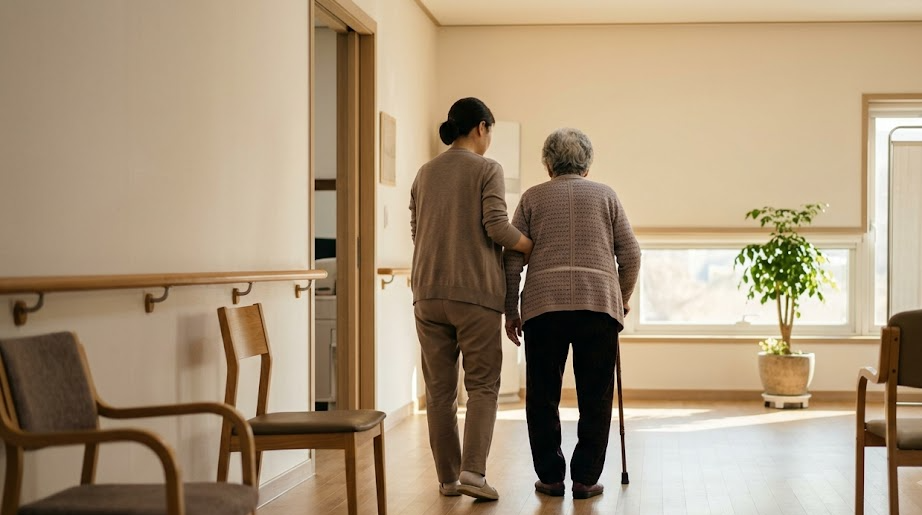
Two people gave presentations. Lee Han-gyeol, chair of the preparatory committee of the Korea Peer Supporters Association, and Sasaki Rie, vice chair of the Tokyo Metropolitan Independent Living Support Council. Vice Chair Sasaki works as a peer support worker in the Department of Neuropsychiatry at the University of Tokyo Hospital, and she herself went through involuntary commitment. It means that someone who was once on the receiving end of hospitalization now stands beside people who are being hospitalized.
It took Japan nearly 30 years to build up this workforce. Since the 1990s, reducing long-term hospitalization and moving people into community living has become a national task, and the first peer support center for people with psychosocial disabilities opened in 1998. From around 2000, people with lived experience began to be hired as staff at welfare service offices, and disability welfare service offices run by people with lived experience themselves gradually increased.
The decisive change came within the past five years. In 2020, the "Peer Support Training Program for Persons with Disabilities" was designated as a Ministry of Health, Labour and Welfare program, putting the state's name on the training course, and the following year's revision of disability welfare service fees recognized a peer support add-on and an implementation add-on. A price was put on the work of staying beside someone. That was when conditions were created so that care would not have to rely on goodwill.
Korea stands on an ordinance of the Seoul Metropolitan Council. There are three peer support centers based on the ordinance. The ordinance does contain a notable provision. It requires that the center director be a person with a psychosocial disability, and it stipulates that a majority of the decision-making body be filled by people with lived experience.
About 2,000 peer supporters work around these three centers. Their work consists of procedural assistance in going through admission and discharge procedures, guidance and referral for supportive housing, and running programs inside psychiatric institutions. How far to expand the legal basis for these activities remains unsettled.
News of another kind came out the same week. It was pointed out that when a person who has gone through involuntary psychiatric commitment moves after discharge to another closed residential facility such as a long-term care hospital or a nursing home, there is effectively no way from the outside to confirm that person's wishes and condition. When one legal representative asked where a person was, the psychiatric hospital said it was not their responsibility to track, the nursing home said the guardian had banned visits, and the administrative agency said it was outside the scope of its duties. The case has not been closed, and the representative's side is looking into procedures for seeking help from the court.
Neighborhood-level efforts continue as well. The Jincheon County Mental Health and Welfare Center is signing agreements with three apartment complexes in the county between the 21st and the 28th. Deoksan Jugong, Gwanghyewon LH Complex 2, and Chungbuk Innovation City Centum Class are the sites.
The plan is to bring mental health screenings, awareness campaigns, and a mobile counseling office into the complexes, and to connect residents who need help with medical referrals, information on treatment costs, psychological counseling, and case management. In Jeju as well, the Seongsan-eup Urban Regeneration Field Support Center has joined hands with the Jeju Special Self-Governing Province Metropolitan Mental Health and Welfare Center.
[Illustration: a mobile counseling office with a folding table and two chairs set up beside a playground in an apartment complex, a quiet afternoon with a few people passing by in the distance | Caption: counseling offices that come to where people live]
Between Japan's 30 years and Korea's three centers lies a difference in the thickness of the institutions. A system designated as a national program and reflected in the fee structure and a system grounded in a single local council ordinance will inevitably take next steps of different sizes. The concerns behind this seminar reached that point as well. Hospitals and facilities are at the center of support, services available in the neighborhood are thin, and it is rare for people with lived experience to lead policy.
Jincheon County's agreement period ends on the 28th. After that, how many times the mobile counseling office is set up in the complexes, and who comes and sits down there, will tell the actual size of this effort. Just as Vice Chair Sasaki works inside a hospital department, Korea's 2,000 peer supporters also spend their days somewhere between the hospital ward and the neighborhood. That a path is open for someone who was confined to move into being someone who stays beside others, that is the one thing confirmed for now.