
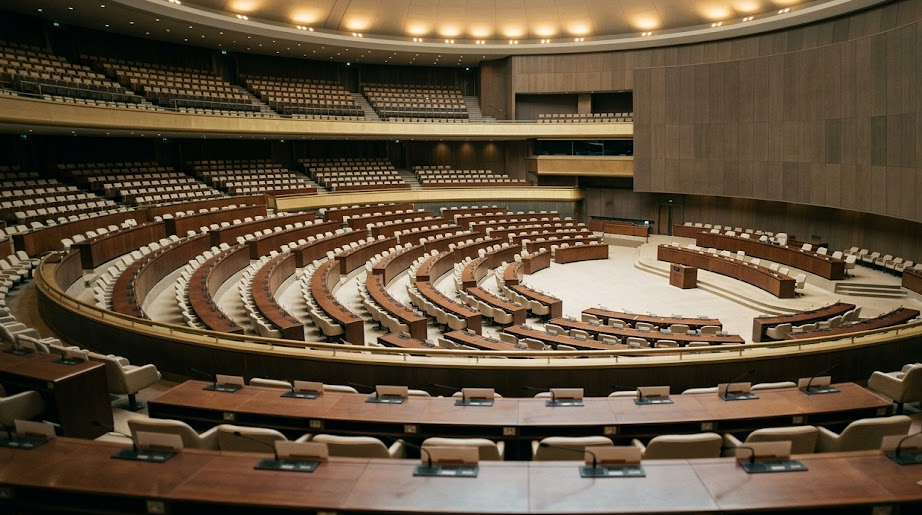
141 in favor, 8 against, 28 abstentions. At the UN General Assembly plenary meeting on May 20, 2026, local time, a follow-up resolution supporting the advisory opinion of the International Court of Justice (ICJ) on climate change and urging its implementation was passed by this margin. The resolution stated in the document that a state that has breached its obligations on climate change may bear responsibility for "full reparation" to affected states. South Korea put its name down as a co-sponsor and cast a vote in favor.
The starting point is the advisory opinion the ICJ issued in July 2025. Its core was that states bear an obligation to protect the planet from greenhouse gas emissions, and it was adopted without dissent among the judges. This resolution assesses that opinion as an "authoritative contribution clarifying existing international law" and calls on states to comply with their obligations to protect the climate.
Neither the advisory opinion nor this resolution is legally binding. But a document in which the highest judicial body sets out what international law contains, and in which a majority of member states endorse that interpretation through a General Assembly vote, is of a different character. It means one more ground has been added that those litigating climate responsibility in national courts can cite.
The resolution urged states to set nationally determined contributions (NDCs) that actually contribute to the goal of holding the temperature rise to within 1.5℃ above pre-industrial levels, and to strengthen their implementation. It also included that member states take all possible measures to avoid causing serious harm to the climate and the environment, including cutting emissions within their own borders, and that they keep the promises they made under the Paris Agreement. Wording on phasing out subsidies for fossil fuel exploration and production also went into the resolution.
The negotiation process was not smooth. A provision in the initial draft to set up an international register for recording climate damage and grounding reparations was dropped from the final text, and the quantified phase-out language on fossil fuels was lowered to the level of urging a transition. The resolution was led by Vanuatu, a South Pacific island state, and there are accounts that the United States pressed for its withdrawal. The United States opposed it, citing the demand for reporting by the UN Secretary-General and other elements as excessive political demands.
Among those casting the 8 votes against were countries named as the United States, Russia, Iran, Saudi Arabia, Israel, Belarus and Liberia. Oil producers or large emitters largely stood in this line. More important than casting them as villains is that the no votes and the abstentions combined did not block adoption.
UN Secretary-General António Guterres, in a statement, pointed out that those least responsible for climate change are paying the highest price, and stressed the need to move quickly and fairly from fossil fuels to renewable energy. It is a signal that the destination of the transition itself did not waver despite the softened wording.
For South Korea, which voted in favor as a co-sponsor, domestic tasks follow immediately. The civil society organization Plan 1.5 said in a comment that the resolution has strengthened the legal authority of the ICJ advisory opinion, and called for a revision of the Carbon Neutrality Framework Act. What revision timetable the government will set has not been decided.
The process by which climate action shifts from a promise of good faith to an obligation that must be kept proceeds as such documents pile up one page at a time. The place where those documents turn into actual reductions is the deliberation calendar of the National Assembly and the ministries. Leaving one short comment with our own district lawmaker's office demanding a target that matches the 1.5℃ pathway when the next discussion of domestic reduction goals opens, that much is the force a citizen of a country that added one vote to the 141 can apply now.