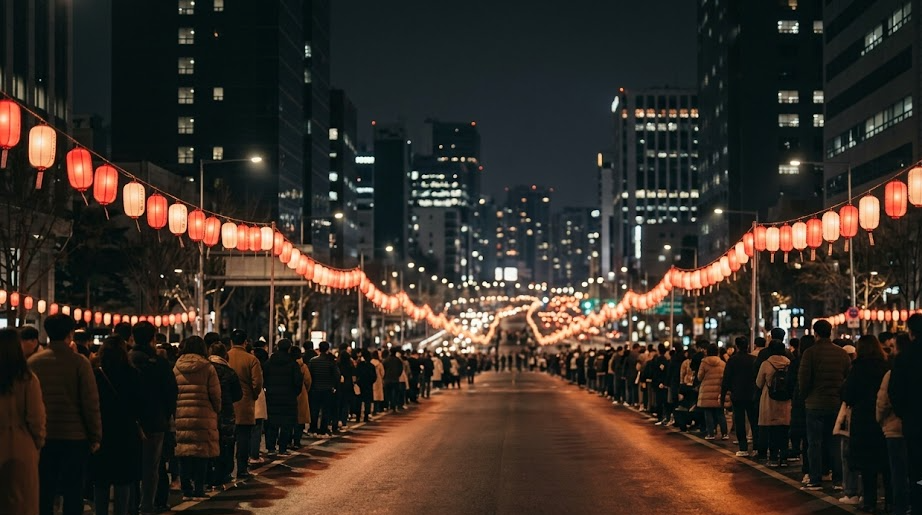
The "2026 Lotus Lantern Festival" will be held for two days, May 16 and 17, at Jogyesa Temple, Ujeongguk-ro and around Jongno in Jongno-gu, Seoul. The Seoul Metropolitan Government announced the event on the 13th, saying that from 1 p.m. on the 16th to 3 a.m. on the 17th it will close major downtown roads in stages, including the stretch from the Sejong-daero intersection to Heunginjimun and Jangchungdan-ro. For a day and a half, one of Seoul's oldest streets is handed over to people on foot and paper lanterns in place of cars.
The Lotus Lantern Festival is a tradition carried on since the Unified Silla period. Some records count that span at about 1,200 years. It was designated a National Intangible Heritage in 2012, and in 2020 it was inscribed on the UNESCO Representative List of the Intangible Cultural Heritage of Humanity.
The lanterns are simple things. A frame is built of bamboo or wire, hanji paper is pasted on, and then paint is applied. When a light is placed inside, the grain of the paper and even the traces of glue let the light through, so lanterns of the same shape are lit with faces of their own. What is heard when the parade passes is closer to the rustle of paper and the sound of footsteps than to cheering.
The schedule is dense. On the 16th, all lanes in both directions on the Jonggak intersection-Heunginjimun stretch will be closed from 1 p.m. until 3 a.m. the next day. Vehicle traffic will be restricted from 6 p.m. to midnight on the Sejong-daero intersection-Jonggak intersection and Anguk intersection-Jonggak intersection stretches, and from 6 p.m. to 8:30 p.m. on the stretch from in front of Dongguk University to Heunginjimun. On the 17th, the Anguk intersection-Jonggak intersection stretch will be fully closed from 9 a.m. to midnight.
The parade itself begins at 7 p.m. on the 16th and ends at 9:30 p.m. It is a route that departs from Dongguk University, passes Heunginjimun and Jongno, and reaches Jogyesa Temple. Some 60 organizations and about 20,000 citizens walk it together. After the parade ends, a Daedong Hanmadang will follow at the Jonggak intersection from 9:30 p.m. to 11 p.m., with ganggangsullae, music performances and a "flower rain" presentation prepared.
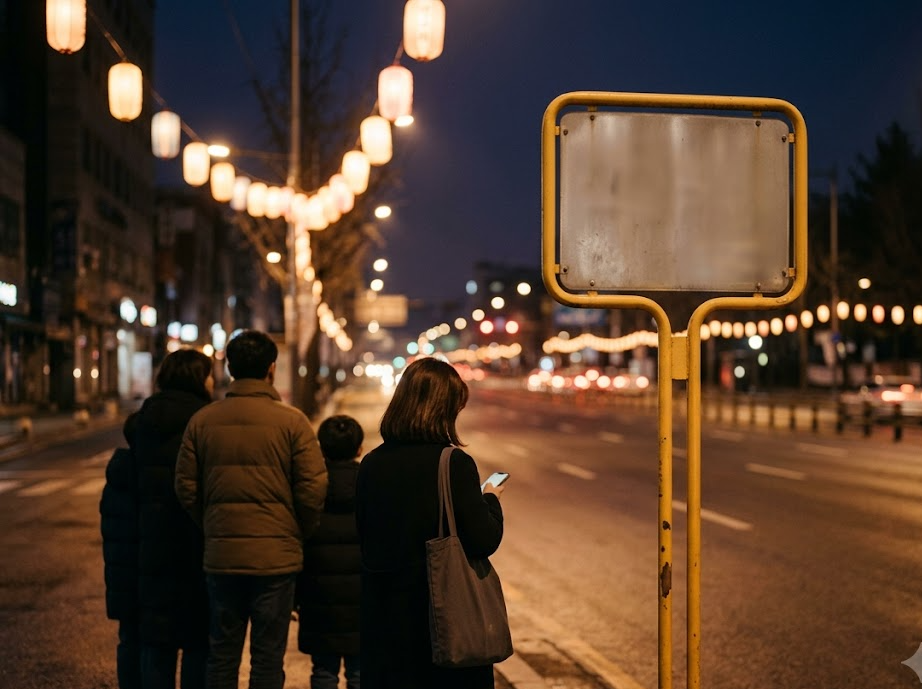
The inconvenience is real. Ten median bus stops from the Jonggak intersection to Heunginjimun will be temporarily relocated to the roadside and operated there, and buses passing through the Jongno area will detour. Stops inside the closed sections will be temporarily shut. The Seoul Metropolitan Government asked riders to get off at nearby stops and continue by subway or on foot.
Preservation and use collide here. Making lanterns and bringing them out onto the street does not hold up inside a museum display case. For it to be a living heritage, people have to gather and the streets have to be emptied every year, and the price comes back as a city cost of evening rush-hour congestion and detoured buses. The Yeondeunghoe Preservation Committee's running of annual traditional lantern-making workshops and an international academic conference is also close to an effort to keep the festival from being consumed only as a spectacle of a day or two.
Safety is the precondition for that balance. The Seoul Metropolitan Government has finished relocating the median bus stops and inspecting facilities, and plans to deploy city, Jongno-gu and Jung-gu staff, police and fire personnel, and safety management workers at the site. Kim Tae-hee, head of Seoul's Culture Headquarters, asked citizens to check traffic information in advance and set out the on-site safety management policy.
This year's Buddha's Birthday falls on May 24. Around that date, lanterns will also be lit in places across the country, including the Hyeongsan River park and the Geumjangdae area in Gyeongju, Songsanghyeon Square in Busan, and Sureungwon in Gimhae. Schedules and scale are set differently by region.
On the 17th, visitors can experience Buddhism and traditional culture at the Traditional Culture Madang in front of Jogyesa Temple. Those who miss the parade still have these daytime hours. Whose hands made one of the lanterns that flowed down the main street the night before, you come to know a little by trying the brushwork of applying paint to hanji yourself.