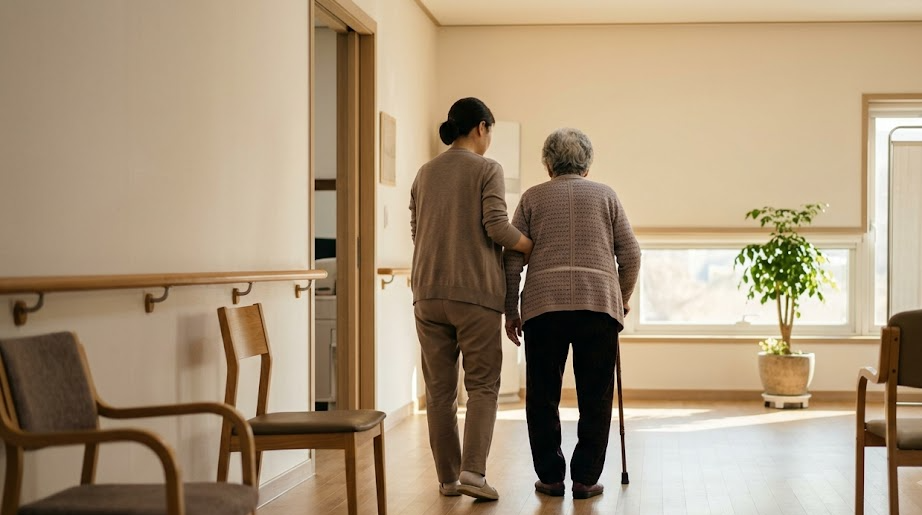
Integrated care for older adults and people with severe disabilities went into full effect at local governments nationwide on March 27. But one in four people said they knew the program was under way. In a survey of 2,000 adults nationwide conducted by Hankook Research at the request of the Care and Future Foundation from April 23 to 29, 92% said integrated care is needed, while awareness that it had taken effect stayed at 25%. The full survey results will be released on the 12th.
The 67 percentage point gap between the answer that it is needed and the answer that people know about it shows in itself where the program's first year begins. The program has opened its doors, and the fact that the doors are open has not reached the people concerned.
Care was not someone else's business. The share who said that they or a family member need care was 51%, more than half. The primary party actually bearing that care was close family at 65%, followed by public care services at 23% and facilities at 13%. The difficulties experienced in providing care were cited as financial burden at 70% and burden of time at 61%.
The picture of later life that people want was also clear. 82% said they want to stay in their home or the neighborhood where they have lived instead of moving to a facility. The home and community based principle that integrated care aims for and what citizens want are heading toward the same place.
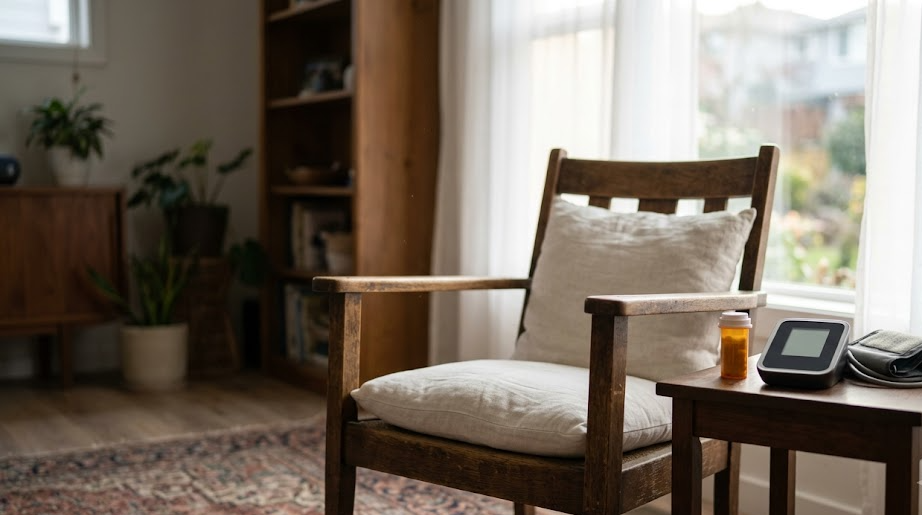
On the ground, the assessment is that this program must not be designed in the language of welfare alone. A report published on April 30 by the Gyeonggi Welfare Foundation, "Tasks for Health Care in Building a Sustainable Integrated Care System," pointed to the actual condition of the people receiving care. Based on the 2022 Long-Term Care Survey, long-term care beneficiaries have an average of 3.5 chronic diseases and take an average of 8.3 medications. The leading conditions were hypertension, dementia and diabetes.
Managing eight pills a day is not resolved by daily living support alone. That is also why the report presented home-based long-term care recipients, patients discharged from medical institutions, people leaving nursing facilities and users of the customized care service for older adults as priority management targets. It means the moment of walking out the hospital door is the point at which care is most likely to break off.
Cases abroad come to much the same conclusion. Britain tied health care and social care together in law through the 2022 "Health & Care Act" and reorganized the country into 42 integrated care systems (ICS). Japan, building on its community-based integrated care system, is working to widen it beyond older adults into a support system covering people with disabilities, children and low-income groups.
In the regions, the demands are coming out in the form of campaign pledges. The Incheon Public Healthcare Forum and the Incheon Bucheon regional branch of the Korean Health and Medical Workers' Union held a news conference in front of Incheon City Hall at 2 p.m. on the 11th and called for the five policies and 15 tasks of "Incheon, a City of Care and Health" to be adopted as pledges by candidates for Incheon mayor. Nine organizations, including Health and Sharing, put their names to it together.
The proposals deal with hospital beds and daily life together. They include integrated operation of Incheon Red Cross Hospital and the Gyeongin Regional Rehabilitation Hospital at a scale of 500 beds, establishment of a second Incheon Medical Center with 500 beds in the northeastern area, establishment of a hospital specializing in infectious diseases, and enactment of an ordinance compensating public hospitals for losses incurred in the public interest. In the care field, they presented an Incheon-style standard model of integrated care in which specialized staff at eup, myeon and dong offices check daily living and health needs together, a one-touch administrative system for integrated care, one "halfway home" and one short-term care center in each district, expansion to vulnerable groups aged 60-65, and the introduction of a resident-led time bank.
Demands to change administration and finance were attached as well. They call for a new care and health bureau and a framework ordinance on the right to health, and for securing the city's own health care budget at up to 1% of the general account within the mayor's term and raising it in stages to 10% including national funds. An ordinance to pursue an Incheon-led public medical school, expansion of the public nurse scholarship program and a pilot four-day workweek at public hospitals were also included.
There is a reason these demands cluster in election season. In the survey, 80% said that when candidates are similar in other respects, whether they include an integrated care policy affects their voting choice. 88% said it is important for local government heads to put forward care policies, and the figure was higher among people in their 50s at 94% and among those in their 60s and those 70 and older at 93% each. It means the generations going through care themselves or about to go through it answered most strongly.
The ninth nationwide simultaneous local elections will be held on June 3. Integrated care was designed by the central government, but the actual operation is handled by cities, counties and districts. Three weeks remain to check what the candidates for mayor, county head and district head where you live have said about how they will use integrated care, and how many lines that item takes up in their campaign leaflets. Closing the distance between 92% and 25% also moves forward little by little during those three weeks.