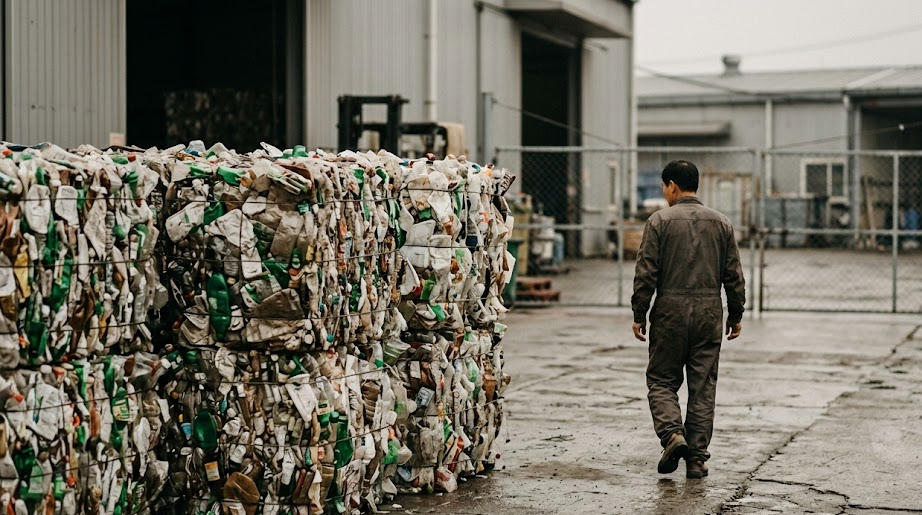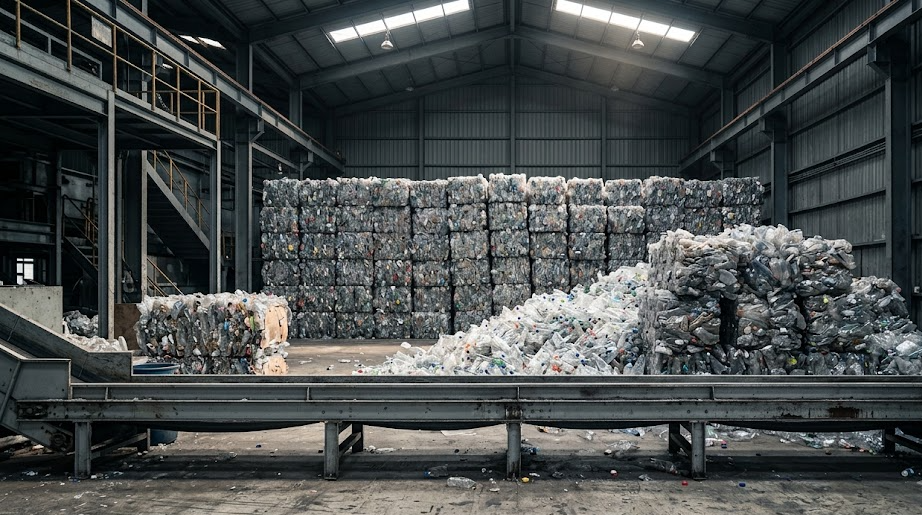
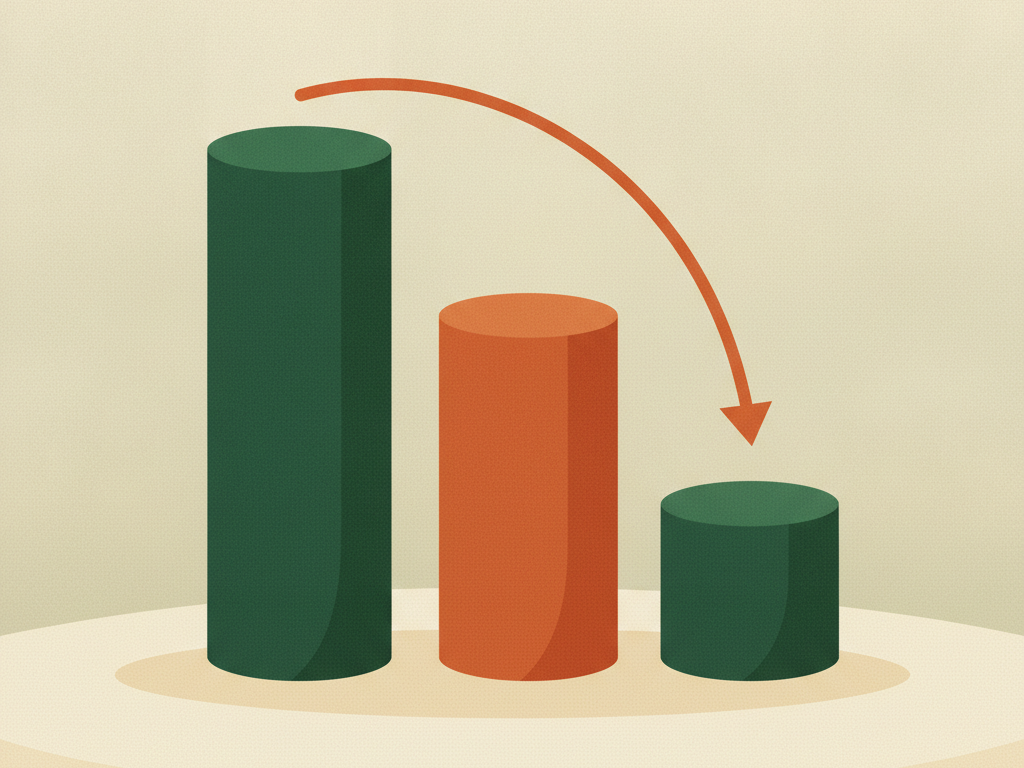
From 10 million tons to 7 million tons. These are the two markings the Ministry of Climate, Energy and Environment's "De-plastic Circular Economy Transition Plan," presented to the Cabinet on April 28, has drawn toward 2030. The core is to cut more than 3 million tons from a projected 10 million tons of plastic waste generation if left unchanged. With the target now written into a national plan document, what remains is the work of filling in which hands and which facilities will remove those 3 million tons.
The 3 million tons splits into two branches. It is understood to consist of 1 million tons removed by using less plastic and 2 million tons by using more recycled feedstock. The first million tons involves touching household habits and retail practices, and the latter 2 million tons involves rebuilding facilities and supply chains. Two tasks of entirely different character have been tied under a single target, so each requires its own implementation schedule.
The naphtha supply crisis triggered by the Middle East war is cited as the background to the plan's arrival at this moment. When the feedstock that is plastic's starting point is shaken, manufacturing methods built on the premise of cheap virgin plastic are shaken along with it. Rather than environmental norms pressing on industry, the situation is closer to the feedstock market itself pushing companies toward recycled materials. The corporate change civil society has demanded and the government's tightened regulation aim at the same place.
The measures in the plan are fairly detailed. The share of recycled feedstock blended into PET bottles is now around 10 percent, and a proposal to raise it to 30 percent by 2030 was included. A plan to broaden the mandatory scope beyond PET to polyethylene and polypropylene was also submitted. Mechanisms were attached to expand chemical recycling facilities that heat plastic waste to return it to an oil state, to simplify permits for treatment facilities, and to count the feedstock made this way as carbon reductions.
The measures on the household side are closer at hand. "Zero waste zones" where reusable containers must be used will be expanded to city centers and university districts by 2027, and a proposal to bar disposable cups from being carried into public government buildings, including the Government Complex Sejong, is being pursued. Disposable plastic cups will come under the Extended Producer Responsibility scheme, and excessive packaging rules will be extended across the food and retail industries. Distribution of eco boxes and an expansion of the carbon neutrality point program are also on the list.
The sharpest scene is the funeral home. Of 1,075 nationwide, 100 use reusable containers. That means nine out of ten still receive mourners with disposable dishes. The plan to expand reusable containers starting with public-institution funeral homes and extend that to private ones shows that a practice long considered hard to change in fact has wide room for change.
Outside currents point to the same place. The European Union will ban shipments of plastic waste to non-OECD countries beginning this November. Even with enforcement half a year away, about half of the waste Europe sends out still goes to non-OECD countries. Türkiye, the largest importer, generates 3.3 million tons a year at home alone, more than twice its own recycling capacity.
By export volume, Germany ranked first in the world last year with more than 810,000 tons, Britain second with about 675,000 tons, and Britain's figure was its highest in eight years. The United States was in the top five in 2025 with 385,000 tons. The European Union is preparing ecodesign rules that tighten imports of products whose use of recycled feedstock is not proven, and the United States is strengthening state-level regulation. Once the option of pushing waste beyond the border closes, circulation must in the end be completed within each territory.
There are points that do not line up. Measured against the benchmark that current generation stands at around 7.8 million tons, an interpretation is also emerging that the 7-million-ton target is closer in character to holding down growth than to sharply reducing the absolute volume. When and under which statute the 30 percent PET blending will be made mandatory, and how far recycling levies on non-compliant companies will be raised, remain unanswered. There is no reason to doubt the target, but the tools to meet it will be completed in enforcement decrees and budget tables.
The distance between taking a cup of coffee in a tumbler and 3 million tons looks long. Still, the change of 975 funeral homes switching their dishes, and the recycled feedstock blended into a single PET bottle rising from 10 percent to 30 percent, ultimately started from demands built up out of individual choices. Choosing, on this week's grocery run, between a product wrapped in layers of individual packaging and one that is not is itself one vote for that demand. The 3 million tons written in the plan will be filled only by the counting of those votes.