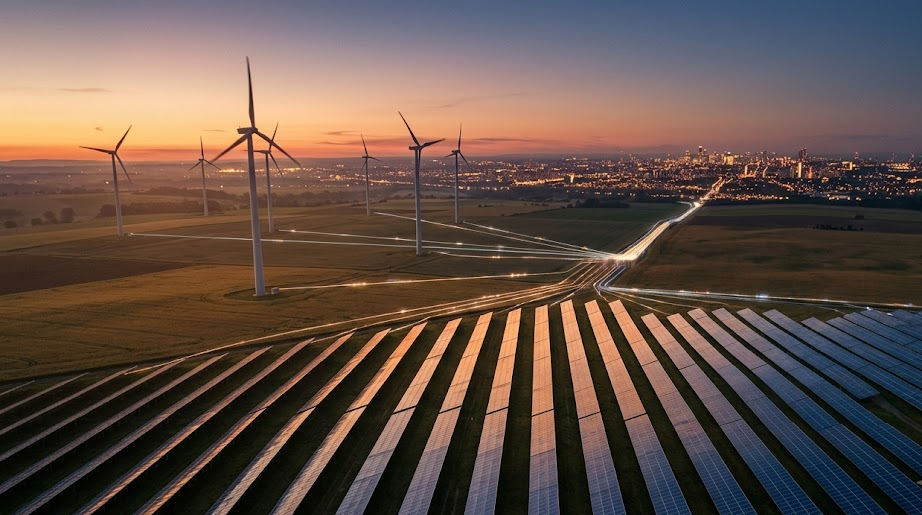
In Gwangju and South Jeolla Province, about 1.5GW of capacity has received generation business licenses but has not entered commercial operation for lack of transmission lines. It means the generators have been built but there is no path for the electricity to flow. With the government stating that it will raise renewable energy capacity to around 100GW by 2030, points were raised in succession on the 30th that the real gateway lies in a triple bottleneck of grid, planning and market rather than in the number of solar panels or wind turbines.
The National Assembly Futures Institute released a report that day assessing the country's renewable-centered energy transition policy and covering what is needed to draw up a basic plan. The analysis is that as grid expansion has failed to keep pace with the rapid growth in capacity, volumes waiting because they cannot connect to the grid and measures forcibly reducing the output of connected facilities are occurring at the same time. On one side power cannot be sold because it cannot connect, and on the other it cannot be sold even though it is connected.
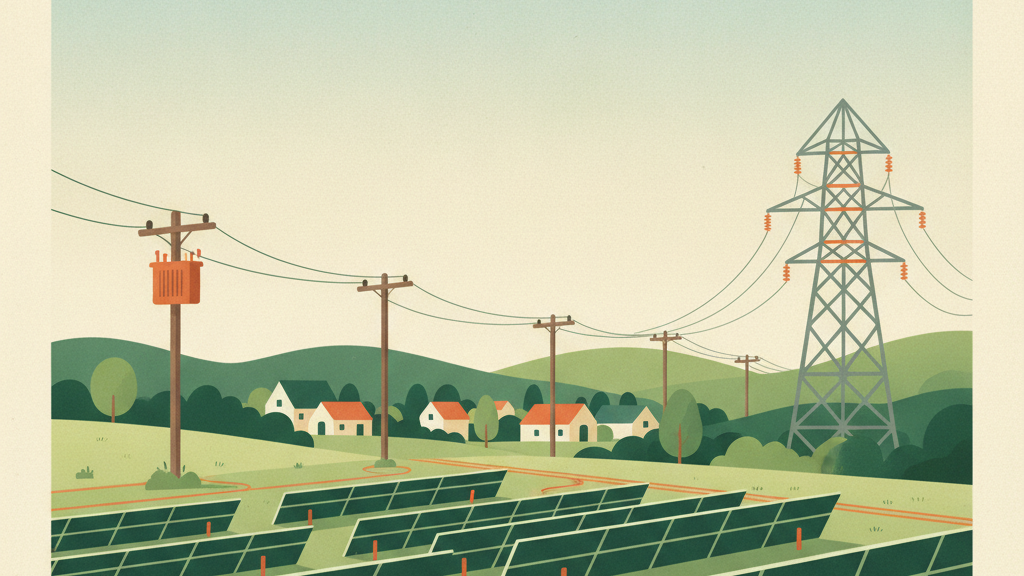
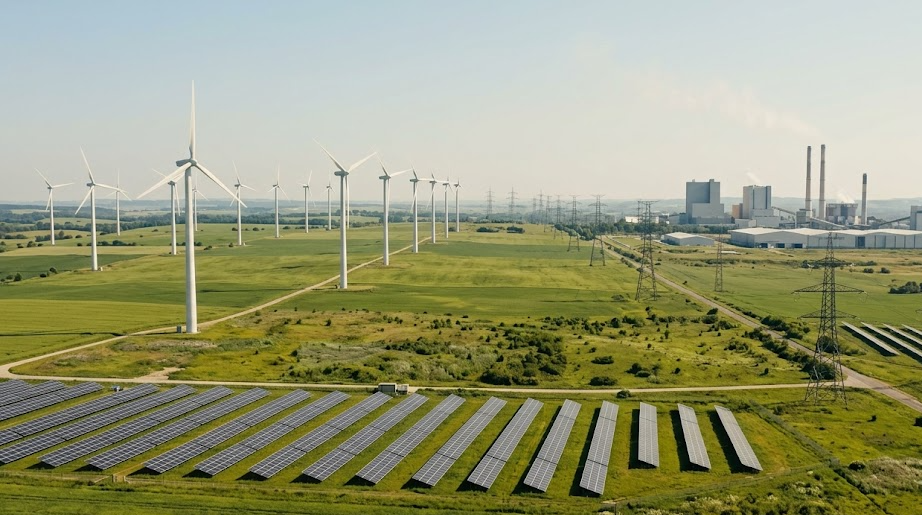
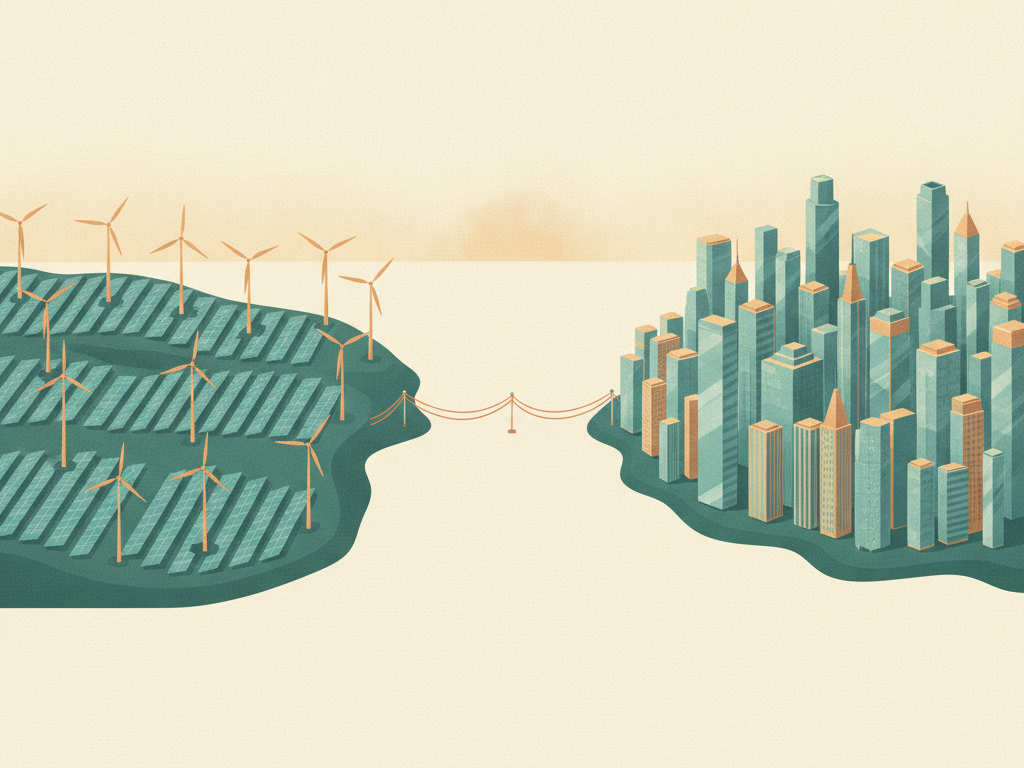
The root lies in geography. Renewable facilities are concentrated in the Honam region and Jeju, while the place that uses the most electricity is the metropolitan area. Since production sites and consumption sites are misaligned on the map, no matter how many generators are built the electricity loses its destination unless the lines linking them are ready.
The timing between plans is also out of step. The renewable energy basic plan is drawn up and revised every five years, the basic plan for long-term electricity supply and demand every two years. As the two plans with different cycles look at different points in time, even the target figures waver. The 2030 renewable share target alone fell from 30.2% in the October 2021 upward revision of the greenhouse gas reduction target to 21.6% in the 10th Basic Plan for Long-term Electricity Supply and Demand confirmed in January 2023.
The solution the report offers does not lie in building more power plants. It is to examine by region the capacity the grid can actually absorb and then set deployment targets accordingly, and to tie together flexibility resources such as energy storage systems (ESS), pumped storage and virtual power plants (VPP) and treat the entire power system under a single plan.
On the ground, work has begun. Korea Electric Power Corporation cleared out so-called phantom operators who had been holding connection queue positions without actually proceeding with projects, securing about 1.4GW of connection capacity in Gwangju and South Jeolla, and redistributed some 1.2GW of it to other operators. In the same region, ESS construction on a 523MW scale has been confirmed as the first project of 2025, and talks are continuing to secure a further 525MW. The government is also pushing a plan to support up to 90% of ESS installation costs in regions with poor grid conditions.
Who will oversee the grid has also emerged as an issue. The Korea Electricity Regulatory Commission held a forum that day in Gwanghwamun, Seoul, together with the Korea Power Exchange and the Energy Transition Forum, on the theme of power regulation governance in the era of 100GW of renewables. A proposal to establish a new electricity supervisory agency to take independent and neutral charge of grid oversight and market monitoring was treated as the central issue, and consumer protection and data integration were also raised as roles. The backdrop is the reality that Korea Power Exchange members have swelled from 19 in 2001 to more than 7,000 and that KEPCO PPAs, an over-the-counter form of trading, have reached some 180,000 cases.
There are cases to refer to overseas as well. Last year a nationwide blackout occurred in Spain, halting railways and disrupting the operation of airports and industrial facilities, and some regions lost electricity for several hours. An interpretation that renewables were to blame circulated for a time, but reporting from the country on the 28th pointed to grid operation problems as the cause. Spain is a country that filled about 55% of its total power generation with renewables as of 2024.
The same conclusion has come from two places. How well the grid and operating system that receive renewables have been refined divides the stability of the system more than how much renewable capacity has been built. So the 100GW target is not a task for generation businesses alone.
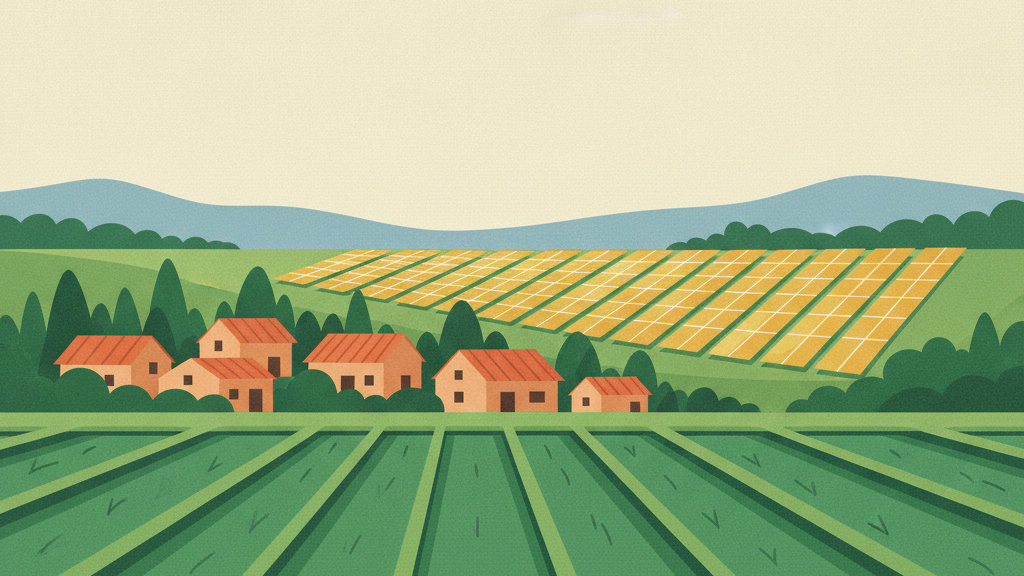
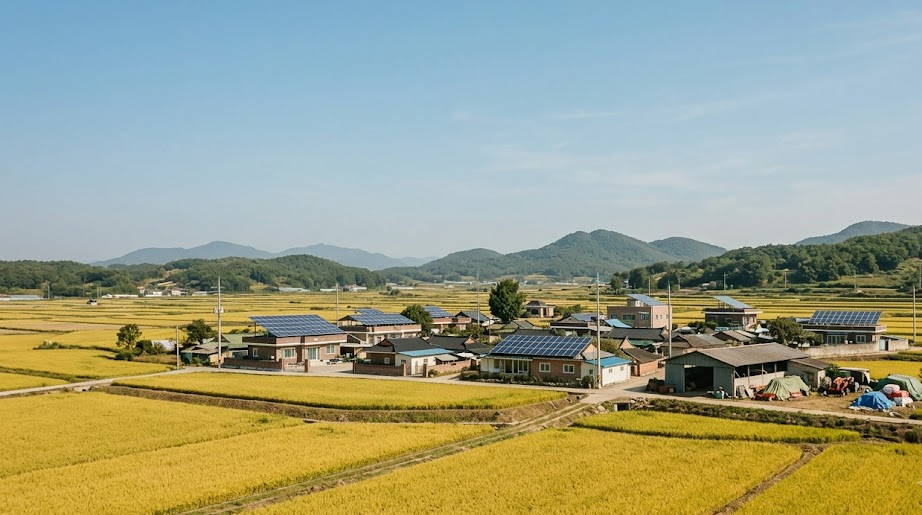
Channels for citizens to take part are also being prepared. The government said it would raise the renewable share of power generation to more than 20% by 2030 while building a system in which about 10 million people take part in energy income. Sunlight Income Villages, which build solar facilities of 300-1,000kW on idle village land, are under public call with a target of selecting more than 500 sites nationwide this year, and Wind Income using wind power and Grid Income, in which residents of areas crossed by transmission lines invest and share the returns, are also being pursued.
Transmission towers have always been someone else's neighborhood problem. Grid Income is an attempt to turn those lines into a local asset. Checking whether such a public call is open in the village where you live is where the story of the grid stops being someone else's business.