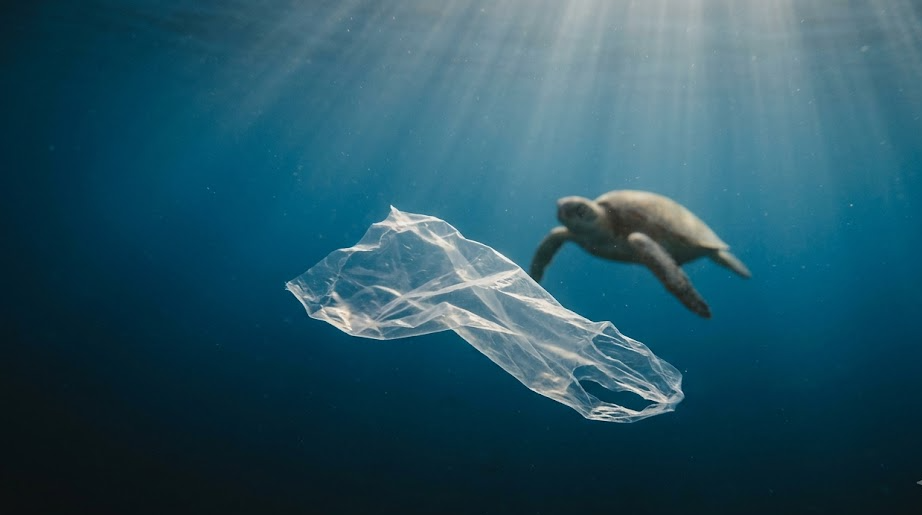
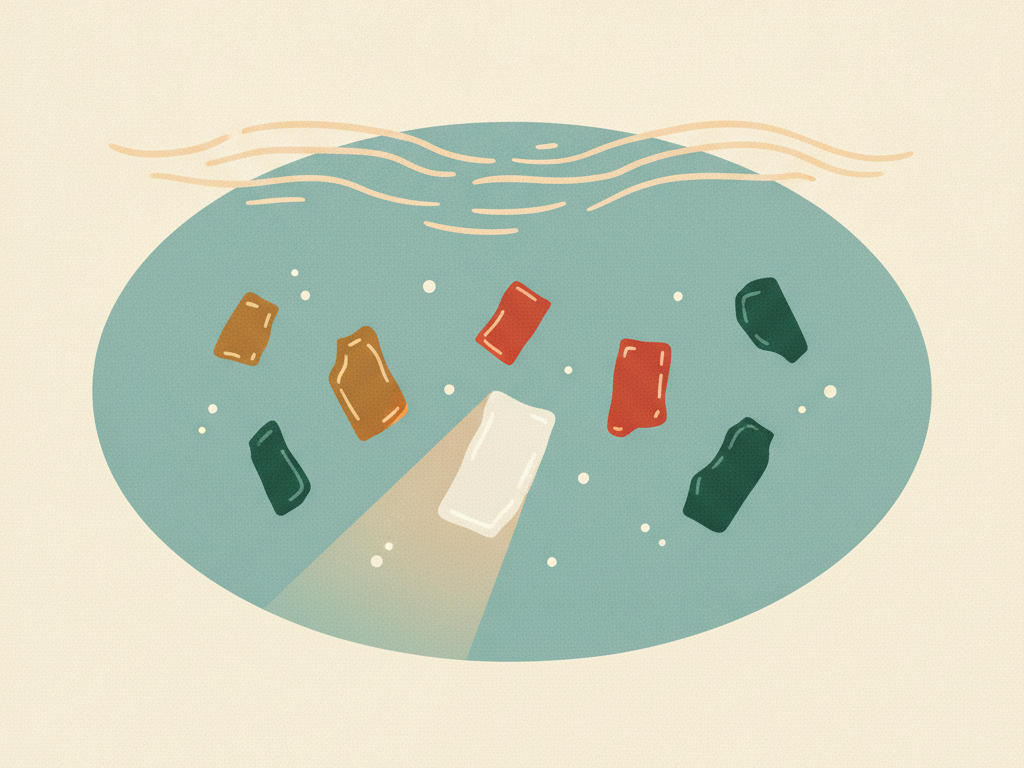
When plastic packaging in six colors was floated together in the water, the beak of a four-year-old sea turtle went straight for the clear piece. A research team led by Dr. Hong Sang-hee of the Korea Institute of Ocean Science and Technology (KIOST) announced on the 22nd the results of a study that identified why sea turtles swallow plastic by observing their behavioral responses to different colors. The "prey confusion" that academic circles had only guessed at until now was confirmed by eye inside a laboratory.
The subjects of the experiment were artificially bred hawksbill sea turtles. The team simultaneously presented single-use plastic film in six colors, including clear, white, blue, red, yellow and black, and then recorded the response behavior of the turtles pecking or biting with their beaks. The four-year-old individuals showed a preference tendency in the order of clear, white and yellow, and showed no notable response to blue.
An interesting result emerged when individuals of different ages were observed together. Young turtles that had hatched 10 weeks earlier responded randomly to nearby objects, with no meaningful difference in behavior by color. The team interpreted this difference as a gap in prey recognition ability according to developmental stage.
The explanation is that the more feeding experience an individual has accumulated, the more it recognizes bright, soft plastic as natural prey such as jellyfish or fish and responds selectively. Jellyfish and clear plastic film resemble each other in the way they let light pass through underwater and in their limp texture. Conversely, young individuals may be vulnerable to a wider range of plastic because their recognition ability is less developed and they swallow without distinguishing color.
One point worth noting in the experimental design is that it was arranged so that the turtles would not actually swallow the plastic. The entire process received prior approval from the KIOST Institutional Animal Care and Use Committee. The findings were published in "Scientific Reports," a sister journal of Nature.
These results point to where the response should be focused. Scooping up the waste that has flowed into the sea is still necessary, but until it is scooped up, those pieces drift about looking like prey. Thin, clear single-use film in particular is the material whose shape breaks apart in the water and comes closest to resembling a jellyfish. Building up collection capacity alone will not easily reduce the confusion itself.
Even so, narrowing this problem down to individual carelessness or the fault of a particular industry is also far from the facts. Single-use film is a material that society as a whole has chosen for food hygiene and distribution efficiency. What has to change is less someone's conscience than the entire path along which that material is used and discarded. The research team also said it would continue follow-up research to systematically identify the causes of harm to organisms from marine plastic and to prepare responses.
Discussions on moving away from plastic have had their deadlines for agreement pushed back several times on the international stage. In the meantime, the sea takes in new pieces every day. This study is useful because it narrowed down which materials are how dangerous to which organisms, using the concrete standard of color. One piece of evidence worth referring to has emerged, both in designing regulations and in choosing alternative materials.
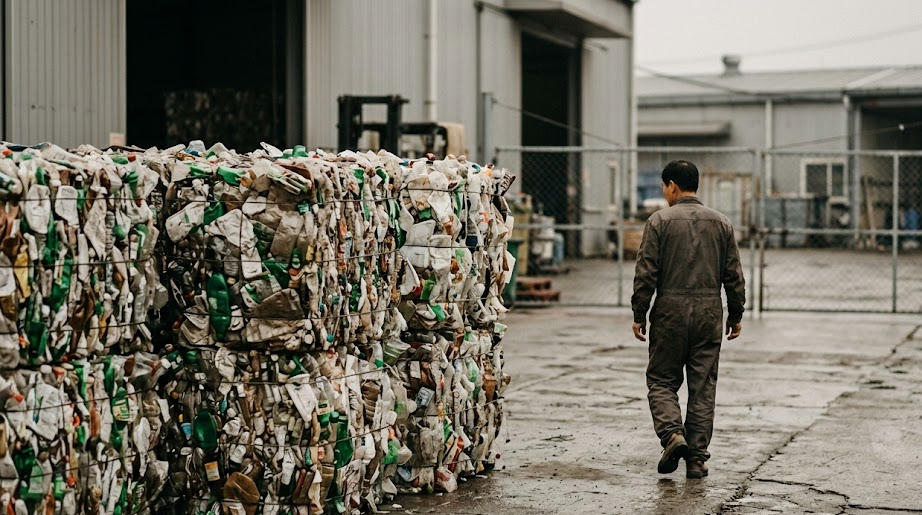
There are also practices within immediate reach. The habit is to separate and tie up the light things that blow easily in the wind, such as the clear plastic covers that come with delivery food, the thin film on fruit packaging and laundry covers. Such films are so light that they seem to weigh almost nothing, so they slip away most easily during collection, and the moment they touch water they resemble jellyfish most closely. The scene of the four-year-old turtle's beak turning toward the clear piece was a short preview of how far a single bag we throw away today travels.