The Third Basic Mental Health and Welfare Plan has been released. It puts front and center the advancement of the rights and interests of people with lived experience under the UN Convention on the Rights of Persons with Disabilities, and it has created channels for their participation from the research stage through to the task force. Raising peer support to a key performance indicator and reflecting it across areas including housing support, and including services led by people with lived experience such as day activities and procedural assistance, also set it apart from earlier plans.
The plan's heavy tasks are pointed out as well. The mechanisms for remedying rights that people who have experienced involuntary admission, seclusion, restraint and long-term hospitalization can actually rely on are thin. Changing the direction a document points in is one thing, and having the means to undo what happened inside a ward is another.
Why this shift is urgent is told by life after discharge. Three out of 10 people who leave a psychiatric hospital are admitted again within three months. The suicide rate within 30 days of discharge reaches 66 times that of the general population. Compared with other member countries of the Organisation for Economic Co-operation and Development, Korea continues to have long psychiatric hospital stays and a large number of beds.
That many people return also means there is no suitable place to go. About 160 people living with severe mental illness come and go from the peer support center in Gwanak-gu, Seoul, and annual use exceeds 6,000 cases. Seventy percent of the people working there hold peer supporter qualifications. The World Health Organization has counted peer support as a core element of human rights-based community mental health services, and the United States has placed the service within Medicaid.
The words of people with lived experience reached the National Assembly as well. The demand to live together in the community was raised at last year's National Assembly Health and Welfare Committee audit, and at the comprehensive audit a person with lived experience came and sat in person. President Lee Jae-myung's pledge of a "state responsibility system for care" supporting the daily lives of people with psychosocial disabilities, put forward as a candidate to coincide with the Day of Persons with Disabilities, was not included in the government's policy tasks.
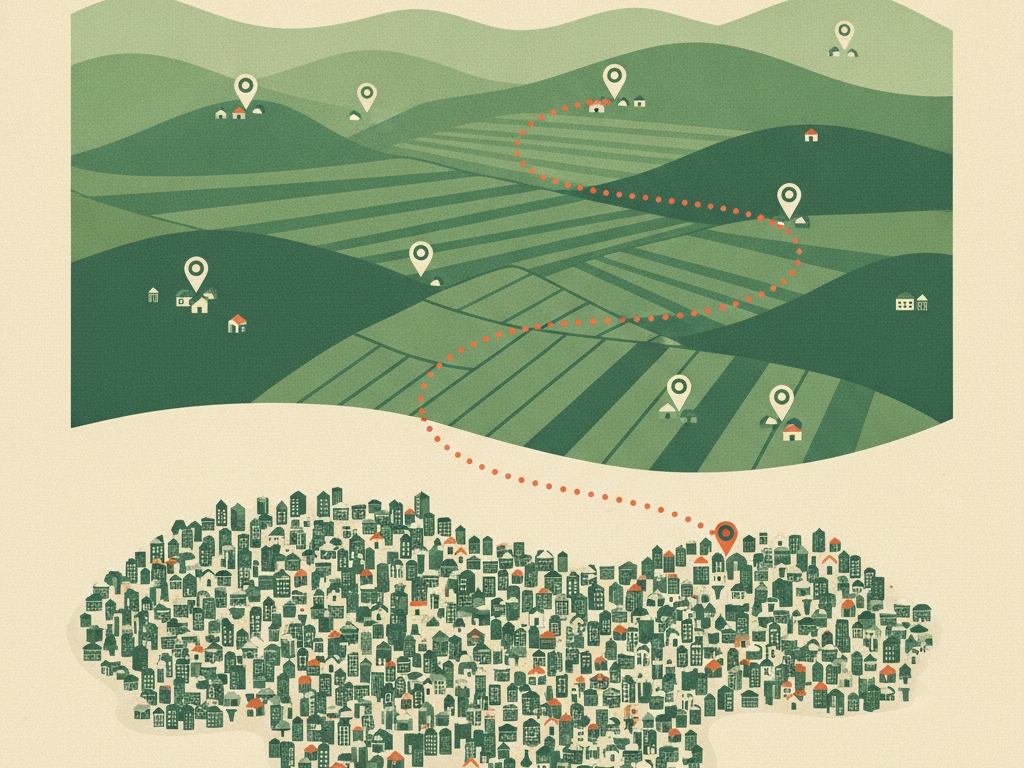
The door out into the community is not open to the same width everywhere. At the 2026 Gangwon Disability Welfare Forum held on the 16th of this month at the Gangwon-do Women and Family Research Institute, Kim Jin-woo, professor of social welfare at Duksung Women's University, presented that because integrated care policy started from the fiscal logic of curbing medical and long-term care costs for older people, people with disabilities were included late and pushed aside in both design and implementation, producing a "dual exclusion." A "triple isolation," in which travel costs to reach a service in Gangwon's farming, mountain and fishing villages amount to four times the cost of the service itself, was also presented. Some cities and counties have no disability welfare center at all.
The forum put forward as alternatives the introduction of a social prescribing model, a method of specifying a disability allocation ratio within budgets, the creation of participation channels for people with lived experience, and a "Gangwon-specific model" of close public-private cooperation. The general discussion also mentioned the case of a rural integrated care pilot project running in Hoengseong. On dementia policy, a diagnosis that it should move from a management focus toward care rights and the person concerned came out on the 21st.
The framework of the system is being built. With the full enforcement of the Integrated Care Support Act on March 27, grounds were created for older people and people with disabilities who have difficulty moving about to receive medical care, long-term care and personal care together in the homes where they live. The question is who goes to those homes. Because there is no legal basis for medical technicians such as physical therapists and occupational therapists to visit homes or social welfare facilities outside medical institutions to provide services, the home visit rehabilitation part of the home medical care pilot project for rehabilitation patients, which began in December 2020, has not been able to move into a full program.
At the National Assembly Communication Hall on the 21st, Rep. Nam In-soon of the Democratic Party of Korea and Rep. Choi Bo-yun of the People Power Party stood together with representatives of organizations for older people, people with disabilities, patients, social welfare and medical technicians and called for the passage of the amendment to the Medical Technicians Act that they jointly sponsored. The National Assembly Health and Welfare Committee will hold its First Bill Review Subcommittee on the 28th. With the Korean Medical Association not bending on its objections, whether this bill will make it onto the agenda is uncertain.
That peer support has been raised to a performance indicator means the experience of people who have been through the same thing is counted in the language of the system for the first time. Seven out of ten people working at the Gwanak-gu center are people who turned that experience into a certificate. A plan that opens the ward door has come out, and what will be placed outside that door is decided in several places, including the subcommittee meeting room on the 28th.