The Gwanghaegun taesil, a chamber holding a royal placenta, in Taebong Village, Yeongyeong-dong, Buk-gu, Daegu, has been included among the 19 sites the Korea Heritage Service has slated for national historic site designation. The Korea Heritage Service drew up the list through a 2025 research project covering taesil across the country, and a second, in-depth study is now under way. It is the first step by which ground where a deposed king's placenta was buried enters the state's official list of remembrance.
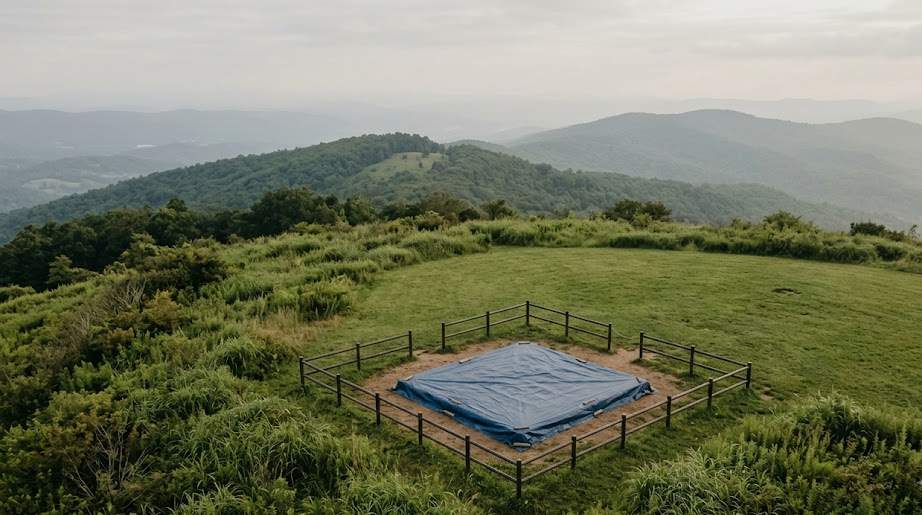
The taesil sits on a low peak in the foothills of Palgongsan, ringed by Hamjisan, Dodeoksan and Eunghaesan. The village name Taebong itself comes from that peak. Climbing along the ridge, one reaches a knee-high steel fence, and inside it the soil is covered with blue waterproof plastic. On rainy days water pools on the plastic, and each time the wind passes the thin synthetic sheet makes a dry sound.
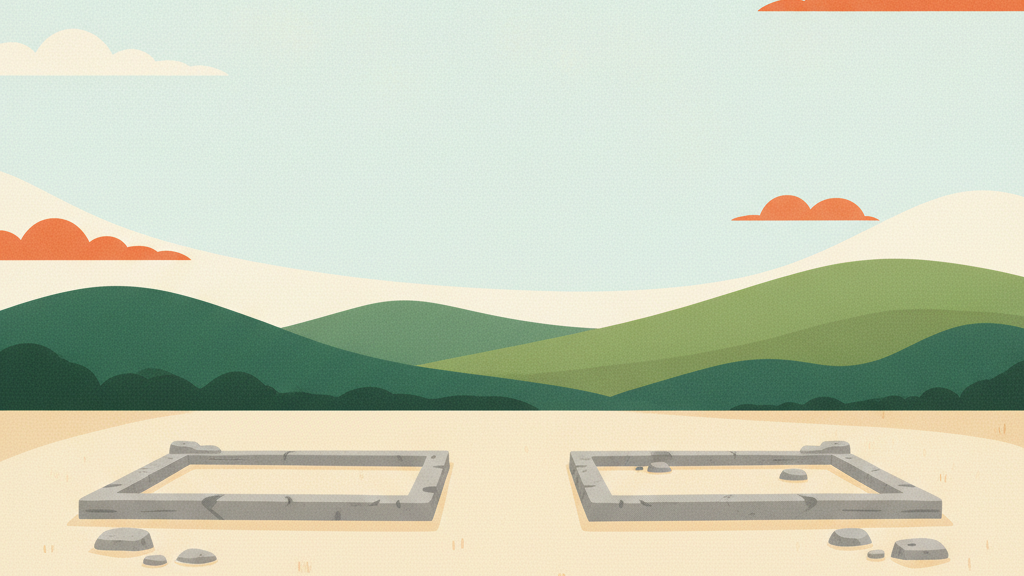
What came out of this ground was set down long ago. In 2013 the Gyeongsangbuk-do Institute of Cultural Properties issued the results of a test excavation, and the full excavation was carried out in 2018 by the Daon Institute of Cultural Heritage, compiled in 2020 into an academic report titled 『Gwanghaegun Taesil in Yeongyeong-dong, Daegu』. The earthen pit that had held the stone placenta case, the packing stones laid in two rings, inner and outer, to support the stonework, and the tortoise-shaped pedestal on which a stele stood were uncovered, and the infant taesil stele, the gabong taesil stele and a cap stone were confirmed. The report concluded that this was a composite site where an infant taesil was created and a gabong, or ceremonial enlargement, was later carried out on the same peak.
The excavation used 100 million won in national funds. After that, what the Buk-gu Office did amounted to putting up a fence and planting grass. The white porcelain placenta jar and the placenta tablet that held the placenta are not on this peak. Scattered after being looted, they were designated treasures in the 1990s and are now held by the Yongin University Museum.
Six years have passed with the ground and the artifacts apart. The Buk-gu Office has repeatedly requested national historic site designation over that time, without success. Even when the district government led by Buk-gu Mayor Bae Kwang-sik prepares an application, the process does not go straight to the state. It must be sent up to the Daegu city government and pass a review by the cultural heritage committee before it reaches the threshold of the Korea Heritage Service.
As long as it remains a city or provincial designated heritage, the next door does not open. Eligibility to apply for World Heritage listing is granted only to state-designated cultural heritage, and heritage designated by local governments cannot join that list. The gabong taesil being pushed for World Heritage listing number seven, including the Sejo taesil in Seongju and the Injong taesil at Eunhaesa Temple in Yeongcheon, and the metropolitan governments behind the effort are three, Gyeongsangbuk-do, Chungcheongnam-do and Chungcheongbuk-do. Daegu is not on that map.
Taesil across the country are counted at about 150. Of those, 54 were forcibly moved to Seosamneung in Goyang, Gyeonggi-do, during the Japanese colonial period. The royal custom of burying a child's placenta at a mountain summit was broken apart on a large scale then, and what remained grew old on its own on each ridge.
Gwanghaegun's is, if anything, in better condition, in that it was dug up and then recorded academically. That is why assessments say restoration to its original form is possible, with both the test excavation and the full excavation finished.
The scale of the restoration cost and the share of national funding have yet to be fixed. The second in-depth study will be completed at the end of 2026, and the results report is expected to go down to the local government concerned in early 2027. Only after that bundle of paper arrives does whether the Daegu city government convenes its cultural heritage committee become a practical matter. What covers this peak is a single sheet of plastic.
Will the state take in as heritage the placenta of a king dragged down from the throne in the Injo Restoration? This discussion is also a question of how far later generations will revive a name the dynasty erased. The back road of Taebong Village in Yeongyeong-dong is worth walking up in spring, and standing on the flat summit at the end of the ridge, the foothills of Palgongsan unfold in layers toward Hamjisan. Not many people know what was buried beneath their feet and then dug up.