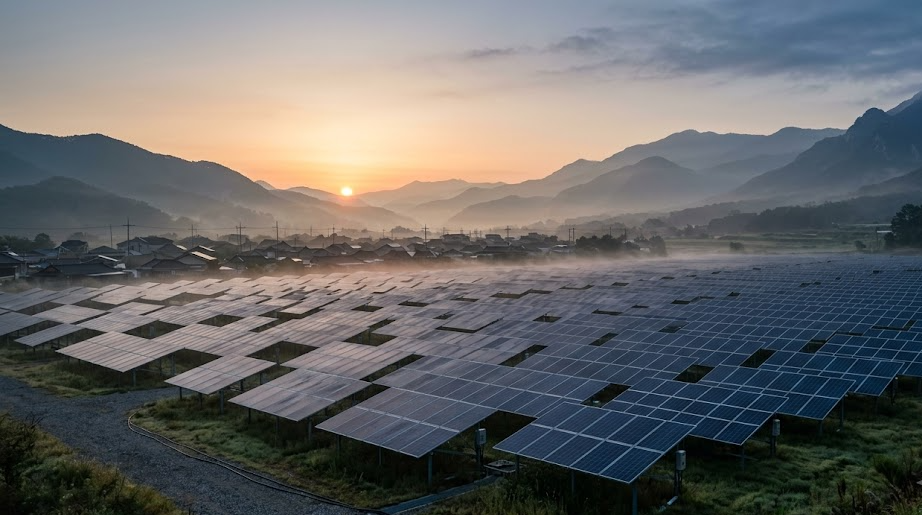
3.4217 trillion won. That is the amount the government says it will spend on climate change response technology development over the course of 2026. The Ministry of Science and ICT drew up and released the "2026 Climate Change Response Technology Development Implementation Plan" on the 16th. The figure is 14.1 percent larger than last year's, and it shows that climate response has moved from the realm of declarations into the realm of execution backed by public funds.
The implementation plan is organized along three lines. They are greenhouse gas reduction, climate change adaptation, and the creation of an innovation ecosystem. Cutting emissions, enduring the changes already at hand, and pushing those technologies into the market were placed together within a single plan.
The list of new projects on the mitigation side keeps several paths of energy transition open at the same time. Development of next-generation solar cells receives 5 billion won and the design of a Korean-type innovative fusion reactor 2.1 billion won in new funding. Technology for localizing innovative manufacturing of small modular reactors (SMR) was allocated 15.67 billion won, and 4.5 billion won goes into clean hydrogen development. A large-scale carbon dioxide capture and utilization (CCU) demonstration project receives 42.4 billion won in new funding, combining 20 billion won from the main budget with 22.4 billion won from a supplementary budget.
The change worth watching lies in the adaptation field. Climate budgets have leaned toward cutting emissions until now, but this plan states that monitoring and prediction systems applying digital technology and artificial intelligence will be built separately for ecosystems, forests, urban areas and the ocean. Technology development for disaster response will also be expanded. With heat waves and torrential rain breaking records every year, technology that reduces damage has itself become an object of investment.
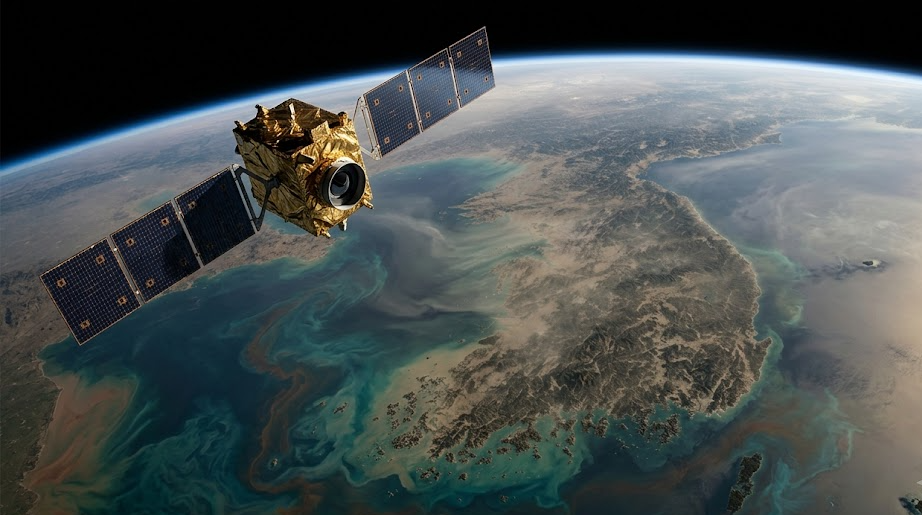
Specific projects to strengthen prediction capacity were also set. Advancing climate prediction using artificial intelligence receives 5.08 billion won and the Korea Meteorological Administration's development of a national climate prediction system for climate crisis response 7.3 billion won in new funding. The ability to know in advance where, when and what kind of damage will arrive is the precondition for every follow-up measure, from building embankments to putting up shade canopies.
The innovation ecosystem field focuses on narrowing the gap between the laboratory and the field. The plan is to support the building of climate technology demonstration infrastructure led by companies and local governments, and to spread the technology through international cooperation. Underlying it is the recognition that keeping developed technology from ending up only in papers requires a place to actually run it and partners to run it with.
There are also points to note. No breakdown was given of how the total investment of 3.4217 trillion won is divided among the three strategies. The fact that the budget has grown and the question of whether that money leads to actual emissions cuts or reduced damage are separate matters, and the answer can only be confirmed through results once execution begins.
For the central government's plan to work, there have to be hands receiving it in the regions. The city of Pohang in North Gyeongsang Province held this year's first climate crisis response committee meeting at city hall on the 10th, reviewing the implementation status of its carbon neutrality and green growth basic plan and its climate crisis adaptation measures. Fifteen committee members attended, with the deputy mayor as chair. Local review bodies of this kind become the channel through which the budget comes down.
Climate response looks like a story of enormous facilities and large sums of money, but the starting point of adaptation policy begins with knowing which risks the neighborhood you live in is exposed to. Each local government draws up and publishes climate crisis adaptation measures, and these contain the heat wave and flooding vulnerability points in our area. Ten minutes is enough to look up and read that document once on the website of the place you live. The last space in a 3 trillion won plan is filled in, in the end, where each of us lives.