An 18.9-ton mass of bronze has sounded again. The National Museum of Korea said that the sound source and patterns of the Divine Bell of King Seongdeok, held by the Gyeongju National Museum, were used in a track on BTS's fifth studio album 'ARIRANG' and in collaboration merchandise. The high-resolution recording of the bell, which the museum had released as a Korea Open Government License work, was actually used in the track 'No.29'. In the same week, the Korea Heritage Service released the official emblem of the 48th session of the UNESCO World Heritage Committee on the 25th, and the basis of the design was the form and color of the tiled roof of Jongmyo's Jeongjeon.
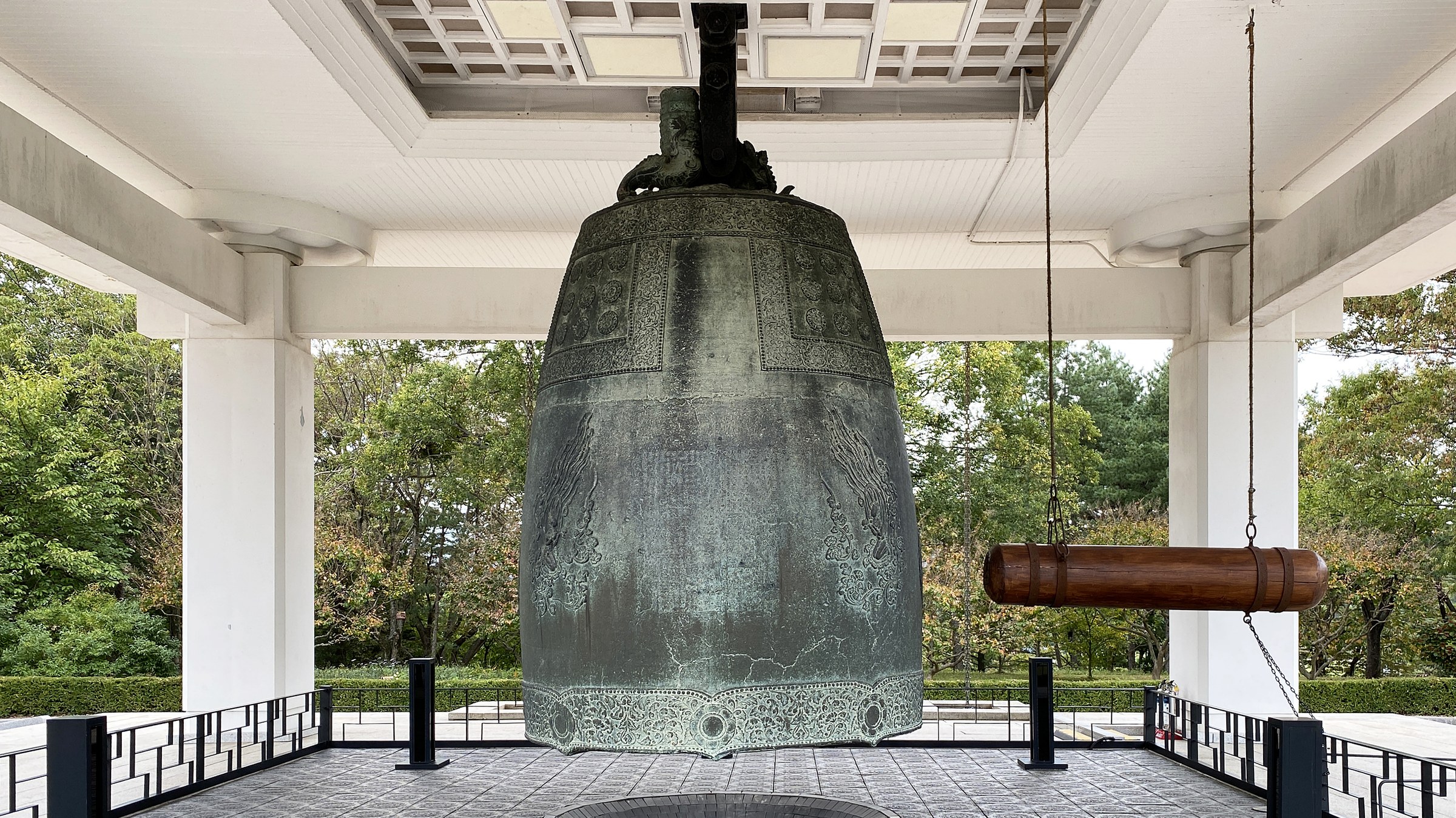
The Divine Bell of King Seongdeok is a temple bell cast in 771 in Unified Silla. Its height is recorded as around 3.6 meters, and depending on the notation it is also recorded as 3.66 meters. It was designated a National Treasure in 1962, and having been enshrined at Bongdeoksa Temple it has been called the Bongdeoksa Bell, and following a legend also the Emile Bell. About 1,000 characters of inscription are carved on the body of the bell.
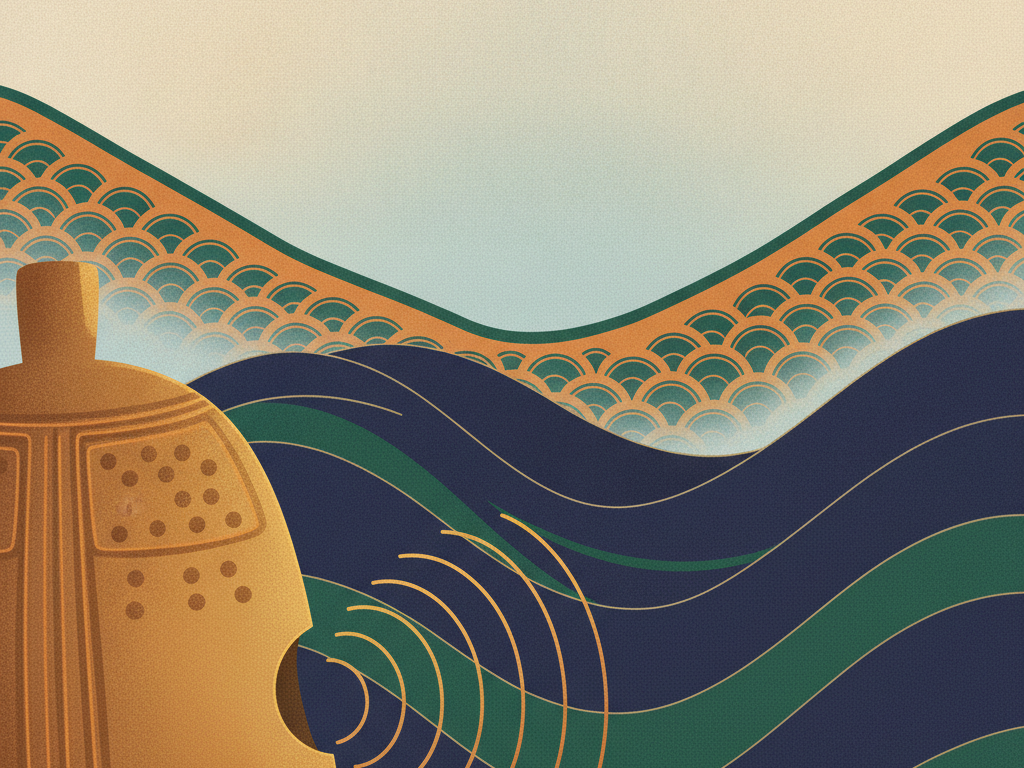
What distinguishes this bell is that its sound does not disappear all at once. Beating tones that surge and recede in alternating strength and continue at length. The collaboration recording carried that quality as it was. It is the story of the vibration of bronze more than a thousand years old being laid down as one layer inside a popular music track of 2026.
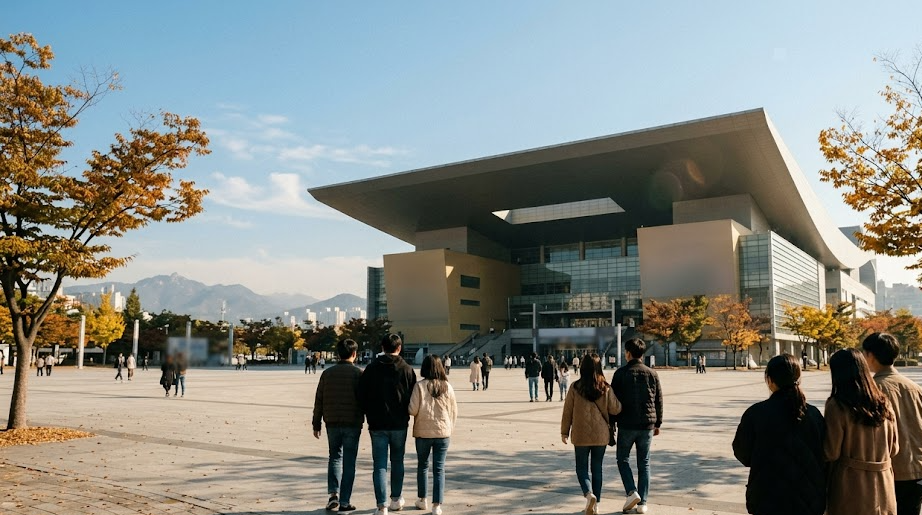
The collaboration did not come together overnight. In October 2025 the National Museum of Korea, the National Museum Foundation of Korea and HYBE signed a memorandum of understanding for spreading Korean heritage and K-culture, after which Yoo Hong-june, director of the National Museum of Korea, let Bang Si-hyuk, chairman of HYBE, hear the resonance of the bell in person in the sensory exhibition hall on the third floor of the permanent exhibition building. The foundation and HYBE took the offering figures and cloud patterns of the bell and released the '2026 BTS X MU:DS Collaboration Merch.', made up of five items: a shoulder bag, a layered skirt, a card holder, a hairpin and a hair clip. The points of sale and prices have not yet been announced.
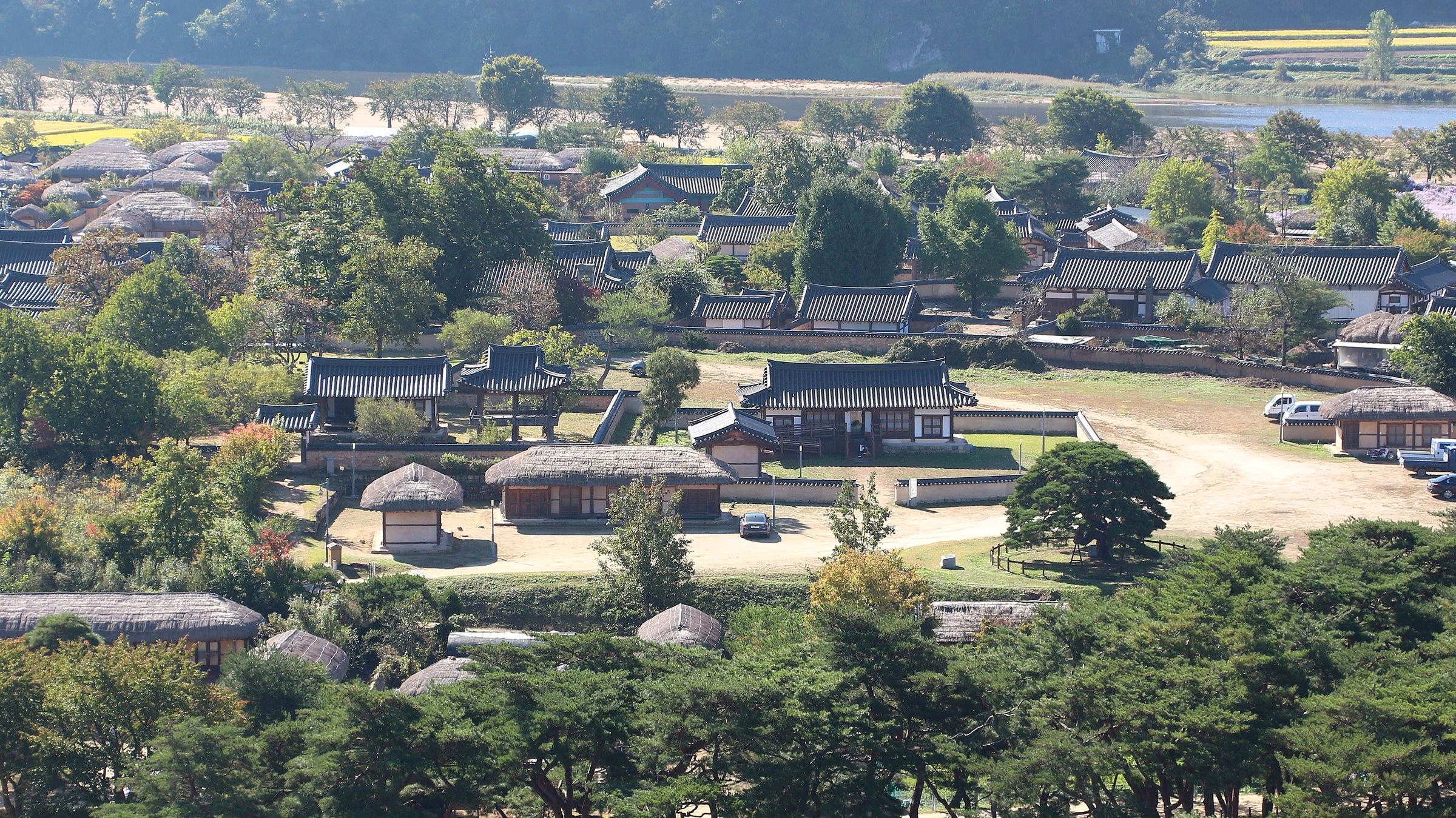
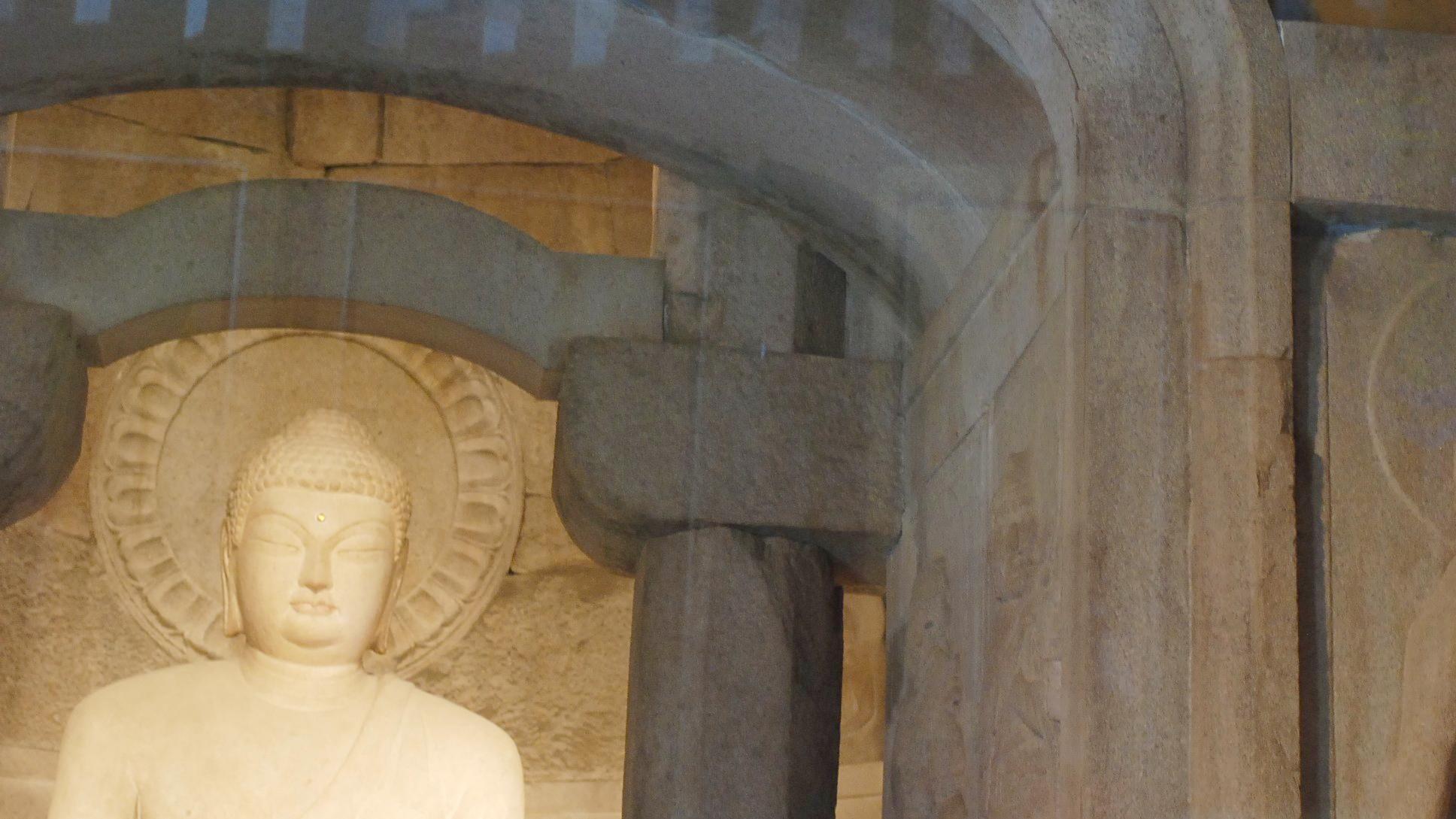
The situation on the emblem side has a similar grain. The 48th session of the World Heritage Committee will be held at BEXCO in Busan from July 19 to 29, 2026, and Korea's hosting of this session is understood to be the first in the 38 years since it joined the World Heritage Convention in 1988. The meanings held in the emblem are three: connection, peace and cooperation. Jongmyo is the national shrine housing the spirit tablets of the kings and queens of Joseon and the emperors and empresses of the Korean Empire, and in 1995 it was inscribed on the World Heritage List together with Seokguram Grotto and Bulguksa Temple and the Janggyeongpanjeon of Haeinsa Temple.
Moving the dark gray of the roof tiles and the long horizontal line of the eaves into a design is the work of compressing architecture into a picture. The Korea Heritage Service plans to make and distribute promotional videos with this emblem, develop content together with the private sector, produce souvenirs, and let ministries, local governments and public institutions share its use. While the symbol goes up across the city, the redevelopment conflict in Sewoon District 4 across from Jongmyo continues unresolved.
A tension arises here. Translating heritage into a widely used language and protecting the land and sky where that heritage actually stands do not move at the same speed. At the same time as the roofline of the Jeongjeon becomes the face of an international conference, on the opposite side that roof looks toward, the dispute over height and development goes on. The achievements of utilization do not pay off the burden of preservation in its place.
Still, what this week showed is clear. One public sound recording that a museum left open became material for the most played album in the world, and the roof tiles of a Joseon royal shrine moved into the symbol of an international conference body. There is no longer a reason for heritage to remain only inside a glass case. How the side that borrows and uses it treats the original has to be checked again each time.
The way to experience it directly is open. The Divine Bell of King Seongdeok stands in the outdoor exhibition area of the Gyeongju National Museum, and the original sound can be heard in the same museum's digital media hall. In Seoul, at 'Space_Between', the sensory exhibition hall on the third floor of the permanent exhibition building of the National Museum of Korea, the vibration that touches the body can be felt along with the sound. Meeting the bell in person before the session opens in Busan in July will stay in the memory longer than looking at the emblem a hundred times.