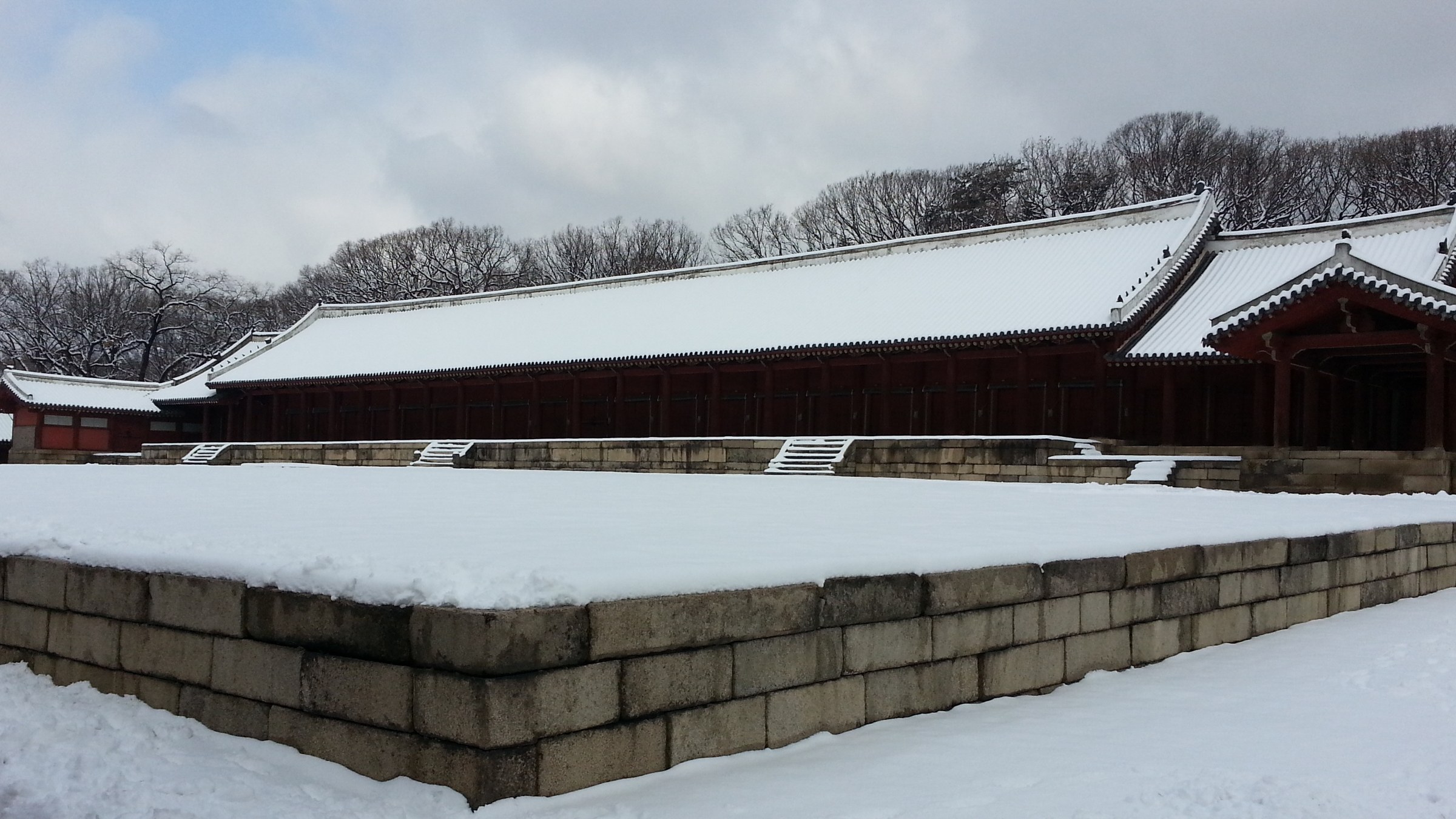
The Korea Heritage Service unveiled the official symbol of the 48th session of the UNESCO World Heritage Committee on the 25th. Taking the form and colors of the tiled roof of Jongmyo's Jeongjeon hall as its material, it carries the low curve of the roof spreading left and right directly into the design. The Korea Heritage Service explained that the design holds three messages: Continuity, Peace and Collaboration. On the same day, ICOMOS Korea posted a statement on its website expressing its position that the Sewoon District 4 development in front of Jongmyo should not proceed without a Heritage Impact Assessment (HIA).
The 48th session of the World Heritage Committee begins with an opening ceremony on July 19 and runs through the 29th at BEXCO in Busan. This is the first time Korea has hosted the meeting in the 38 years since it joined the World Heritage Convention in 1988. There is a background to Jongmyo being chosen as the face of the session. Jongmyo was inscribed in 1995 as one of Korea's first World Heritage sites, along with Seokguram Grotto and Bulguksa Temple and the Janggyeongpanjeon depositories at Haeinsa Temple.
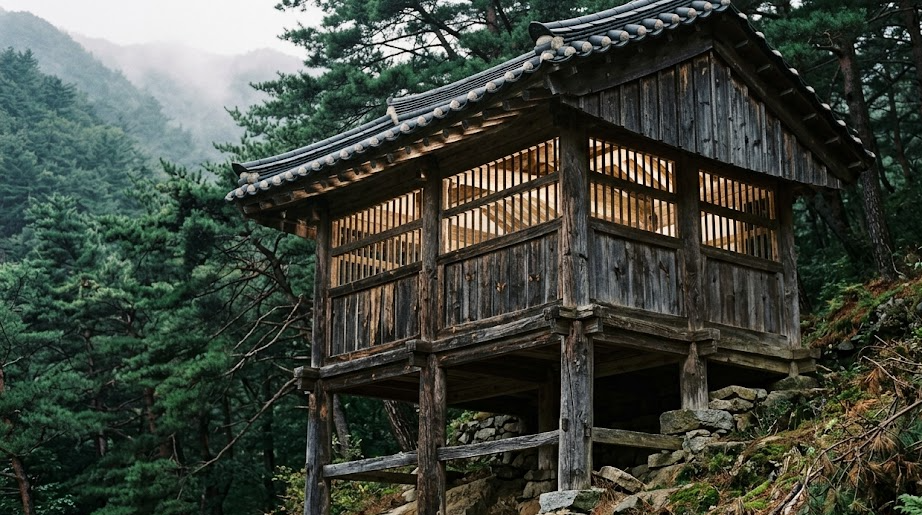
Jongmyo is the state shrine where the spirit tablets of the successive kings and queens of Joseon and the emperors and empresses of the Korean Empire are enshrined and where memorial rites are held. Inside Jeongjeon, the tablets, including that of Taejo Yi Seong-gye (r. 1392-1398), are placed separately across nineteen chambers, known as sinsil. Each time a chamber was added, the building was extended sideways, and the result of that repeated joining is the longest structure among Korea's traditional buildings. Its length is recorded as 101m.
Standing on the wolttae terrace in front of Jeongjeon, one cannot take in that length at a glance. Gray stone slabs rasp underfoot, and the eye slides slowly left and right along the black tile furrows of the roof. It is architecture that lies down lengthwise rather than overwhelming with height, so a wide expanse of sky is left over. What the emblem tried to capture is that leftover sky.
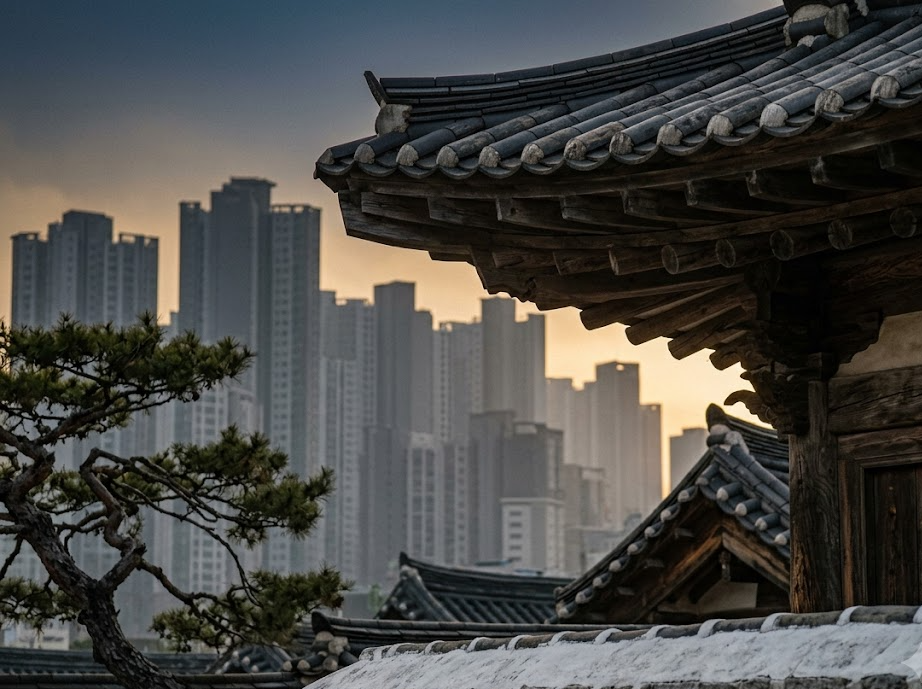
Outside the wall, the situation is different. The confrontation between the Seoul Metropolitan Government and the Korea Heritage Service over the Sewoon District 4 redevelopment across from Jongmyo continues. On March 16, the Korea Heritage Service filed a criminal complaint with the police against the project operator, Seoul Housing and Communities Corporation (SH), on suspicion of violating the Act on Protection and Investigation of Buried Cultural Heritage, saying it had drilled without permission at eleven points on the project site to a maximum depth of about 38m. The Cultural Heritage Committee also sternly criticized this unauthorized drilling on March 19.
On January 9, the Seoul Metropolitan Government floated an advertising balloon outside Jongmyo's Oedaemun gate at a height similar to that of the planned building. It sought to confirm how the height would actually appear, but photography from inside Jeongjeon was not permitted, according to the Seoul Metropolitan Government. The Sewoon District 4 residents' representative council has filed a 16 billion won damages suit against the state and Korea Heritage Service officials, and the trial is under way. This is the second time ICOMOS Korea has issued an official position on the matter, following November 2025.
The hand that makes the emblem and the hand that guards the area outside the wall belong to the same agency. Next month the Korea Heritage Service will present an official promotional video using the design, and it plans to develop content including souvenirs. A plan to distribute the design to ministries, local governments and public institutions to encourage government-wide promotion is also being prepared, and a government-wide task force meeting was held under Commissioner Heo Min. The work of spreading the symbol widely and the work of guarding the sky where the real thing behind that symbol stands must both be carried through to July.
On July 19, delegations from each country will gather at BEXCO. The original of the black roof design they will encounter throughout the venue stands where it is in the middle of Seoul's Jongno, and any citizen can book a visit and walk in front of it. Climb onto the wolttae terrace and look up once past the Jeongjeon roof, and what is being fought over now is visible without explanation. The sky the guests will see four months from now is that same sky.