The 'Act on Integrated Support for Community Care Including Medical and Long-Term Care' takes effect on the 27th. Most of the process of finding eligible people, surveying their needs, going through a comprehensive assessment, drawing up individual support plans and connecting them to services moves to local governments. The Ministry of Health and Welfare's tally released on Feb. 11 says 194 of the country's 229 cities, counties and districts have finished building the groundwork. Around the same time, people in the field pointed out that linkage systems in island and mountain areas are not working and that some places have not even formed a dedicated organization.
South Korea entered a super-aged society in 2025. The promise of the system is to let people receive treatment and care together in the homes where they live, instead of being admitted to a hospital. Health and Welfare Minister Jeong Eun-kyeong said in January this year that the goal of integrated care is to link medical and care services into one so that treatment and care take place together at home.
On Feb. 26 came the complaint that 'medical care,' half of that promise, is thin in the design. The Korea Institute of Community Public Health held a press briefing in Seoul and said the role of medical care and public health is not sufficiently reflected in the law and the program design. Chairwoman Kim Hye-kyung said the implementation structure, the budget and the dedicated organizations are tilted toward welfare, and that it is hard to know how much budget and staffing are being allocated to public health centers and their branch offices.
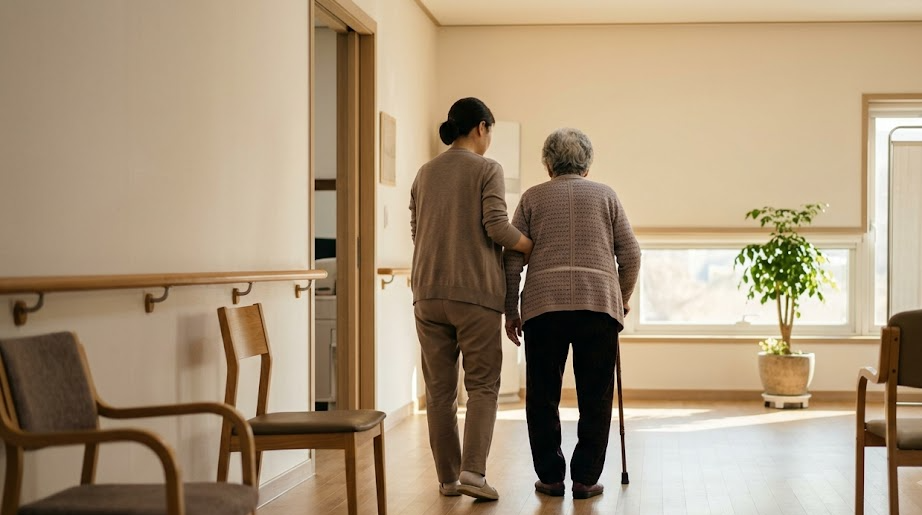
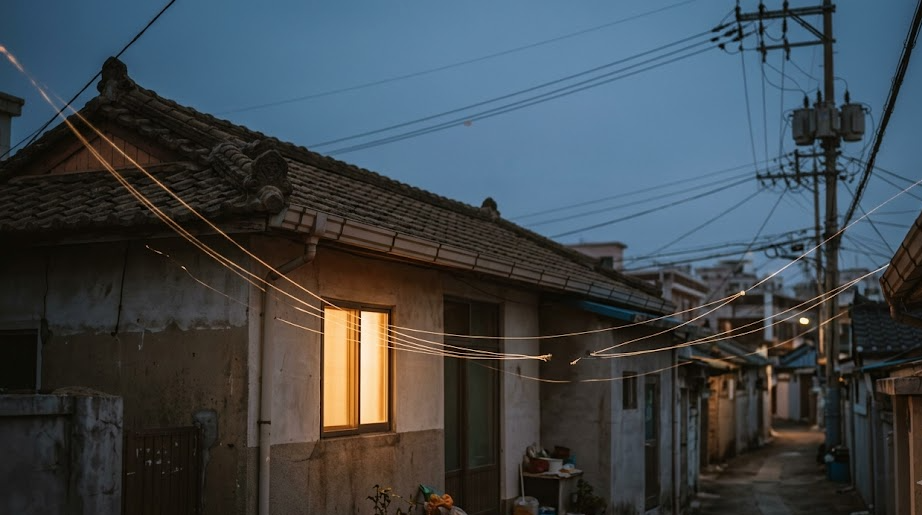
For the person receiving care, the boundary between medical care and welfare means nothing. What an older person who cannot get out of bed needs is for help with bathing, blood pressure management and medication sorting to arrive at once. Public health branch offices and primary health care posts are a framework designed under the 1980s special act on farming and fishing villages, and critics continue to say it does not hold the population and medical environment of 2026. There are also concerns that as the number of public health doctors assigned this year has fallen, the gap in primary care in medically underserved areas such as farming and fishing villages is deepening.
The staffing question starts from an old calculation. The welfare ministry's 2022 commissioned study concluded that more than 13,000 additional social welfare workers are needed in cities, counties and districts and in towns, townships and neighborhoods nationwide. The number now counted as dedicated integrated care staff is 5,394, combining 90 at metropolitan and provincial headquarters, 1,126 at city, county and district headquarters, and 4,178 at towns, townships, neighborhoods and public health centers. That figure includes people standing in for those on parental leave and officials who had been doing the work all along.
The government allocated a budget of 91.4 billion won ahead of the rollout and announced a plan to add 5,300 dedicated staff, but whether the figures above point to the same people has not been confirmed. Busan is running things as if officials it had already hired were filled through the increase in the standard labor cost allocation. How many cases involve only a new title with the same people will emerge only by looking into each local government's allocation.
The picture is relatively clear at the local governments that went ahead. Cheongju created a new integrated care team in its senior welfare division with three social welfare officials and one nursing official, and will spend 1.16 billion won this year on 14 of its own and new programs and 53 linked programs. It is also widening the eligible group from older people to people with disabilities under 65. Jincheon County, which took part in the 2019 pilot project, ties it to the Iwol-myeon urban regeneration project and runs supportive housing for older residents as one short-term recovery support unit and four long-term studio residences.
A system that does not reach people is the same as no system at all. Awareness is low enough that one in two people does not know about it. Doctors, pharmacists, nurses, medical technicians and the social welfare professions are each calling for a system centered on themselves and for their roles to be institutionalized, so the question of who takes on home visits and who coordinates care is also waiting to be settled. On March 11, lectures featuring Muraki Tadashi, chairman of Japan's Kyodo Fukushikai, will be held twice, in the morning and in the afternoon, in Nonhyeon-dong, Gangnam-gu, Seoul.
The Japanese corporation, founded in 1998, has 555 certified care workers, 157 nurses and 151 care managers among its roughly 1,250 employees. It means the makeup of the staff is the content of the care. Once the 27th passes, needs surveys and comprehensive assessments actually begin at the service counters of each city, county and district. If a family member has trouble getting around, asking the town, township or neighborhood office and the public health center at their registered address who the integrated care officer is becomes the first point of contact with the system.