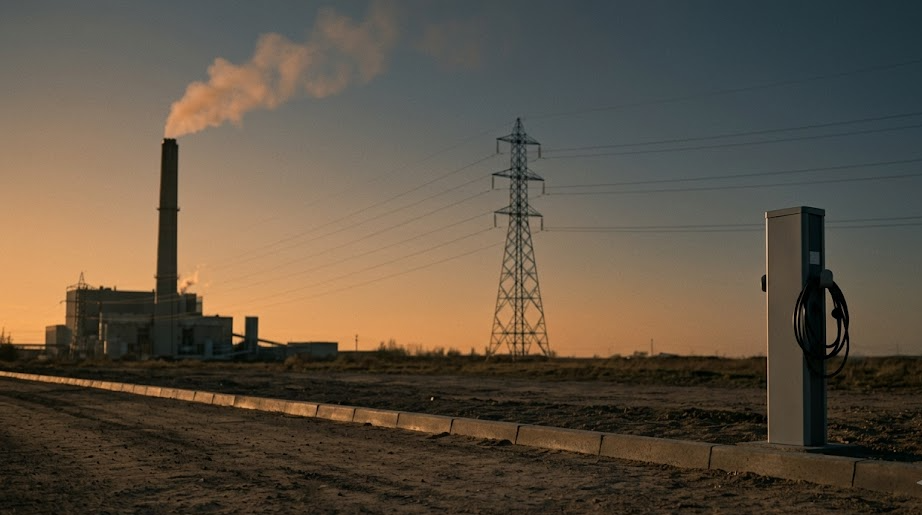
The domestic price of the right to emit one ton of carbon dioxide was around 40,000 won in 2019. That price has recently dropped into the 10,000-won range. The social cost of carbon estimated by academics is cited at around $190 per ton. As the detailed strategy for the government's Korean-style green transformation, known as K-GX, is being refined for release in June, how that gap will be narrowed has come to determine the persuasiveness of the entire strategy.
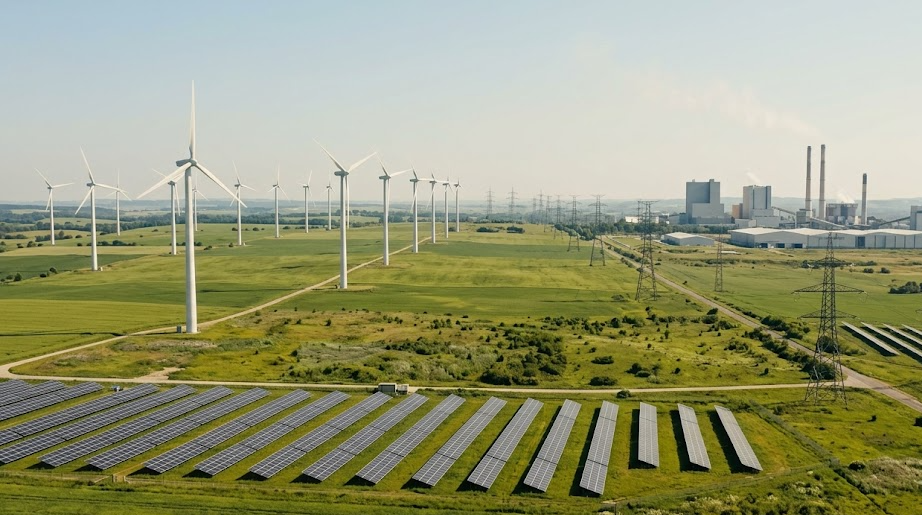
K-GX is a comprehensive strategy for actually carrying out the 2035 Nationally Determined Contribution and 2050 carbon neutrality. The 2035 reduction target was set last November, and K-GX is the work of translating it into year-by-year and sector-by-sector roadmaps and support measures. It covers energy, industry, transport and buildings, from expanding renewables and innovating the power grid to converting processes in key industries, distributing electric and hydrogen vehicles, and decarbonizing thermal energy. An explanation putting the announcement sometime in the first half of the year has also been given, so it is more accurate to view the detailed schedule as not yet fixed.
The Net Zero Intelligence International Forum, held on the 27th at the Korea Chamber of Commerce and Industry in Jung-gu, Seoul, was a venue for looking ahead at those design principles. At the event, hosted by the KAIST Graduate School of Green Growth and Sustainability, the state of GX efforts in Korea and Japan, stabilization of the Emissions Trading Scheme (ETS), building trust in the voluntary carbon market (VCM), and the financing and governance design of transition finance were addressed in turn. The theme was technology and market challenges for the great green transformation, and innovation.
Professor Eom Ji-yong of KAIST, who delivered the opening remarks, cautioned against a view that files K-GX only under climate policy. His point was that it should be seen as an industrial strategy and a project to redesign national competitiveness, and that evidence-based policy design must therefore follow. In global supply chains, RE100 and the European Union's Carbon Border Adjustment Mechanism (CBAM) are in fact making whether a product is low-carbon and whether clean energy was used into conditions for closing a deal.
Professor Joseph Aldy of the Harvard Kennedy School in the United States, who gave the keynote, named carbon pricing, the VCM and green industrial policy as the three axes driving the great green transformation. He assessed that Korea's ETS covers major sectors including power and industry, and further a substantial share of economy-wide emissions. As the biggest obstacle from an investor's standpoint, he pointed to the very range over which carbon prices rise and fall.
Professor Aldy's prescription leaned toward thinking of the overall cap and price management separately. Adjust the supply of permits, but do so predictably according to rules, and build devices such as a price floor into the system. Conversely, he noted that if the government's scope for discretionary intervention case by case widens, market trust erodes. Whether such price-related institutional changes will be included in K-GX can only be confirmed once the detailed plan is out.
Preparations on the government side are also under way. Kim Byung-hoon, deputy head of K-GX, laid out a plan to run regulation and support as one piece rather than separating them. The Green Transformation Policy Division of the Ministry of Climate, Energy and Environment (director Yeom Jung-seop) is preparing legislation to support abatement in high-emitting industries, while also being tasked with creating and operating a taxonomy that determines which economic activities are green and to what degree. Alongside these sit support for green and transition finance systems, support for companies preparing ESG and climate disclosures, and support for local governments building carbon-neutral cities.
The grammar of support is changing as well. A system is being prepared that varies the terms of financial support depending on whether an activity fits the green taxonomy, and that differentiates the scale of support at the R&D, production and purchasing stages according to abatement performance. The independence of the implementing organization, budget stability and market design are all cited as variables that will determine success or failure. It was also pointed out that the government must open up initial demand for private capital to follow.
The place companies can work on now is the taxonomy. Checking in advance which slot of the green taxonomy their equipment replacement and process improvement plans fall into can reduce the need to rewrite documents from scratch when the support terms are released in June. Over the roughly four years in which the permit price came down from 40,000 won to the 10,000-won range, the market has accumulated the lesson that those who put off abatement investment did not lose out. Whether rules capable of overturning that lesson can be made is what must be checked in the June document.