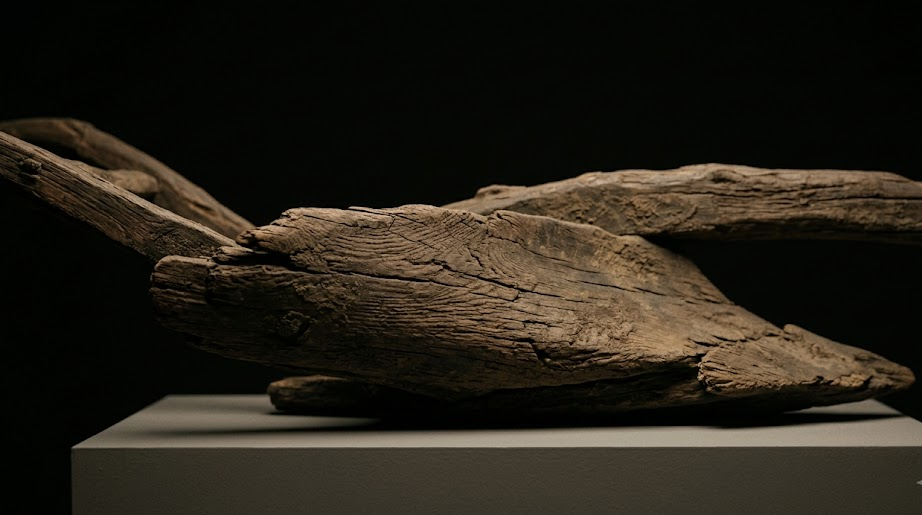
A piece of wood that had lain buried in soil has grown firm again after two years. The Cultural Heritage Conservation Science Center of the National Research Institute of Cultural Heritage announced on February 24 that it had completed conservation treatment on a Three Kingdoms-period plow recovered from the reservoir at Mongchontoseong in Seoul. In photographs released the same day, the plow had regained the outlines of its sole, share and handle. Radiocarbon dating placed its manufacture between 534 and 640.
The plow came up out of the ground in June 2023. The Mongchontoseong reservoir is a site the Seoul Baekje Museum has been excavating since 2022, and objects made of wood survive unusually well in layers where water had collected. Wet soil that air cannot reach holds timber in place instead of letting it rot. This plow was the third of four identified at the reservoir to come to light.
Surviving and being intact are two different things. Over more than a thousand years of burial, moisture and microorganisms had eaten away at the wood tissue, causing deterioration, shrinkage and distortion, and the strength of the material had dropped sharply. Standing that wood back up, wood that could crumble the moment it was lifted by hand, was the conservation science center's task. Treatment began in December 2023.
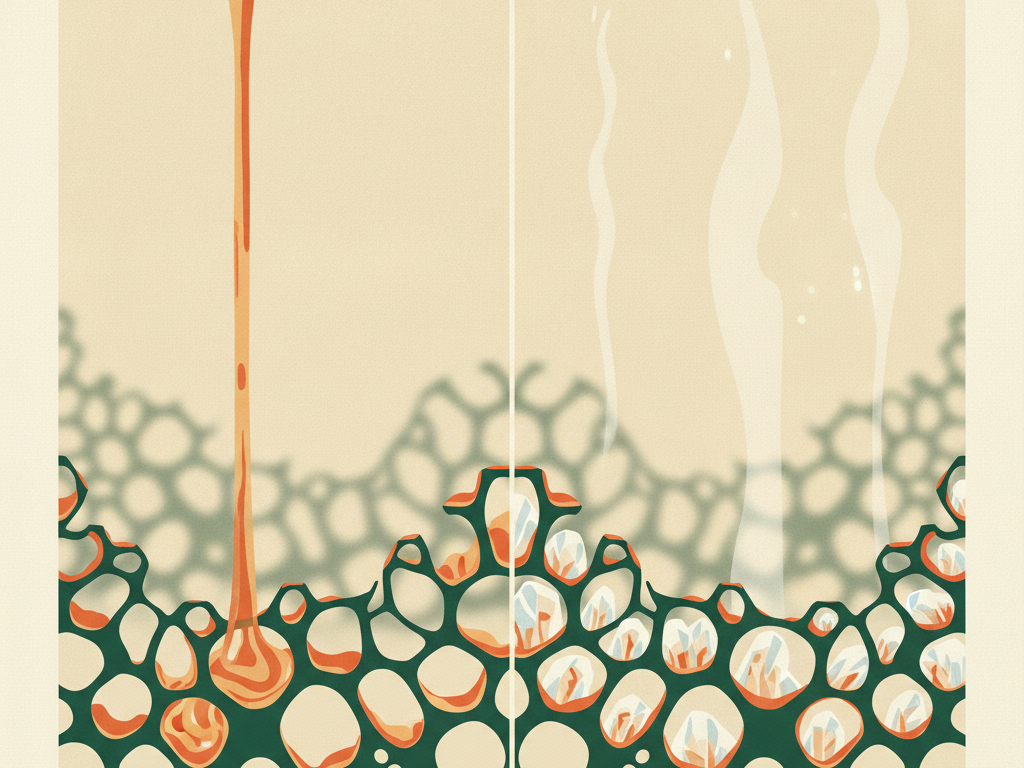
The core of the process is what goes into the emptied cells. Polyethylene glycol, a water-soluble resin, was allowed to permeate the wood to support the weakened tissue from within, and moisture was then drawn out by vacuum freeze-drying. Water leaving in liquid form pulls at the tissue through surface tension and warps it, so the method chosen was to evaporate it while frozen. The center also explained that the object was rapidly frozen at a low temperature of around minus 40 degrees Celsius before the moisture was removed under vacuum.
The recovered form carries information in itself. The material was oak, which has good physical strength, and traces of shaping with woodworking tools such as an adze and a knife were identified. It is presumed to be a lying-type plow, in which the sole rests parallel to the ground, a form said to have been used mainly in the northern part of the Korean Peninsula. Near the handle, organic material in the shape of a cord, apparently a line wound to keep the body parts from coming loose, was found along with it.
The dating also draws attention where it overlaps. Mongchontoseong is a site from Baekje's Hanseong capital period, but the years 534-640 coincide with a time when Goguryeo held the place for a while. The center explained that this result does not conflict with earlier excavation findings that dated the reservoir's construction and use to the Goguryeo occupation. That is also why wording differs over which state a plow found at a Baekje fortress should be attributed to, and over its period.
Not every part was reattached as it originally was. The share, which had shrunk and warped too severely for the actual pieces to be fitted together, was restored virtually through three-dimensional scanning. The fact that the part that cut through soil was the most damaged tells us in reverse what kind of work this tool did. The gap between a body that can be touched and a share that connects only on a screen shows exactly the limit conservation science can handle at present.
The treated artifact now returns to the institution that holds it. The Seoul Baekje Museum in Bangi-dong, Songpa-gu, Seoul, will take over the plow and use it for exhibition and research. The institute said it expects the plow to serve as baseline material for research in folklore studies and the history of agricultural technology. When visitors will be able to see the plow has not been decided.
Mongchontoseong is a site where excavation is still under way. Walking along the fortress wall, you can see the cross-section of soil dug down toward the reservoir, and somewhere below it lie three plows that have not been brought up. Some 1,500 years ago someone gripped the handle and tilled this ground, and the knot that wound a cord tight around the body parts outlasted the wood. The day of meeting that knot inside a museum display case is worth waiting for.