78 dollars per MWh. Last year the levelized cost of energy for standalone battery projects came down to this point. A year earlier it was 107 dollars, so 27% has been cut. Analysis followed that this was the result of falling cell prices, refined design, and fiercer competition in the industry.
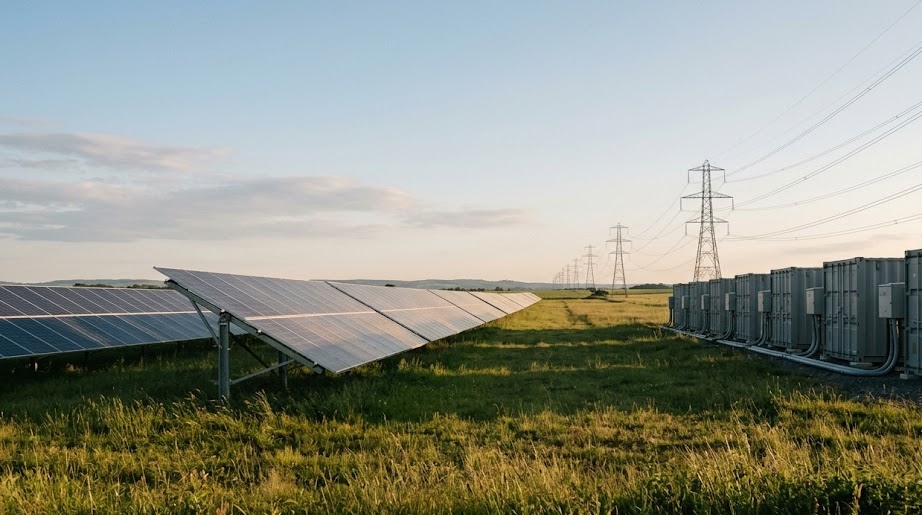
There is a separate reason this figure is drawing attention now. What has long been pointed to as renewable energy's weakness was the intermittency of "stopping when the sun goes down," and storage, the solution to it, was always expensive. If storage becomes cheap, renewable energy does not stay a single generation source and becomes a bundled product that can supply power 24 hours a day. The very way costs are counted changes.
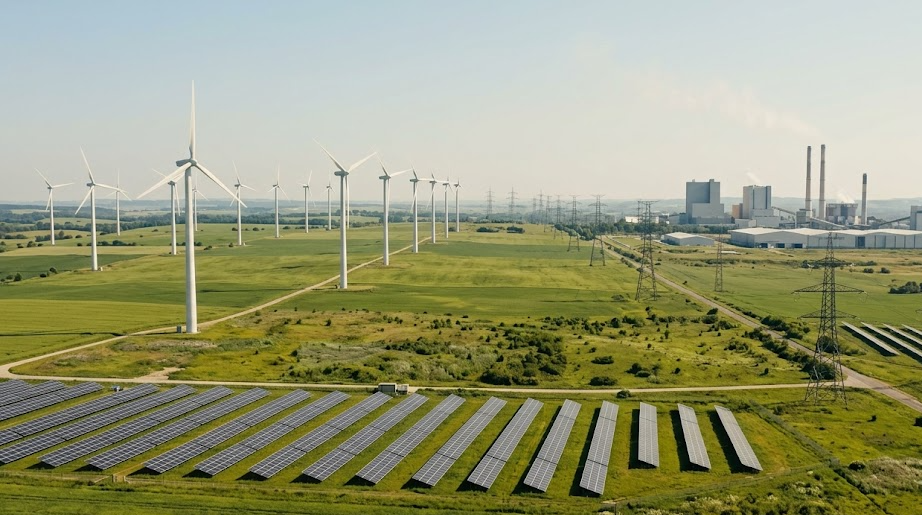
A combined model that adds storage costs on top of solar generation costs came out at up to 110 dollars per MWh. Domestic gas generation is around 90 dollars by international agency estimates, and climbs to 120 dollars when international gas prices jump. It means the two price ranges have entered a zone where they meet each other. Placed alongside a forecast that battery costs will fall further to 58 dollars by 2035, the gap tilts to one side.
Lowering prices is not done by technology alone. Looking at conditions in Korea, the average price of the power Korea Electric Power Corporation buys is in the 200-won range per kWh for solar and the 400-won range for offshore wind. Compared with the 66.4-won purchase price for nuclear, the difference is several times over. The point is that expanding capacity and lowering prices are separate tasks.
This is where movement has come on the institutional side. The Ministry of Climate, Energy and Environment and the National Assembly are pushing a legal amendment to remove the Renewable Portfolio Standard introduced in 2012 and to place capacity obligations on state-run generation companies and others. That system has required large generators of 500MW or more to fill a set share of their output with renewables.
Last month Rep. Kim Jung-ho of the Democratic Party of Korea introduced a repeal bill, and in February last year Rep. Kang Seung-kyoo of the People Power Party proposed a switch to a government-led bidding market. The ministry in charge has been examining alternatives since 2024.
The candidate raised to fill the gap left by the system is the contract for difference, CfD. The government sets a contract price through an auction and covers the difference when the market price falls below it. For developers, revenue becomes predictable, so financing costs come down, and room opens up to bid at lower prices by that much.
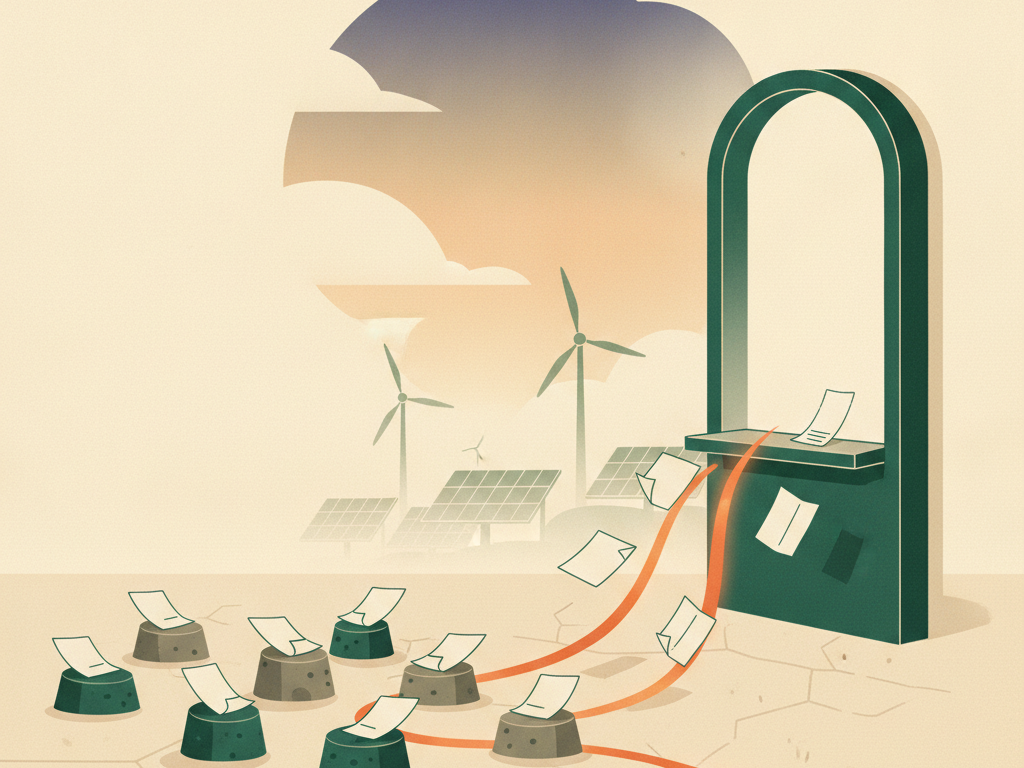
Renewable Energy Certificates are expected to be pushed out of the market over time. The scope of application and the timing of implementation have not been announced.
The target is public. Kim Sung-hwan, Minister of Climate, Energy and Environment, said he would make this year the first year in which results from the great energy transition appear, and that within his term he would achieve 100GW of renewable energy and a generation price of 100 won per kWh. The 2030 capacity target set by the government is the same 100GW. The 100 won figure is understood to be about half the current renewable energy price.
The distance is long. Cumulative capacity in Korea is about 34GW. This target sits 22GW above what the 11th Basic Plan for Long-Term Electricity Supply and Demand set, and reaching it comes with a calculation that more than 13.2GW must be newly built every year.
Harder than building is grid connection. Putting up a single transmission line takes nine years on average.
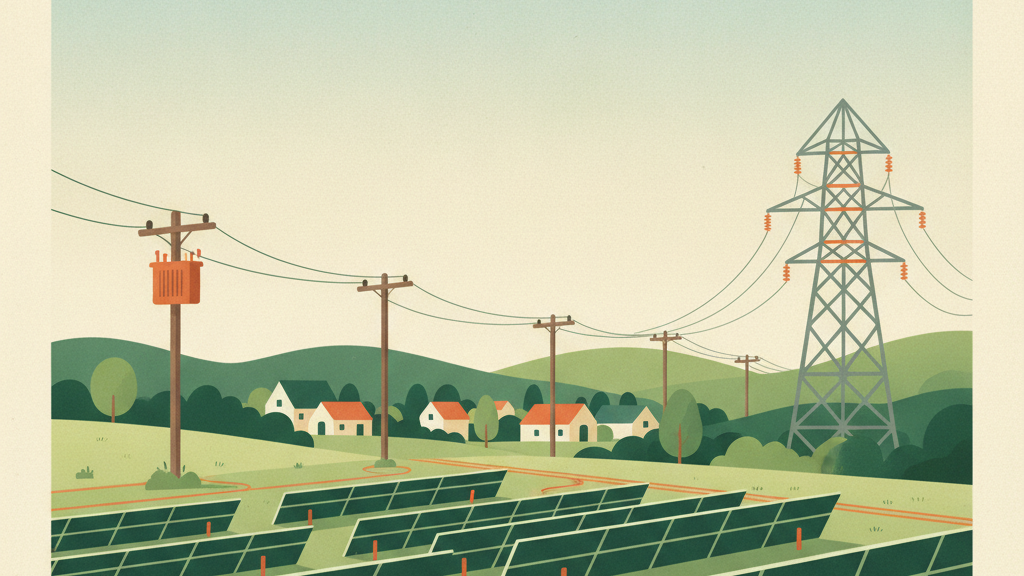
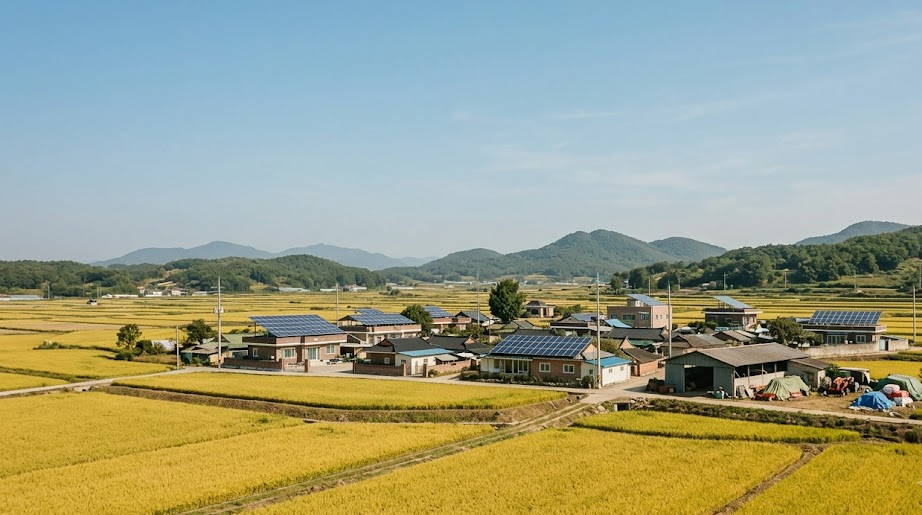
So what the government brought out along with it is an expansion of the distributed power system and construction of high-voltage direct current transmission on the west coast. The idea is to reduce the imbalance that arises when surplus electricity in Honam cannot be sent to Yeongnam. A plan to create 500 sunlight income villages a year for five years, returning generation revenue to village residents as dividends, is also placed in this flow. Reducing the reasons residents have to object is, in the end, also a matter of lowering costs.
A phase in which technology and institutions head toward the same place at their own pace does not come often. Battery prices keep coming down, and auction design is on the discussion table. The variables left are the grid and public acceptance, the domain of concrete and people.
If you next see a notice for a briefing on a solar project coming to your neighborhood, it is worth dropping by and taking a seat. The price of 100-won electricity gets shaved down bit by bit in meeting halls like that.