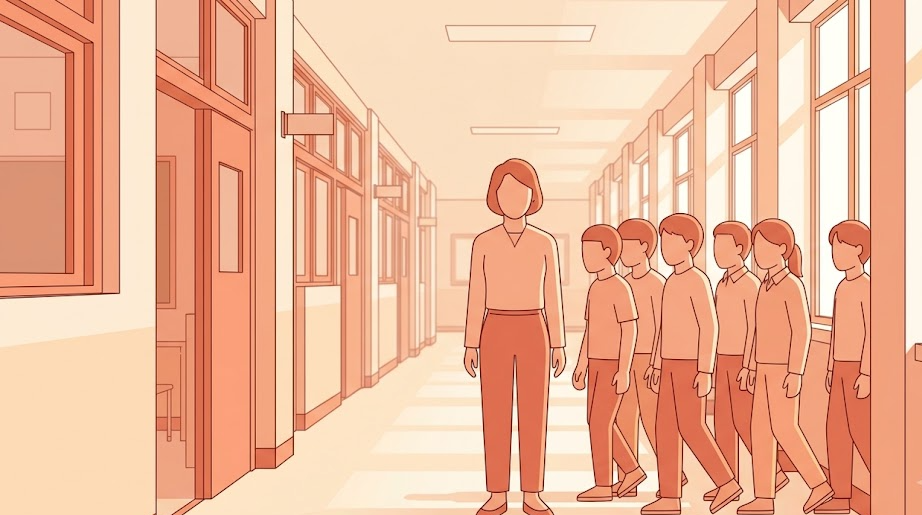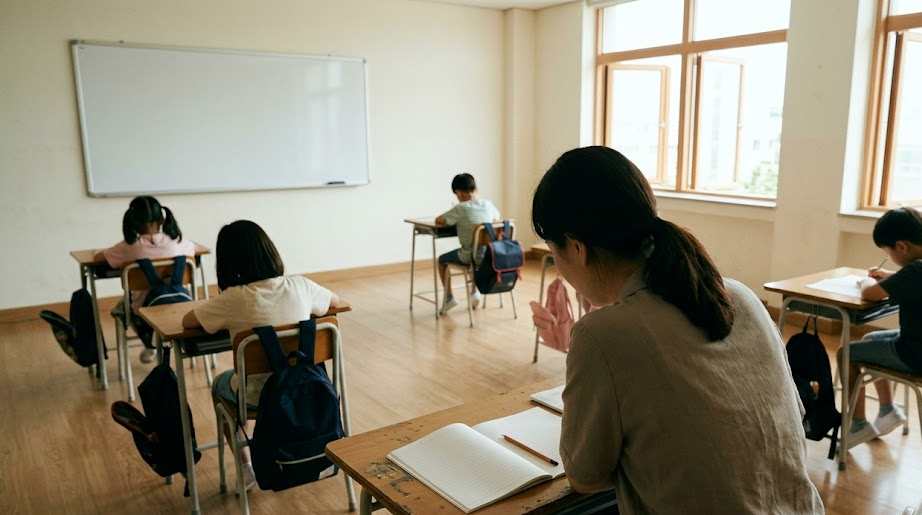
The Student-Tailored Integrated Support Act, enacted in January last year, takes effect next month. It is a system for working out together, at an early stage, the difficulties students face, from a lack of basic academic skills to economic hardship, psychological and emotional problems, school violence and child abuse. Until now such work has mostly been the job of a single homeroom teacher. From next month, when the new school year begins, schools, education offices and local agencies will share the work.
The Ministry of Education announced the 2026 Plan for Building a Student-Tailored Integrated Support System on the 12th of this month. The plan sets out clearly who is responsible for what. Once the students to be supported have been identified, the principal oversees the actual support process, and the vice principal handles coordination between departments and the staff in charge. The people taking part inside the school have also widened beyond homeroom teachers and program-specific staff to those in charge of learning, welfare, health, careers and counseling.
Why this change was needed is recorded in the previous three years. From 2023 through last year the ministry designated 436 pilot schools and ran the system in advance. In the course of that, cases became known of a teacher who saw to breakfast for a student going without meals and a teacher who looked into repairs for the bathroom at a student's home. The ministry explained that these came about because the teachers in charge asked the local community for help themselves.
In the same pilot the ministry also identified another problem. There were cases in which teachers felt an excessive workload because principals and vice principals paid too little attention. The breakfast and the bathroom are easily consumed as heartwarming stories, but behind them was a teacher who had to find somewhere to ask for help on her own. The reason for writing the principal's oversight and the vice principal's coordination into the rules came out of such experiences.
Outside the school, the points of contact are brought together into one. Requests for support for students carrying several difficulties at once will be channeled into the Student-Tailored Integrated Support Centers set up inside education (support) offices. The ministry plans to set up these centers at 17 metropolitan and provincial offices of education and 176 district offices of education nationwide within this month. Within this year, 241 local public officials will be additionally assigned to the centers.
The centers connect matters that schools find hard to resolve on their own to local agencies. Mental health welfare centers, youth counseling and welfare centers, specialized child protection agencies and hospitals and clinics are named as partners. The budget allocated to student-tailored integrated support is 26.1 billion won. An operating guidebook will be distributed this month, a Central Student-Tailored Integrated Support Center will be separately designated, and a policy advisory group including school teachers, experts and parents will also be formed.
What remains at issue is whether this design will work as it stands in classrooms in March. With the setting up of the centers and the distribution of the guidebook scheduled to be finished within this month, schools do not have long to learn the new procedures. How the staff will be divided among the agencies has also yet to be decided. The success or failure of the system turns on the moment when a teacher who has spotted a student in crisis does not hesitate over where to call.
In the first week of March, new homeroom teachers will call out students' names in classrooms across the country. Some of them will be sitting there with circumstances they could not tell anyone about until last year. What changes is that a teacher who notices those circumstances no longer has to search alone for a solution. The places where parents and students can ask for help are no longer only inside the school walls.