On September 10, officials from the Gyeongsangbuk-do Office of Education visited the National Assembly. What they carried was their opposition to the restructuring of the local education finance grant (지방교육재정교부금). The Gyeongbuk superintendent of education said that a decline in student numbers does not mean that demand for education funding falls by the same amount, and that the education conditions and school operating situations that differ by region have to be looked at together. During the visit, a meeting was held with Rep. Suh Beom-soo of the National Assembly's Education Committee.
The grant is money that takes a set share of national internal taxes and sends it down to the metropolitan and provincial offices of education. Everything from classroom heating bills to teacher training and wages for school meal cooks comes out of this money. Discussion that this share should be adjusted as the school-age population falls rapidly has been under way, and the stage for dealing with whether to restructure it has moved to the National Assembly.
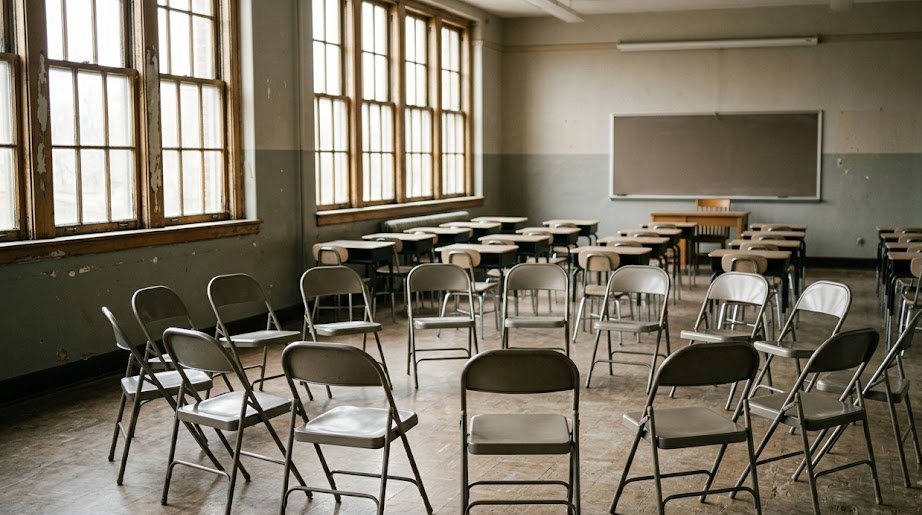
Schools counter that even if students are halved, schools are not halved.
The Gyeongbuk Office of Education asked that newly growing spending items be included in the grant calculation. The expansion of AI and digital education is one of them. Repairing aging school facilities and the share going to education welfare were also named. Costs that can be cut in proportion to student numbers and costs that cannot are divided, it said.
A similar voice came from the south a day later. Choi Jung-hoon, chair of the Gwangju Metropolitan Council's Education Committee, opposed cutting education finance on the grounds that the school-age population has declined. He then presented as standards the qualitative transformation of education, responses to the risk of regional extinction, the closing of education gaps, and the cultivation of future-oriented talent.
It comes closer to a proposal to stop tying the size of the budget to the number of students and to design it again from what education has to accomplish. How the redesign would be done, and at what scale, was not spelled out.

There is a point of disagreement over how many classes are appropriate as well. A point was raised on September 11 that if the standards of a study commissioned by the National Education Commission are applied as they are, the number of classes at schools nationwide falls about 40,000 short of the appropriate size. Which school levels this figure of 40,000 was calculated for, and which year was taken as the basis, were not announced with it. So it is early to draw a conclusion from this one figure.
The National Education Commission said it sees its own job as setting the broad lines of mid- to long-term education policy, and that calculating appropriate class sizes is the job of the Ministry of Education and the metropolitan and provincial offices of education. With no clear body to decide how many students should sit in one classroom, the discussion has begun with how much to cut the money that keeps those classes running.
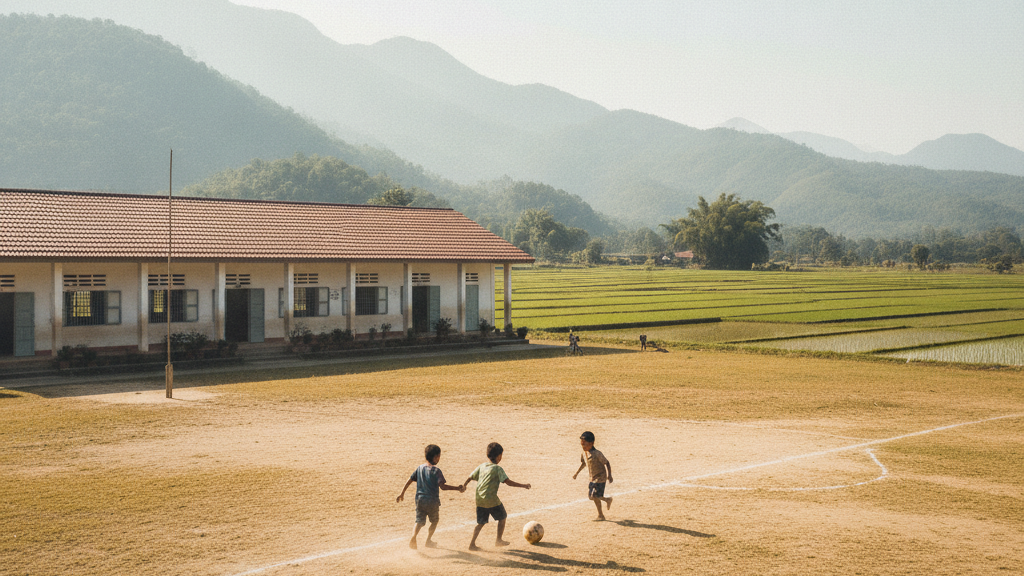
When one classroom disappears, a child's trip to school grows longer. In farming, mountain and fishing villages, more so. This circumstance also lies behind the Gyeongbuk superintendent's call to look at conditions by region.
The voices heard so far are gathered on one side. The side pushing the restructuring has not put forward its reasoning together with the evidence to support it. Whether the remarks from Gyeongbuk and Gwangju are matters for those two regions alone, or part of a movement in which several offices of education are acting together, also has to be watched further.
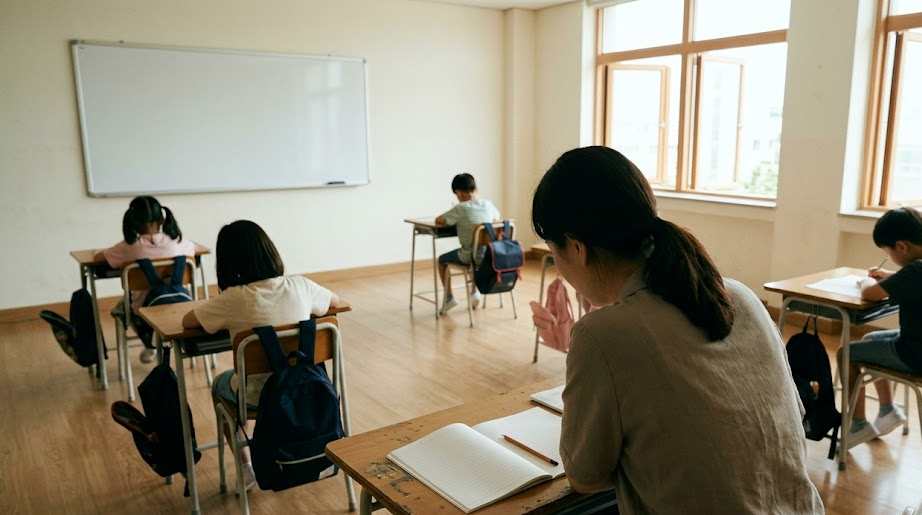
The words spoken in Gyeongbuk and Gwangju on September 10 and 11 are a demand to write down first what will be guaranteed to the children still in classrooms, before deciding how much the grant should be.