From April 14 to May 13, students across the country answered the same survey held online for one month. The questions asked what they had experienced and what they had seen at school. The collected results were released on September 10 through the Ministry of Education and the metropolitan and provincial offices of education. The share of students who answered that they had been victimized was 2.9%, about three out of every 100, recorded as the highest figure on record.
The survey was jointly commissioned by the superintendents of 16 metropolitan and provincial offices of education, and the National Youth Policy Institute and the Korea Education and Research Information Service took charge of running it. Because it was a full-count survey of elementary, middle and high school students, only the answers students themselves marked on the screen accumulated, with no room for observations by teachers or parents.
The 2.9% is the figure that came out of this process.
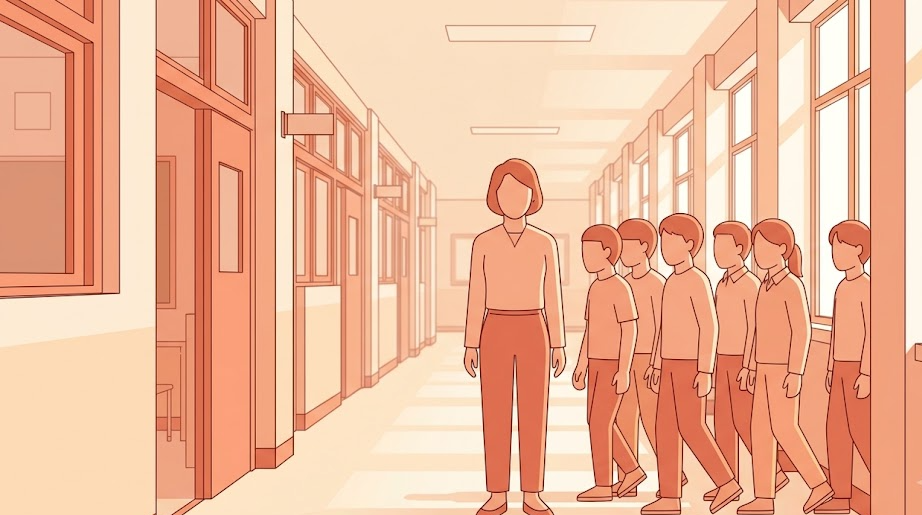
Moving the ratio of three out of 100 to the classroom level gives roughly one student per class. There were several such children in each grade, and other children sharing the same hallway saw it from beside them. How many of the children who experienced it and who saw it passed the fact on to an adult does not appear in this survey.
When the victimization rate rises, the handle policy grabs is generally prevention education. How many hours were held in a semester and what percentage completed it becomes the school's report card. But what the Ministry of Education said in this announcement had a different tone from filling in that column.
Shim Min-cheol, director general of the Student Health and Safety Policy Bureau, said effective prevention education is needed. Going out of the way to say effective comes close to an admission that the timetable built up so far has not been enough in itself.

The remarks by Kim Sung-hoe, head of the School Violence Countermeasures Division, pointed to the gap between the statistics and the classroom. The point was that there are matters not clearly captured in figures but confirmed at regional on-site meetings. It amounted to the government side itself bringing up the idea that there are areas the questionnaire misses.
Answers saying that students cannot easily speak up even after being victimized or witnessing something were also included in this survey. The 2.9% is the share of children who could at least mark it on an anonymous survey screen, and the number of children left outside that screen does not enter any column.
The Incheon Metropolitan Office of Education made 565 schools in its jurisdiction the subject of this survey. Once the results came out, it said it would put a school support network and a dedicated center into operation. This means that matters previously handled only inside the school will also be taken up by outside personnel. It is a part where the situation of a single homeroom teacher caught between the perpetrator and the victim could change.
The prevention education completion rate shows what the school did. Whom a child told about what happened, and what changed after telling, is not written in that table. To confirm the effectiveness the Ministry of Education spoke of, records of the routes words traveled must accumulate with the same weight beside the total of education hours. As long as the two ledgers run separately, wherever the response rate goes up or down, the place for schools to act will stay blurred.
The effectiveness Director General Shim Min-cheol spoke of and the meetings Division Head Kim Sung-hoe spoke of converge on how far a child's words reach once the child opens their mouth. Which of those channels the dedicated center Incheon is opening actually widens will show in the schools this second semester.