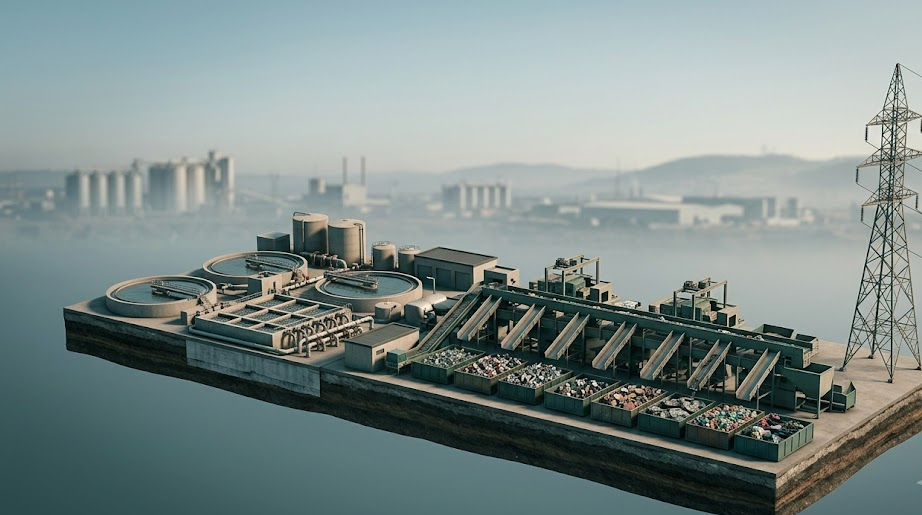
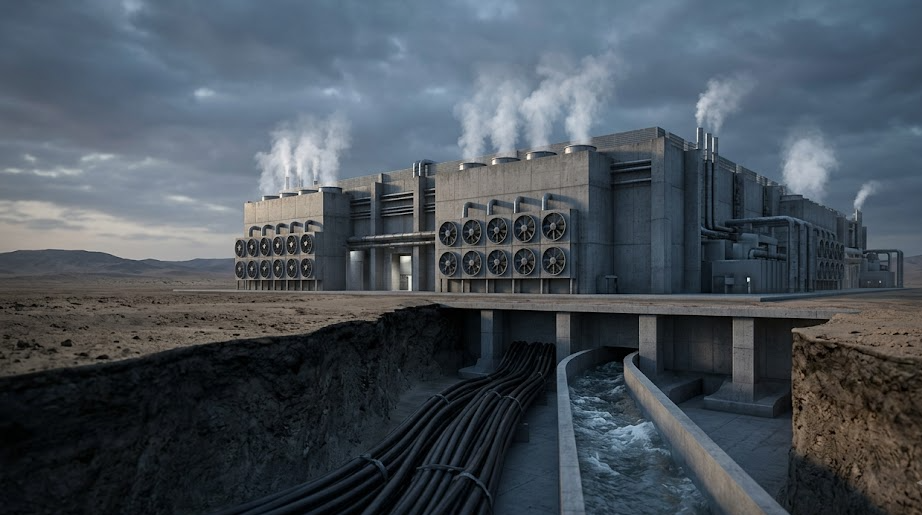
Building an AI data center no longer ends with the question of electricity. Rep. Kim Jang-kyum (People Power Party) of the National Assembly's Science, ICT, Broadcasting and Communications Committee introduced a partial amendment to the Special Act on the Promotion of Distributed Energy on the 4th. The core of the bill is to create an "artificial intelligence data center electricity supply business" in distributed energy special zones outside the capital region, and not to apply the small capacity limits on distributed energy to this business. During the same week, at home and abroad, the argument was raised that the water data centers use for cooling could become the next bottleneck.
The distributed energy system is, as the name suggests, designed to place small generation facilities in many locations and have the power used in those areas. The problem is the size of AI data centers. It has long been pointed out that facilities requiring hundreds of megawatts of uninterrupted power 24 hours a day are hard to fit into a framework built on the premise of small-scale generation and local consumption. That is why the amendment seeks to open large-volume direct transactions between data centers and power generators, limited to areas outside the capital region.
Behind this lies the saturation of the capital region's power grid. As transmission network constraints made it harder to place new facilities in the capital region, areas outside it emerged as candidate sites, but the path to buying and selling electricity directly with generators remained blocked. Even when a facility was built next to where the electricity is produced, that electricity could not be purchased directly, and the mismatch stayed in place. The amendment is closer to an attempt to resolve that mismatch through the system.
Water has been added as a second variable. The water used by generative AI is divided into the amount that goes directly into cooling servers and the amount consumed at power plants to produce that electricity. Some estimates put the figure at 7.6-29.9 mL per chatbot query, a value that includes indirect use. As the nearly fourfold gap in the estimates shows, the variation between studies is large, and no official tally of actual usage at domestic facilities has been prepared.
Long-term projections are more specific. An MSCI report found that by 2050, about a quarter of existing data centers and about a third of newly built ones could face water scarcity. Water scarcity here means a state in which local water demand exceeds supply by more than 60 percent. There is also an observation that water consumption by data centers in Asia could reach 1.7 trillion liters a year by 2030.
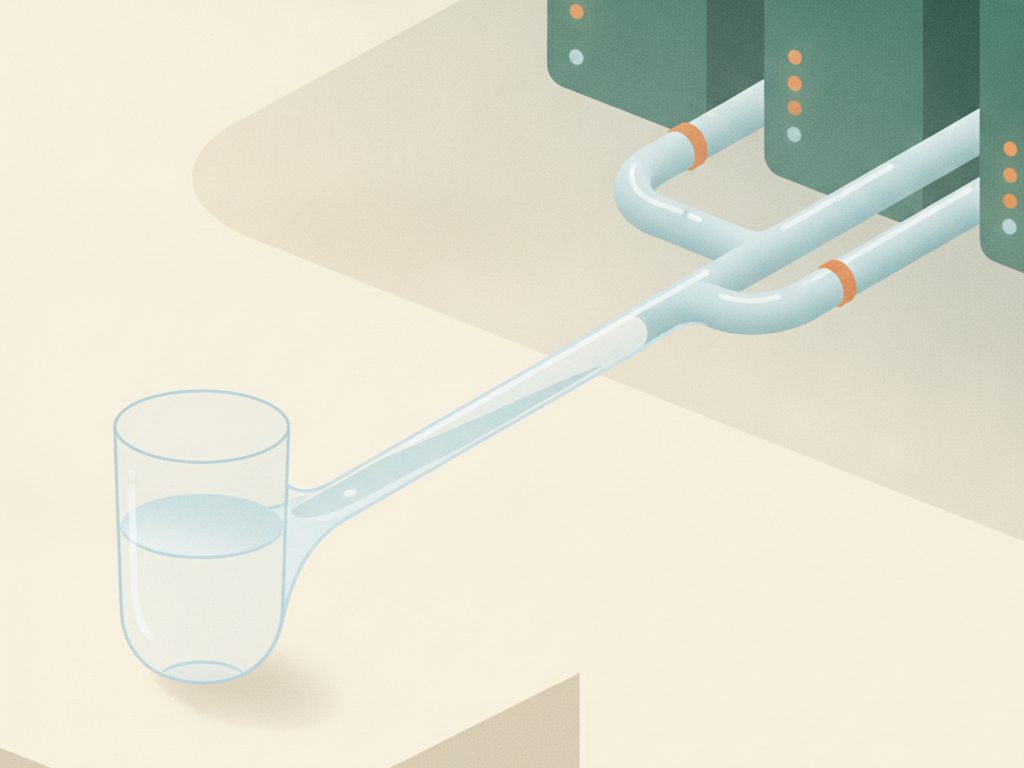
It has also begun to show up in business decisions. Amazon and Google reexamined some projects for reasons including water conditions, and Meta ran into resident opposition over water use at a data center. When it was pointed out that Microsoft's water use could rise over the long term, the company said it would cut usage through technological improvements. The World Meteorological Organization also noted the possibility that more people will live under prolonged water scarcity.
On the power side, response technologies are gradually taking shape. The 2026 Korea Smart Grid Expo, held at COEX in Seoul from the 4th to the 6th of this month and hosted by the Ministry of Climate, Energy and Environment, drew more than 350 companies from around the world. In virtual power plants, which bundle scattered small generation facilities and run them as one, KEPCO KDN's "E:Moeum" recorded an error rate of 2.34 percent in a Korea Power Exchange test, and the same company's hydrogen city platform is being applied in Boryeong and Dangjin. Progress is visible in technology that finely matches power supply and demand, but on measuring and reducing water use, not even comparable indicators have been prepared.
No date has been set for the standing committee to review the amendment. Once review begins, the power market price system and the fairness of grid usage fees when large-volume direct transactions are allowed are likely to come to the table together. And if that discussion stops at electricity, the scene of a facility going up outside the capital region and then, a few years later, fighting with the local community over water intake could repeat.
For users, there is no way to sense how much water a single exchange with a chatbot took. That cost is billed to the rivers and water supply of the region where the servers stand, and the side receiving the bill is that neighborhood. For the days of cheap AI use to continue, who pays what share of the electricity and water bill that supports those days has to be decided now.