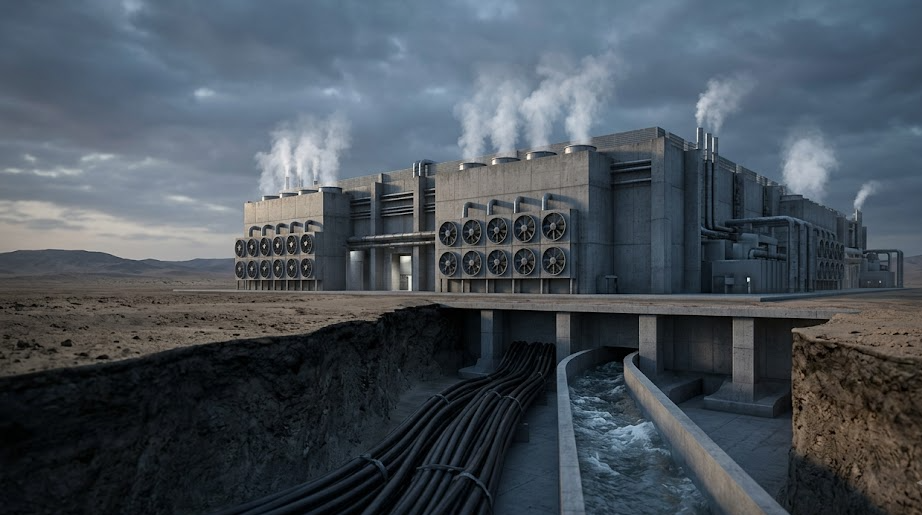
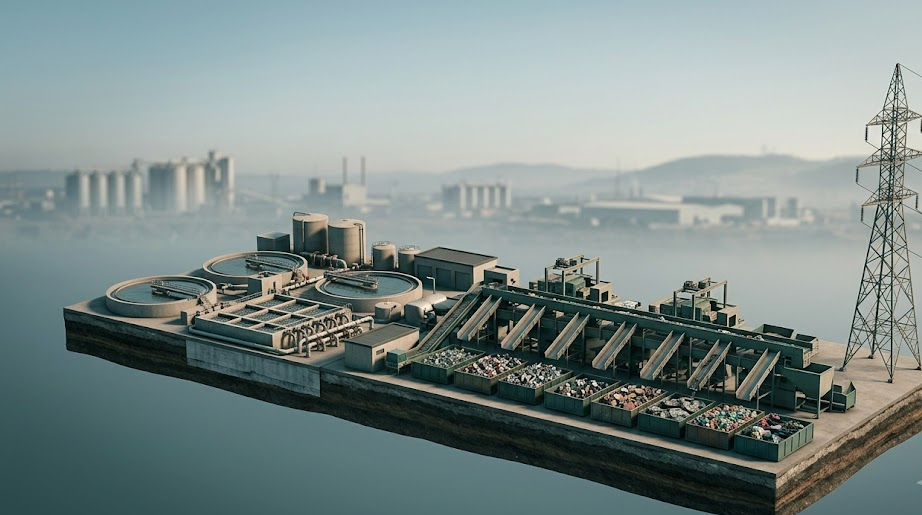
The Ministry of Climate, Energy and Environment and the Korea Environmental Industry and Technology Institute opened the call for the "2026 Rapid Commercialization Support Program for AI Application Products (Environment)" on March 19. Applications are accepted through April 20. Seventeen projects will be selected across five areas, carbon neutrality, water management, resource circulation, environmental safety, and weather and climate, with about 41 billion won in support. It is the environmental share of a government-wide AI transformation program run jointly by 11 ministries.
The government-wide plan totals 754 billion won for 2026-2027, covering 246 AI products and services. AX refers to the transformation of pushing AI into how companies work and into their products. Unlike the method of adding on research and development funds, the key word for this program is "launch."
The projects are divided into two tracks. Type 1 covers projects that attach AI to products with an existing prototype and commercialize them within one year, with 10 projects and about 20 billion won. Type 2 covers projects with large ripple effects but remaining work to be done, refined over two years, with 7 projects and about 21 billion won. The private sector bears 30 percent or more of the total project cost.
The support items do not stop at AI model development. Demonstration and mass production system building, certification and intellectual property acquisition, and consulting are attached in the order companies say they need them. After selection come opportunities to attract investment through green investor relations sessions and participation in domestic and international exhibitions, while future environmental industry development loans, green policy finance, and green transition guarantees support the funding side. Designation as an innovative product for public procurement and links to regulatory special exemptions are also under review.
Where the government sees the bottleneck emerges here. It does not see climate technology as stalled because model performance falls short. It has put its budget on the side that certification, mass production, and the first customer, which lie between prototype and revenue, are the real barrier.
Moves on the industry side followed in the same period. The Korea Climate Tech Association (tentative name), bringing together 46 climate tech companies and investment firms, filed an application in February to establish an incorporated association as it prepares to launch, with Superbin, Sixty Hertz, Nara Space, Softberry, and n.thing listed as founding directors. Twenty-two companies including Eighttech and Ecube Labs took part in the launch of the Green Tech Alliance led by Reco. In January, 26 startups and investment firms launched the Climate Tech Industry Council, and its first chairman is Kim Jong-kyu, CEO of Sixty Hertz, which runs an AI-based virtual power plant.
A virtual power plant is a method of bundling scattered solar, wind, and battery resources and controlling them like a single power plant. It holds together only when weather forecasting and demand forecasting line up, so computation becomes a component as important as the equipment. The chemical dosing volume in water treatment processes and the speed at which a recycling sorter picks out items have the same character.
Ahn Se-chang, head of the Planning and Coordination Office at the Ministry of Climate, Energy and Environment, explained the purpose of the program, and the program briefing will be held on March 25 at the Korea Environmental Industry and Technology Institute headquarters. How many of the 17 projects fall to each of the five areas will be sorted out at a stage after the announcement. If the selected products actually sell a year later, the night shift rosters of waterworks plant operators and the container replacement cycles at apartment recycling stations will quietly change. The success or failure of climate technology will show up fastest in such minor schedules.