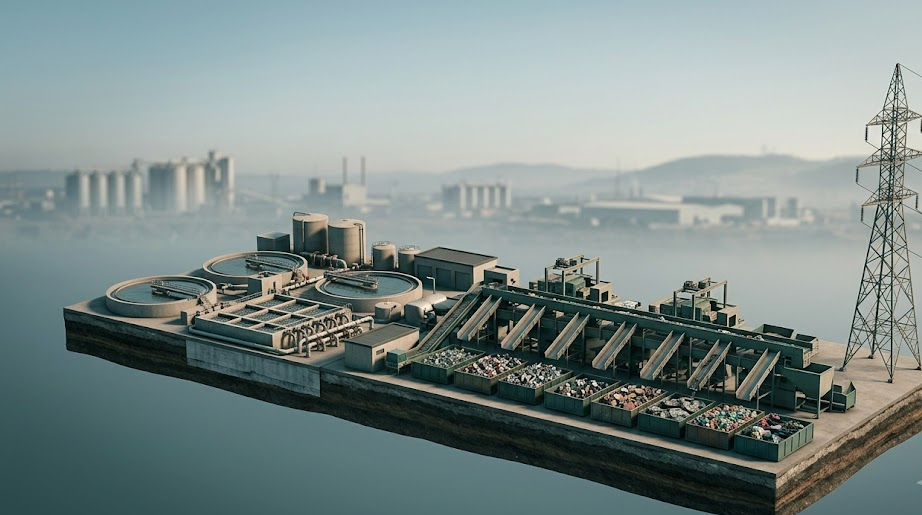

The Seoul Metropolitan Government will hold the 2026 Seoul Climate Tech Conference for two days from the 25th at the Dongdaemun Design Plaza. This year's theme is "Climate Tech Building Resilient Cities with AI." At the exhibition hall of this fourth edition of the event, 29 startups and small and medium-sized enterprises and three related institutions will set up booths. Technologies that cut carbon, technologies that prepare for disasters, and technologies that return resources will gather in one exhibition hall.
The exhibition list shows fairly concrete ways in which AI attaches itself to climate problems. There are technologies that manage energy use in buildings and facilities, technologies that observe where and how much greenhouse gas is emitted, and simulations that model natural disasters such as floods and heat waves in advance. A business model that puts AI on top of circular infrastructure for reusing waste plastic is also on display. Mixed in are ideas that do not particularly require large-scale computation, such as services for circulating unused household goods.
On the 25th, a talk concert and panel talks will be held on founding AI companies in the climate tech field, and on the 26th, success stories from the city's climate tech development program and its innovative technology demonstration support program will be shared. Eleven teams have advanced to the finals of the startup competition. Total prize money is 20 million won, including 10 million won for the grand prize.
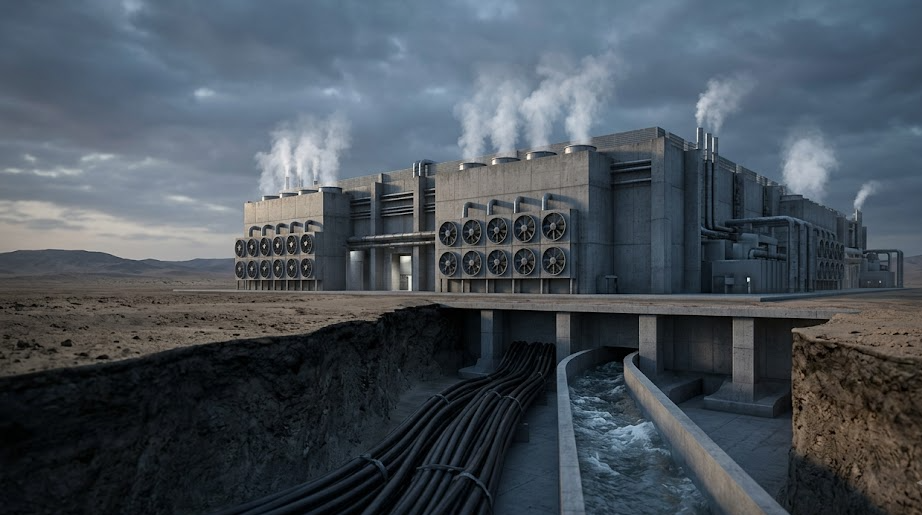
But the plan to handle the climate with AI comes with the burden of resource consumption. GPU servers used for AI computation consume far more electricity in the same space and give off heat accordingly. The method now widely used to cool this heat is circulating water. The hotter the servers get, the more water data centers draw.
There is a case that gives a sense of the scale. In Google's 2023 environmental report, the company's total water use was tallied at about 6.4 billion gallons, most of it going to data center cooling. One Google data center in the U.S. state of Iowa is estimated to use about 1 billion gallons a year.
After expanding its AI data centers, Microsoft faced growing problems with cooling water and is broadening closed-loop cooling that contains and recirculates water, along with recycling technology. The United Nations has also begun raising the issue publicly, saying that the expansion of AI infrastructure could draw on water, electricity and land on a large scale.
The nature of the figures calls for caution. The total volume of water withdrawn differs from the volume that evaporates and disappears, and which of the two the gallon figures above refer to requires opening the reports to determine.
The city projected that this event can cut 1.4 tons of carbon through a paperless opening ceremony, reused booth materials and a ban on disposable cups. That is the reduction from running two days of the event. Which data center's electricity and cooling water the AI demonstrations running in the exhibition hall use is not part of this calculation.
Seoul became the first local government to launch this event in 2023, and in January 2025 it established the Seoul Climate Tech Industry Support Center, which runs four strategies and 15 support programs under a commission to the National Institute of Green Technology. Kwon Min, head of the Climate and Environment Headquarters, expressed his intention to support the growth of climate tech companies in connection with this event.
Admission is free for any citizen interested in the environment. Participatory programs such as VR job experiences, a future food market, recycled paper card making and a zero-energy building block puzzle will also run for the two days. What can be checked at the booths is how much this technology reduces emissions, and how much electricity and water it takes to run this technology.