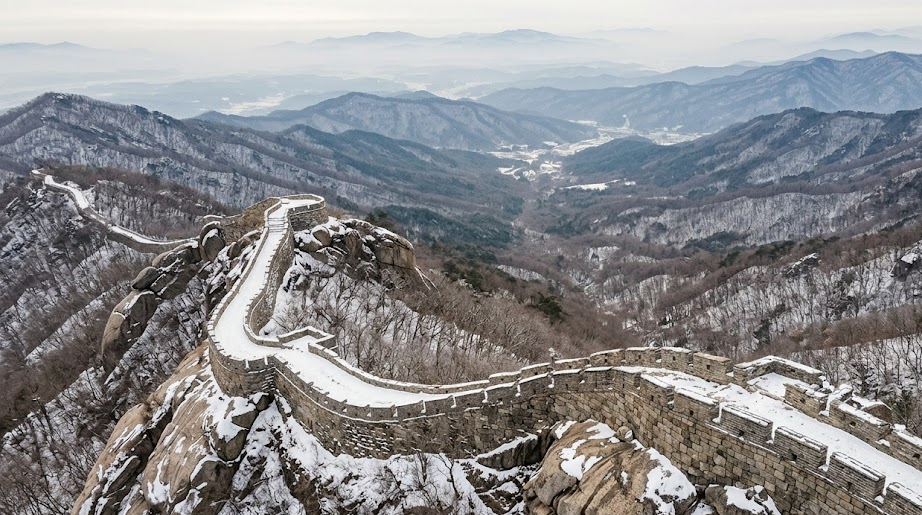
The UNESCO World Heritage nomination dossier for the "Capital Fortifications of Hanyang," which brings together Hanyangdoseong, Bukhansanseong and Tangchundaeseong that lies between the two, was submitted to the UNESCO World Heritage Centre on January 27. The document was filed jointly by the city of Goyang, the Korea Heritage Service, the Seoul Metropolitan Government and Gyeonggi Province. After passing the World Heritage Centre's completeness check, the dossier moves into the hands of the International Council on Monuments and Sites (ICOMOS). The evaluation begins in March.
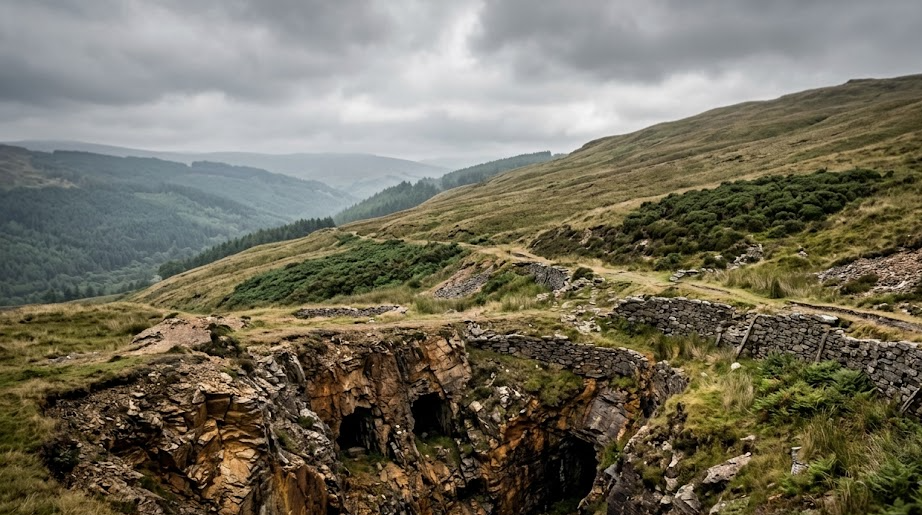
Put a hand on the wall of Bukhansanseong in winter and the granite is cold enough to redden the fingertips. The grayish white stone is discolored a dark blue-green wherever moss has settled, and the wind passing between the wall stones sounds low and long from the valley side. This fortress does not ride the ridgeline alone.
It was built in the pogoksik style, wrapping around the mountain ridge while taking the valley inside. Places with water have to be put inside the walls for people to hold out for a long time.
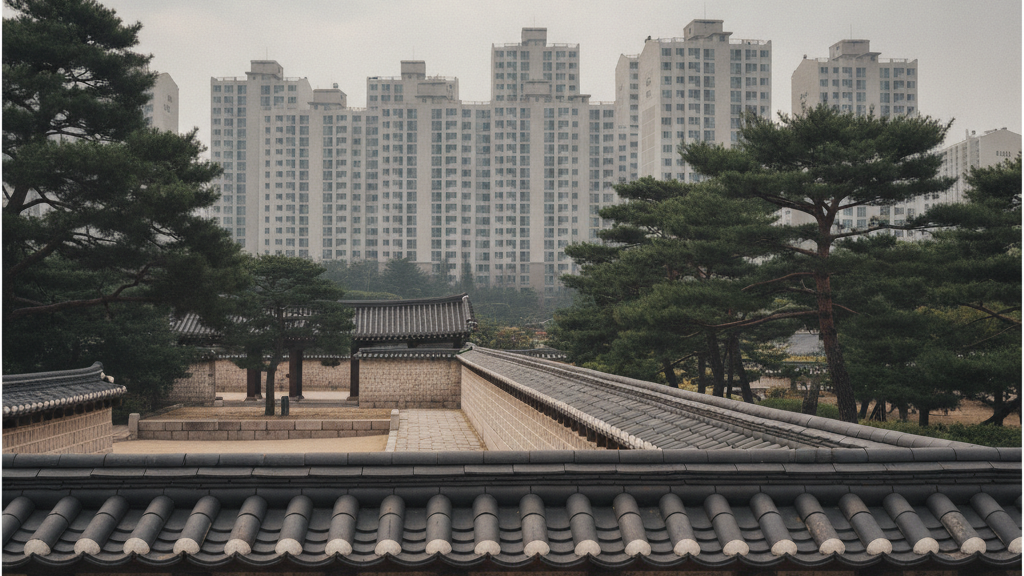
The names attached to the three fortresses are each different. Hanyangdoseong is a city wall that enclosed the king and the city, and Bukhansanseong is an ipboseong, a refuge fortress the king and the people entered and held out in during an emergency. Tangchundaeseong served between them to make the two fortresses one body. The explanation given is that it guarded storage facilities and was a passage that handled evacuation and prolonged warfare.
Behind this bundling lies a long accumulation of failure. Seoul pushed a standalone listing for Hanyangdoseong from 2008 and Goyang did the same for Bukhansanseong from 2011, but neither achieved it. Then in 2021, a strategy of reading the two fortresses as the whole of a capital defense system was set, and Tangchundaeseong came into it. Tangchundaeseong became a state-designated Historic Site in 2024.
The comparison is always Namhansanseong. Namhansanseong began preparations in 2002 and was listed in 2014, and it was assessed as a mountain fortress and a fortified city in which the defensive military engineering of the 17th century Far East was gathered together. Twelve years on, another Joseon mountain fortress knocks on the same door. Whether it can explain how it differs from the value recognized in Namhansanseong will decide the success or failure of this nomination.
The schedule is tight. The ICOMOS evaluation begins in March, and the on-site inspection is scheduled for the second half of the year. The final conclusion comes at the 49th session of the World Heritage Committee in 2027. Until then the fortress will stand taking the snow and rain as it does now.
If the listing is confirmed, Goyang will become the only local government in Gyeonggi Province holding two World Heritage properties, along with the Seosamneung and Seooneung royal tombs of the Joseon Dynasty. There is also a count that for Gyeonggi Province it would be the fourth World Heritage property after Hwaseong Fortress in Suwon, the Royal Tombs of the Joseon Dynasty and Namhansanseong. A Goyang official cited the cases of Gyeongju, Buyeo and Gongju, where domestic and foreign visitors increased sharply after listing, and said the city expects an effect of revitalizing the region. Park Rae-hyuk, director of the Culture, Sports and Tourism Bureau of Gyeonggi Province, mentioned the preparations for the listing and the policy of cooperating with related agencies.
There is a part here where words should be kept few. Crowds arriving and walls surviving do not go together on their own. Listing is a procedure that lays a heavy conservation duty, and a rise in visitors is the pressure that tests that duty. The wall that curves around the valley stands where soil and water move, so the more footsteps come, the more it wears from underfoot.
The village and temples inside the fortress, and the paths leading to the gates, are open now as well. Starting at Daeseomun, passing Jungseongmun and climbing to Daenammun, the wall goes down to the valley floor and then rises again onto the rocky ridge. That rise and fall is the sentence of this fortress. The seventeen months left until the verdict are also time in which what the documents try to explain can be checked on foot.