

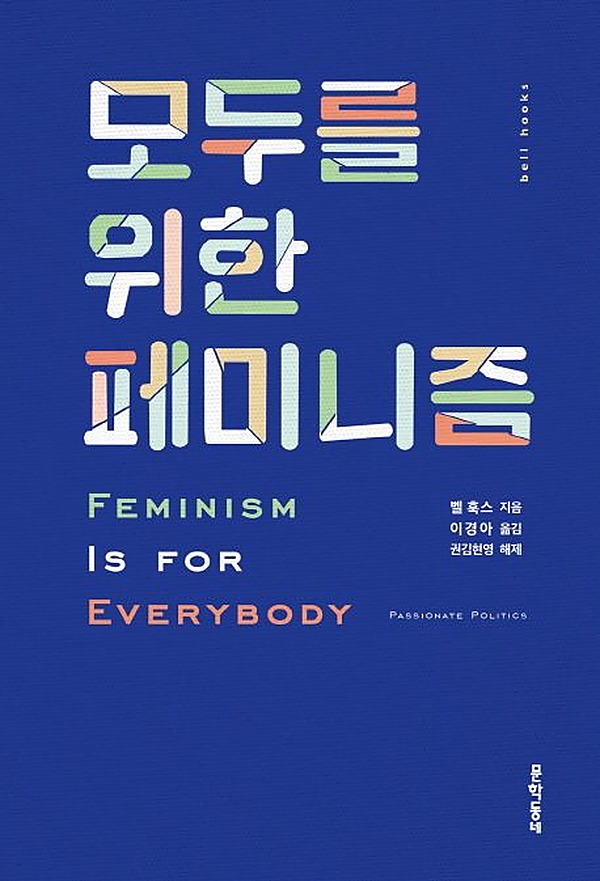
Who cooks the meals, and who stays beside the person who is ill. It is an old question, and the answer has yet to change. This month, after March 8, International Women's Day, passed, there is a book to read together on the question of how to divide care and labor. It is bell hooks's "Feminism Is for Everybody."
The Korean edition was published by Munhakdongne in 2017. The title itself states the book's stance. It is a declaration that feminism will not be narrowed to the property of particular people but held open as a door anyone can walk through. It is thin and its sentences are plain, so it reads as a primer, but once you have finished it the word primer no longer fits.
bell hooks does not keep the language of the lecture hall and the language of daily life apart. Rather than setting up a concept and fitting cases into it, she starts from the day of a living person and climbs to the concept. It is an approach that suits readers worn out by works of theory.
Care has long gone uncounted as labor. Systems such as parental leave, family care leave, and long-term care have appeared one by one, but the "primary caregiver" those systems assume is still largely a woman. hooks does not leave what happens inside the home as a private matter and moves it into the question of labor.
The book's strength lies in having widened its subject. It does not confine the issue to women alone and speaks of what men, too, lose within this order. How can someone who grew up without learning the ability to care later care for anyone. This question reaches straight into the design of welfare policy and into the content of school education.
There are places where it runs thin. Because the book was written against the background of American society, the realities of care in Korea, such as how burdens are distributed between nursing facilities and families or the situation of migrant care workers, are not in it. Readers who want statistics and institutions will have to open another book alongside it. What hooks offers is a baseline for judging what is right.

The difference from similar books is decided here as well. Many books put their effort into recording women's experience, but this one leans toward persuasion over recording. It takes even people who consider themselves on the opposing side as its readers. If a moment comes while reading when something feels uncomfortable, that is a sign the book is working.
The words that call care labor have begun to enter public documents. How far those words have traveled shows up faster on the duty roster in a nursing facility corridor than in an office filing cabinet. That sheet of paper, recording who does what from what hour to what hour, sums up in a single page what this book is trying to say.
There is no such paper at home. The hands that clear the dinner table and the hands that pack the next morning's lunch box pass by without being recorded anywhere. What hooks aimed at is that blank space, and one thin book keeps pointing at it.