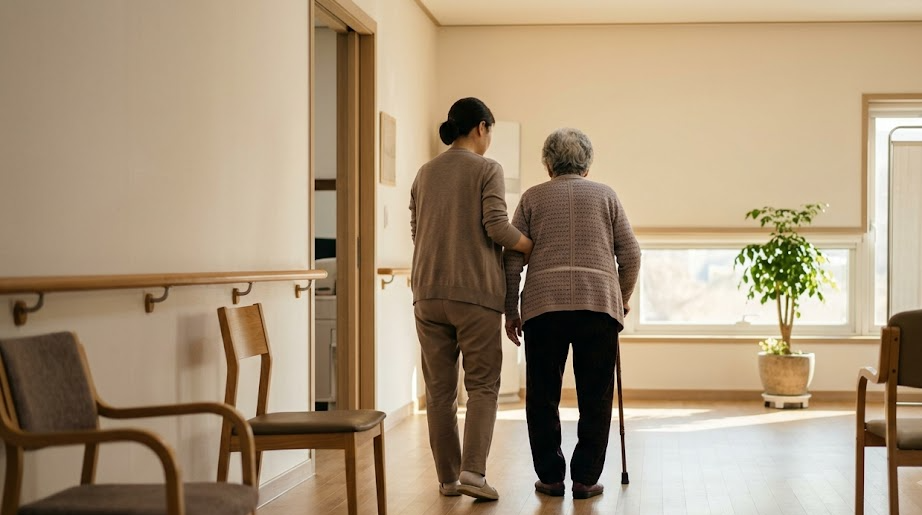
Integrated support services for medical care, long-term care and daily care will be available nationwide from March 27. In line with the enforcement of the Act on Integrated Care Support, the underlying law, the Ministry of Health and Welfare, cities, counties and districts, and eup, myeon and dong offices are preparing by setting up dedicated organizations and staff and drawing up ordinances. Last week, two months before the law takes effect, three regions made moves in different ways a day or two apart.
On January 23 the Ministry of Health and Welfare held the "2026 First Central-Local Cooperation Meeting on Health and Welfare," attended by welfare and health bureau directors from 17 metropolitan cities and provinces. On the same day this meeting, chaired by First Vice Minister Lee Seu-ran, was held, the Bucheon City Council passed the "Full Amendment to the Bucheon City Community Integrated Care Support Ordinance" at the second plenary session of its 288th extraordinary session. The amended ordinance, proposed by council member Kwak Nae-kyung, provides for drawing up a local integrated support plan, operating integrated support meetings, placing integrated support desks at district offices, dong administrative welfare centers and public health centers, and forming an integrated support council.
There is another provision worth noting. While strengthening multidisciplinary cooperation projects that bring health care workers and local welfare experts together, the ordinance includes an institutional device that covers the burden on the organizations taking part. The intent is to keep those who spend time on care from losing out. Which funding source will be used, how much will be paid and in what way have not yet been disclosed.
On the same day, the city of Namyangju signed a "long-term care home medical center pilot project" agreement with four medical institutions in the city. With the agreement, the number of institutions providing home medical care in Namyangju rose from one, Seoul On Care Clinic, to five. The newly added ones are Dasan Yeonhap Clinic, Hopyeong Asan Internal Medicine Clinic, Seol Rehabilitation Medicine Clinic and Seoul Good Morning Internal Medicine Clinic. At a home medical center, a team of doctors, nurses and social workers visits homes to provide treatment and nursing care, and links up local welfare and care resources.
The next day, January 24, at 11 a.m., the founding general meeting of the Dignity Care Medical Welfare Social Cooperative (tentative name) was held at the Yi Sun-sin Auditorium of the Eastern Jeonnam Regional Headquarters in Suncheon, South Jeolla Province. Medical professionals, care workers and local residents signed up together as members. It is understood to be the second medical welfare social cooperative established, after the Gwangju Medical Welfare Social Cooperative.
The history of such cooperatives is not short. The first was created in Anseong in 1994, and as of December 2024 there are 30 nationwide. About 20 of them take part in the government's home medical center project.

Salim Medical Welfare Social Cooperative in Eunpyeong-gu, Seoul, opened in 2012 with 348 members and now has 5,143 members and about 2.7 billion won in cumulative contributions, and runs some 40-50 small health groups. Last December a line dance group was added.
Even with the field moving this way, the way money flows stays the same. Lim Jong-han, a professor of social and preventive medicine at Inha University College of Medicine, points out that under the current fee-for-service system revenue comes from raising the number of treatments, which makes it hard to put effort into prevention and counseling. He argues for a shift to a "value-based payment system" that rewards improvements in a patient's health. As a way to run the Act on Integrated Care Support, he put forward a "multidisciplinary primary care team system" that divides the doctor's authority among nurses, care managers and others.
Professor Lim took part in founding "Pyeonghwa Clinic" in Incheon in the early 1990s, and after serving as standing representative of the Korea Community Care Health and Medical Council and as dean of the Inha University College of Medicine and the Graduate School of Public Health, he is now chairman of the Korea Community Care Association. By his account, a home care task force began in 2007 as a social jobs project, and the "primary care doctor pilot project for people with disabilities," which the private sector started first, later became the basis for the enactment of the Act on Health Rights of Persons with Disabilities. There are precedents of institutions following the field.
Approaches abroad are also worth looking at. Japan has had a care manager system since 2000, and nonprofit organizations run a large share of its community comprehensive care centers under contract. In Germany, six nonprofit social organizations, including Diakonie and Caritas, handle care services without pursuing profit and manage service quality strictly.
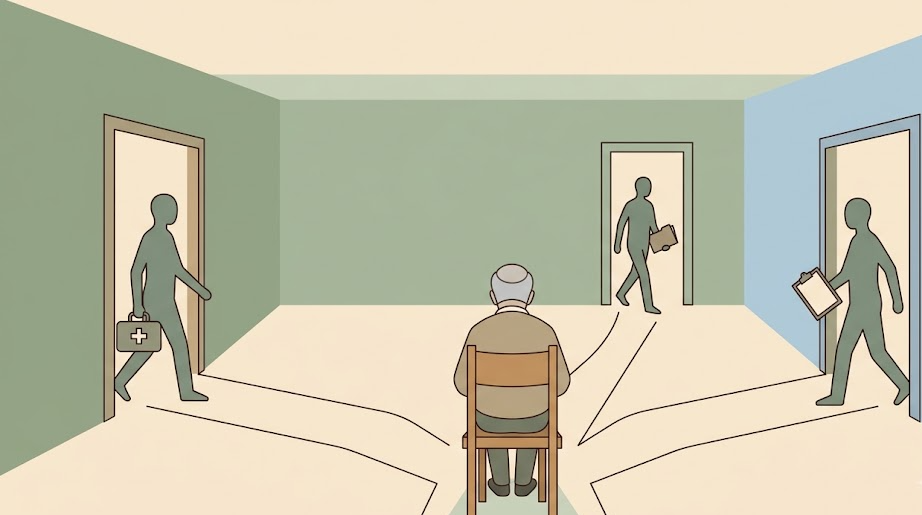
From March 27, anyone anywhere in the country can apply for integrated support. Desks will be set up at cities, counties and districts and at eup, myeon and dong offices, and in regions such as Bucheon, where the ordinance specifies the desks, consultations will also be available at district offices and public health centers. Beside the person who knocks on that door, in place of a single doctor, a nurse, a social worker and a neighbor who is a fellow cooperative member will be standing together. That scene was what the people gathered in the Suncheon auditorium were trying to make.