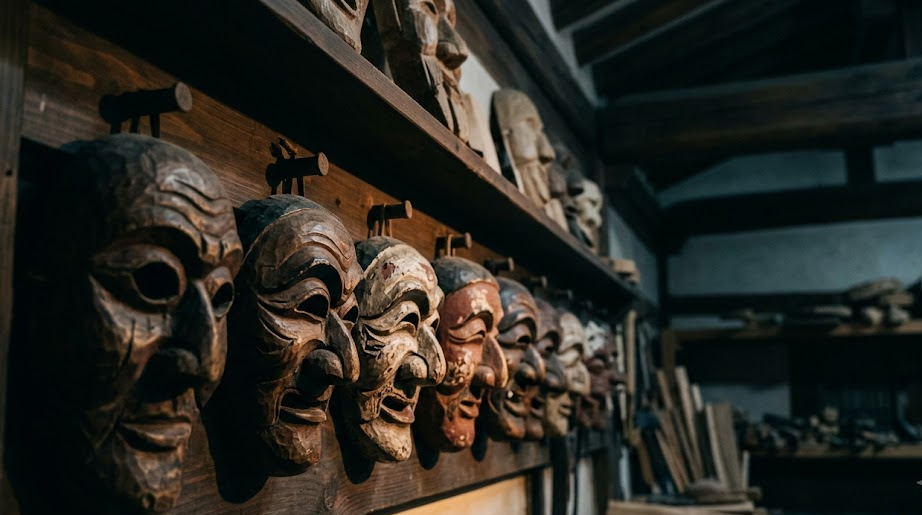
The Yangju Byeolsandae Nori Preservation Society has had three transmission education assistants recognized by the Korea Heritage Service. They are understood to be Ko Kyung-min, Park Jin-hyun and Han Eun-ok. It took the society 25 years to produce transmission education assistants. That is the time it took an organization that has safeguarded National Intangible Heritage No. 2 to enter the names of the next generation in official documents.
Yangju Byeolsandae Nori was designated Important Intangible Heritage No. 2 on December 7, 1964. It is what is now called National Intangible Heritage. It is said to have taken root in the land of Yangju, Gyeonggi Province, and been carried on from some 300 years ago, far earlier than that. On November 30, 2022, it was inscribed on UNESCO's Representative List of the Intangible Cultural Heritage of Humanity.
Transmission education assistants are the personnel responsible for the transmission and teaching of National Intangible Heritage. The Korea Heritage Service reviews transmission activity over a set period and teaching ability before granting recognition. What the 25-year interval was counted from has not been made public.
Mask dance is a skill that has to be inscribed on the body. It cannot be written on paper and handed over, nor can video take its place. At what height the arm bends, when the foot presses the earth, how the breath is parceled out inside the mask, these transfer only barely after years spent standing beside the body of the person who came before.
Twenty-five years is hard to read as a record of idleness. It is closer to a measured figure for the time that transfer required.
Yangju Byeolsandae Nori is composed of eight acts and eight scenes. For one person to carry an entire act, a single role is not enough, and the rhythms and comic dialogue of the acts before and after must have entered the body as well. Which acts each of the three has taken on is not known.
The society did not stop during that time. It continued transmission training, regular performances and special performances, and carried out outreach heritage programs and overseas performances alongside them. It also runs culture and arts classes for local residents and field study programs for students. It has done the work of raising people to put on stage and the work of raising an audience at the same time.
Preservation and utilization do not always aim at the same place. The harder one tries to keep the original form, the narrower the stage becomes, and the harder one tries to widen the audience, the more the form wears down. What gives this recognition its meaning is the fact that three more people are now there to carry that tension. The next 25 years will be graded by how many people these three raise in turn.
Yangju Byeolsandae Nori cannot be known from photographs. The dry sound of the wooden mask meeting the face, the smell of the courtyard earth rising when the rhythm changes, come only to someone standing in that courtyard. The society's regular performances and transmission training are open even now. The day the three put on masks and stand in the courtyard, rather than the day their names went up in the notice, is the substance of this news.