A woman is observed inside a house. Max McCandles, a medical student, is hired by the eccentric scientist Godwin Baxter and given the job of watching this woman who behaves strangely. Her name is Bella Baxter. "Poor Things" follows the process by which the one who was observed comes to observe the world herself.
Directed by Yorgos Lanthimos, the 2023 film is based on the novel of the same title published by Alasdair Gray in 1992. Tony McNamara wrote the screenplay, and Emma Stone, Mark Ruffalo and Willem Dafoe appear in it. It was shot in Hungary from August to December 2021, and won the Golden Lion at the 2023 Venice Film Festival.
The story begins in late 19th-century London. Godwin tells Max that he transplanted the brain of a fetus into the body of a woman who had jumped from a bridge and taken her own life while pregnant, and that the being born this way is Bella. An infant's mind is held in an adult body. As time passes Bella's vocabulary grows, and she does not hide her curiosity about the world.
What makes this premise frighteningly precise lies elsewhere. From the start Bella exists under someone's protection, in someone's house, as someone's object of record. Care saved her, and at the same time it bound her world to the size of the mansion. The film does not treat the fact that protection and control come through the same door as a metaphor, but shows it in scenes of daily life.
The story folds once when Max proposes and Bella accepts. Soon Bella discovers her own pleasure and leaves for Lisbon with the lawyer Duncan Wedderburn. What she chose in place of the safe path of marriage was to go through things herself. Before weighing whether that choice was right, it was the first choice she made on her own.
As the journey continues, the ways of holding Bella back repeat. Duncan tries to stop her growth, fails, and collapses into drink and gambling. Bella becomes friends with passengers who teach her philosophy aboard the ship, and when they dock in Alexandria she witnesses the suffering of poor people and is tormented by it. Learning always happens outside the plans of those who mean to protect her.
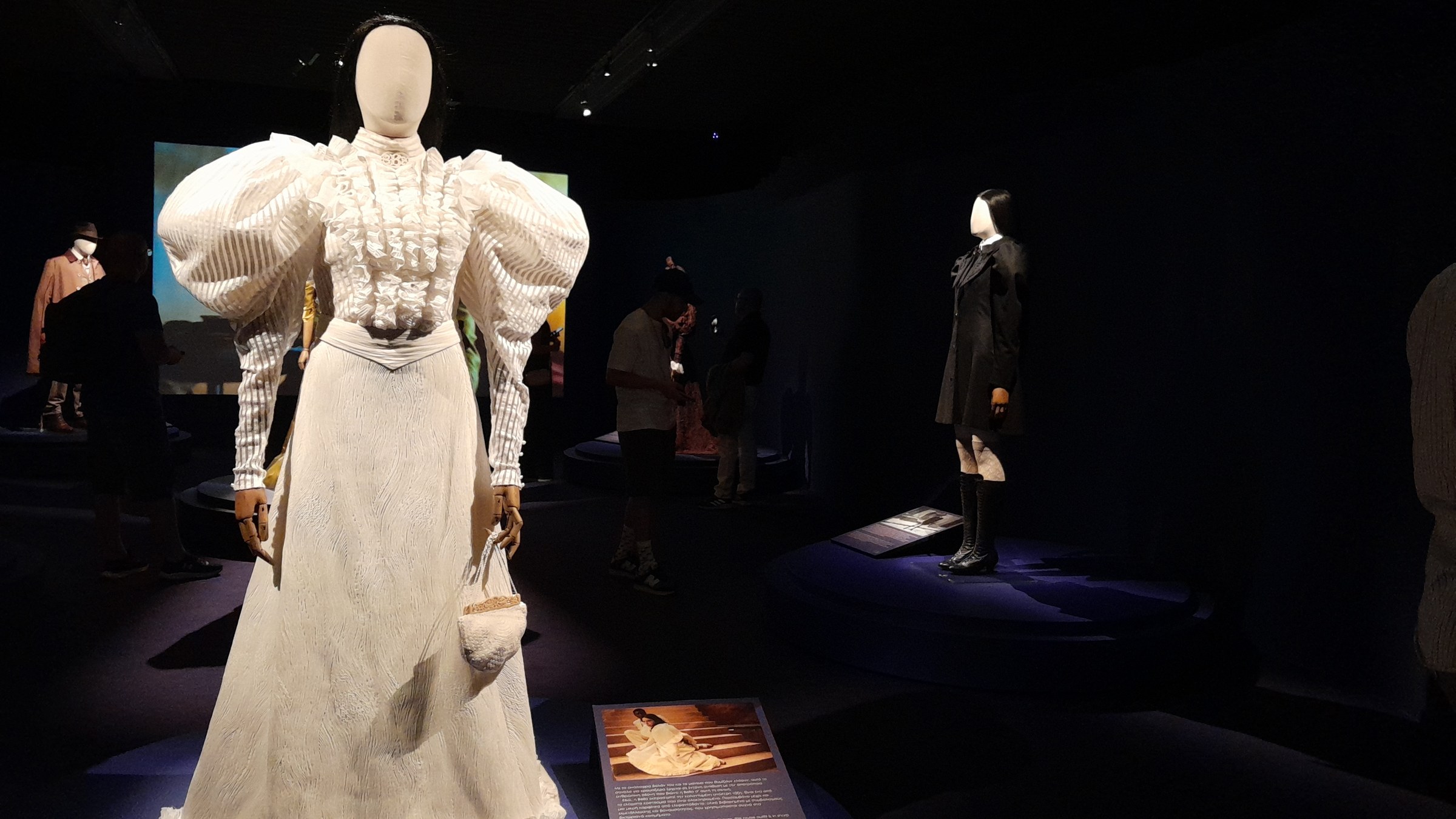
The direction pushes this structure through the visuals. The exaggerated production design and costumes point to the deformity of the world around Bella rather than Bella herself. This film took the awards for production design, costume design and makeup not because the ornament was pretty, but because the screen took on the world's distortion. Emma Stone built up in performance the process by which the body's rhythm follows the rhythm of language, and that precision led to the best actress award.
The places where it slackens are also clear. Toward the latter half, as male characters who want to possess Bella are placed one after another, the characters are consumed as illustrations of a logic in place of having their own thickness. The point in Marseille where she encounters brothel labor and socialism is where the film expands most socially, and there Bella's awakening takes the front seat over the conditions of that labor. The film never resolves the asymmetry that divides the one who gains learning from the ones who become background.
Even so, the reason "Poor Things" stays with you for a long time lies in its depiction of self-determination as accumulation rather than declaration. She adds words one at a time, fails, is swindled, runs out of money, and walks again. The film says that the right to decide is something that grows through experience rather than a prize given to a person who has proved her ability.
After the release, the share held by commercial films that put women's bodies and desires front and center widened a little, and the arguments around this film grew along with it. Made for 35 million dollars and earning more than 117 million dollars worldwide to become Lanthimos's highest-grossing film, that result has been cited as evidence that such stories are not consumed only as a minority taste. Scenes read as provocation at the time of release now look more like calculated design.
What becomes clearer on a second viewing is the people who propped up that liberation rather than Bella's liberation. The way the workers of Marseille remain in the background stands out more as time passes, and it makes you ask again whose time one person's awakening stood upon. While the world catches up with Bella, the asymmetry the film left behind remains as it was.