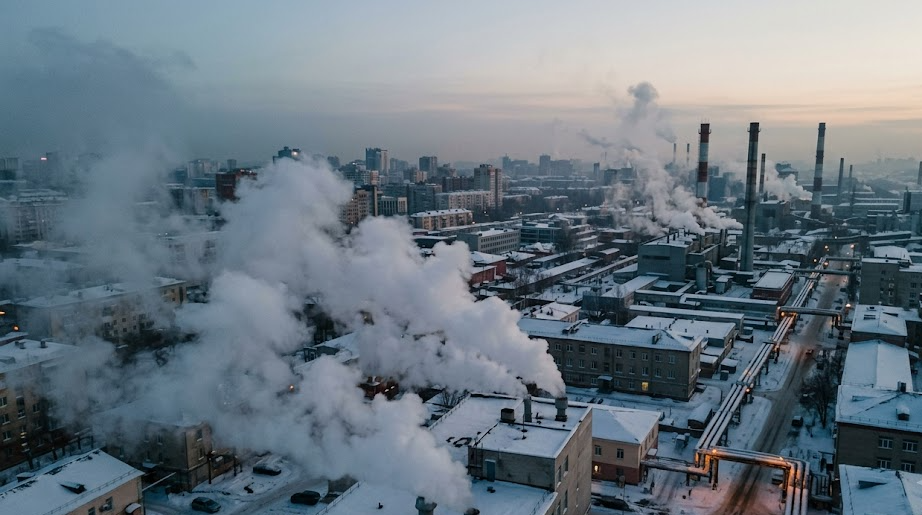
About half of the energy we use is heat. This half, consumed quietly in heating, hot water and industrial processes, has not been dealt with clearly on the policy map. That heat moved to the center of public debate over the past week. The Ministry of Climate, Energy and Environment gave advance notice of a revision to the enforcement decree of the New and Renewable Energy Act, saying it would add a clause recognizing air thermal energy as renewable energy, and around the same time work began on a "heat energy innovation implementation plan (roadmap)."
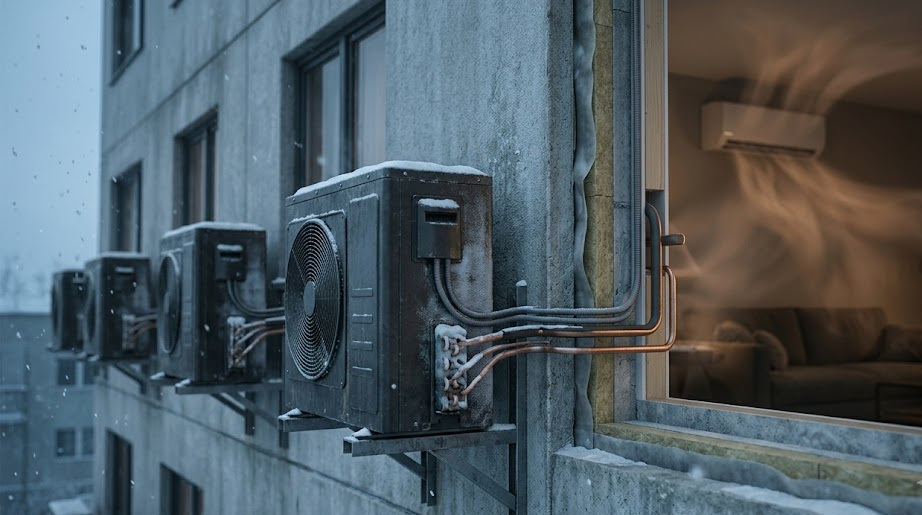
An air-source heat pump is equipment that gathers the heat dispersed in the outdoor air and uses it for heating and hot water. The government has taken note that, unlike geothermal energy, which requires digging into the ground, it faces few installation constraints and is easy to expand within a short period. Seen from the policy of first converting fossil fuel heating to electricity, it is the quickest option. The government says it will include air thermal energy above a certain standard in the renewable energy category to create a legal basis for expanded deployment, but the revision does not state what figure that "certain standard" is.
Opposing voices came out immediately. Officials from 14 associations and organizations, including the Korea Geothermal Association, held a rally in front of the Government Complex Sejong on January 13 opposing the inclusion of air thermal energy in renewable energy and issued a statement. This movement, which began earlier in the Nowon area, passed through the Sejong complex and continued near the National Assembly.
The issues they raised come down to three. Efficiency, dependence on fossil fuel based electricity, and the possibility of increasing peak power demand.
The root of the dispute lies in the method of calculation. The performance of an air-source heat pump depends on the outdoor temperature, and the electricity that runs the device still includes power generated from fossil fuels. So how much of the heat drawn in should be counted as "renewable"?
Even within the government the levels differ. The Climate Ministry defines clean heat as heat that emits almost no greenhouse gases in the process of producing or using it, and cited air thermal, geothermal and hydrothermal energy as examples along with heat recovered from waste incineration plants and factories, but how this clean heat category relates to the renewable energy category under the law has not been sorted out.
On the same day, a different clock was running at Dalgaebi in Jung-gu, Seoul. The Climate Ministry (Minister Kim Sung-hwan) launched a "heat energy innovation roadmap council" made up of experts from industry, academia and research institutes and began drawing up the implementation plan. The council is organized into five subcommittees including a general one, and they divide up the areas of law and institutions, infrastructure, utilization and technology. Second Vice Minister Lee Ho-hyun said the ministry would push ahead in turn with organizing the policy foundation, improving the system, developing technology, and applying it in the field in stages.
The framework of the system is being built along several tracks at once. In the Climate Ministry's organizational chart, a heat industry innovation division was placed under the hydrogen and heat industry policy bureau, which reports directly to the second vice minister, creating a department dedicated to heat for the first time. In the National Assembly, Rep. Wi Seong-gon introduced two bills, a "framework act on heat energy" and an "act on the decarbonization transition of heat energy and the promotion of its use and supply," and Rep. Han Jeoung-ae also introduced a bill related to clean heat energy. In the 2035 national greenhouse gas reduction target as well, heat was assigned an independent reduction area for the first time, and heat pumps were listed among the means.
Looking closely at the target figures, the burden is not small. The target presented by the government is 3.5 million heat pumps by 2035, a phased plan of installing 420,000 by 2029 and then supplying 3.08 million more. The government says that if this target is met, 5.18 million tons of greenhouse gases can be cut by 2035.
Placing this alongside the fact that the 2035 reduction target for the building sector is set at up to 56.2 percent from 2018 levels, it becomes clear why this equipment has come to the fore. Domestic heat pumps for heating are at an early stage where even official statistics are not compiled, which is a limitation.
The constraints in the field are more concrete in practice. LG Electronics cited installation space, load and the burden of electricity bills as the sticking points when installing heat pumps in apartment buildings, and proposed dividing the system so that hot water is supplied centrally while heating and cooling are handled by heat pumps in each household. In a country where apartments are the main form of housing, how this combination is worked out will determine whether the 3.5 million figure is realistic.
The side raising the efficiency problem and the side urging faster deployment are ultimately aiming at the same point. Showing in statistics how much performance drops in winter and how the power grid responds at that time.
Anyone can submit an opinion on this enforcement decree revision during the advance notice period. Whether from the geothermal industry or an apartment resident, the heating bill for one's own building and the indoor temperature in winter can serve as grounds. Since heat has long been outside the statistics, it is also an area where experience in the field becomes data. Adding one's voice before the baseline is set is far cheaper than arguing after it has been fixed.