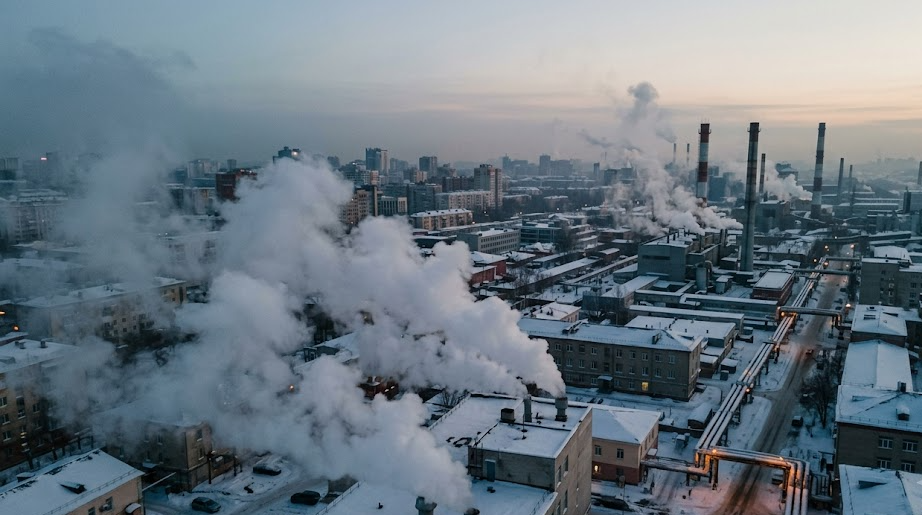
Nearly half of the energy we use flows through pipes and boilers instead of passing through power lines. Thermal energy accounts for about 48% of the country's final energy consumption. Even so, the language of carbon neutrality policy long stayed with power generation and electricity. Legislative discussion aimed at filling that gap formally opened at the National Assembly on the 22nd.
The theme of that day's hearing, held at the National Assembly Members' Office Building by Rep. Wi Seong-gon (Democratic Party of Korea), chair of the National Assembly's Special Committee on the Climate Crisis, was "Carbon Neutrality, Beyond Electricity to Heat." Two bills were on the table. They are the Framework Act on Thermal Energy, which sets up the framework of thermal energy policy, and the Act on the Decarbonization Transition of Thermal Energy and the Promotion of Its Use and Supply, which moves the transition forward.
The assessment of Oh Se-shin, research fellow at the Korea Energy Economics Institute, who gave the keynote presentation, was simple. Without touching heat, it will be hard to reach either the 2030 Nationally Determined Contribution (NDC) or 2050 carbon neutrality. He cited heat's share of consumption, its still-high dependence on fossil fuels, the efficiency side of lowering abatement costs, and the worldwide trend of heat policy taking hold as one pillar of national policy. The thermal energy sector is understood to account for about 29% of national greenhouse gas emissions.
This trend is not confined to Korea. The European Union (EU), the United States, Japan and China all handle thermal energy inside their national energy policies. Japan and China in particular have noticeably widened that coverage since 2020. Korea's starting the discussion now is closer to narrowing a gap it has fallen behind in than to a choice that gets ahead.
Rep. Wi stressed the points where the two bills connect with each other more than the individual provisions. The plan is to link setting targets, actually carrying them out, weighing the results, and having those results change even the way the market works into a single flow. Underlying it is the view that repeating fragmented support policies will not get the heat sector's transition rolling.
What the legislation is aiming at was sorted into three broad strands. Finding clean heat resources such as renewable heat and the waste heat that has gone unused, opening up closed heat networks and letting them connect with one another, and setting how far the public and private sectors are each to be responsible. The last item, the balance between mandates and support, is most likely to make the actual negotiations the roughest. The bills also include a plan to bring heat-electricity integrated facilities, high-efficiency combined heat and power (CHP), and heat storage facilities into the scope of policy management.
The differences in temperature among interests came through as they were. The district energy and resource circulation side voiced agreement with the bills' purpose, while the city gas industry and part of the business sector called for another look at the definition of clean heat and the design of supplier obligations. The general discussion was chaired by Kwon Pil-seok, head of the Green Energy Strategy Institute, with working-level officials from Korea District Heating Corporation, the Korea City Gas Association, the Korea Resource Circulation Energy Mutual Aid Association, the Korea Chamber of Commerce and Industry, the Heat Pump Alliance, the Korea Renewable Thermal Energy Convergence Association and the Ministry of Climate, Energy and Environment sitting together. It is worth putting on record that no side denied the transition itself.
Heat that sits outside the system also came up for discussion. Thermal energy from private incineration facilities is one example, and as it was noted that 76 companies were producing it as of 2024, the need to bring it into the institutional framework was raised. The substance, such as who supplier obligations will apply to, target ratios and the timing of enforcement, has yet to be announced. In the end, the sentences the law is completed with will determine the size of the reductions.
This winter, it is worth taking a look at the thermostat in your home and your heating bill. Beyond a report card on personal saving, the charge printed on the bill is an indicator of how our society makes heat and how it carries it. When citizens start asking where the hot water running through the pipes was heated, the tug-of-war inside the National Assembly over the definition of clean heat will at last touch daily life.