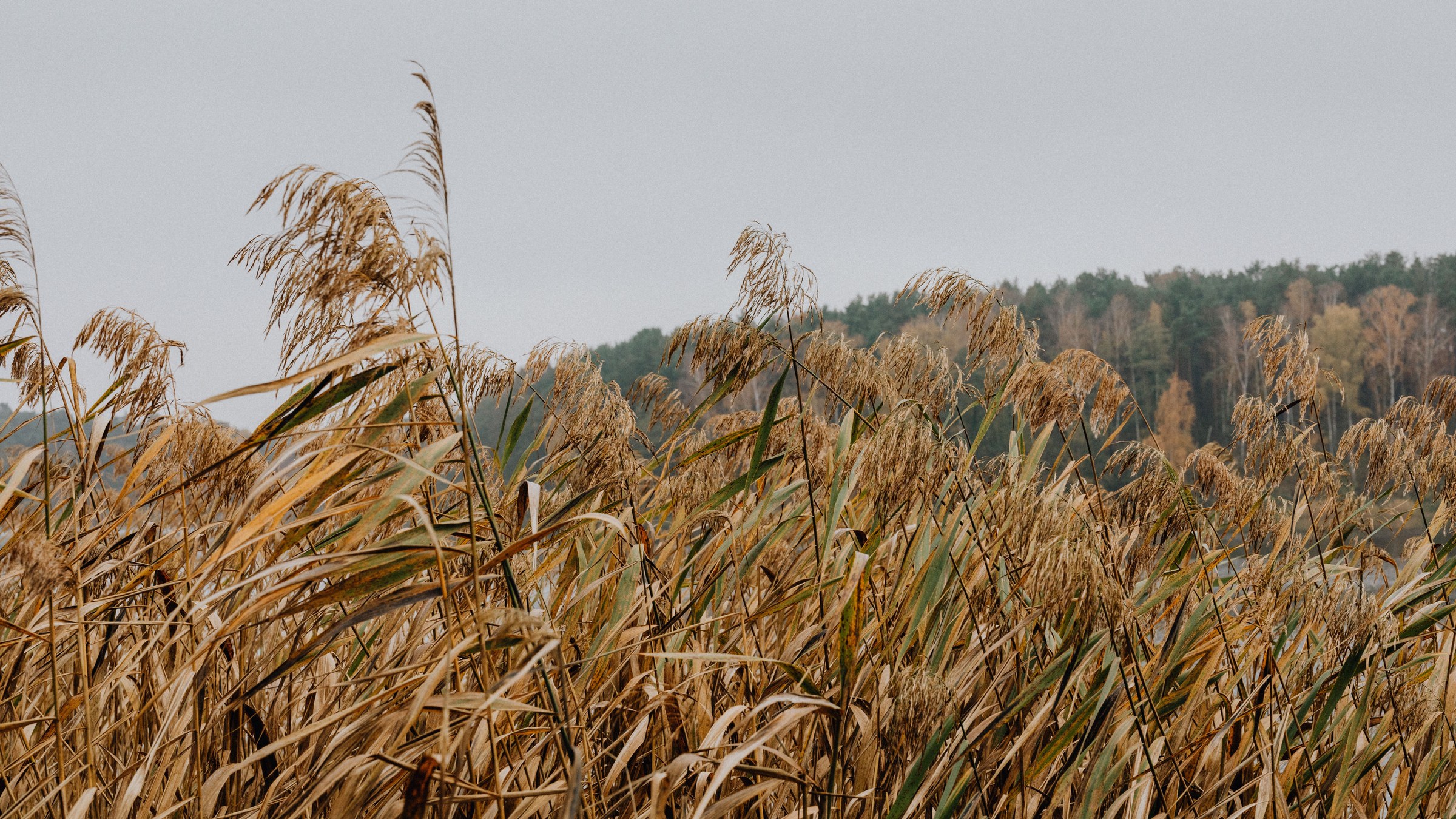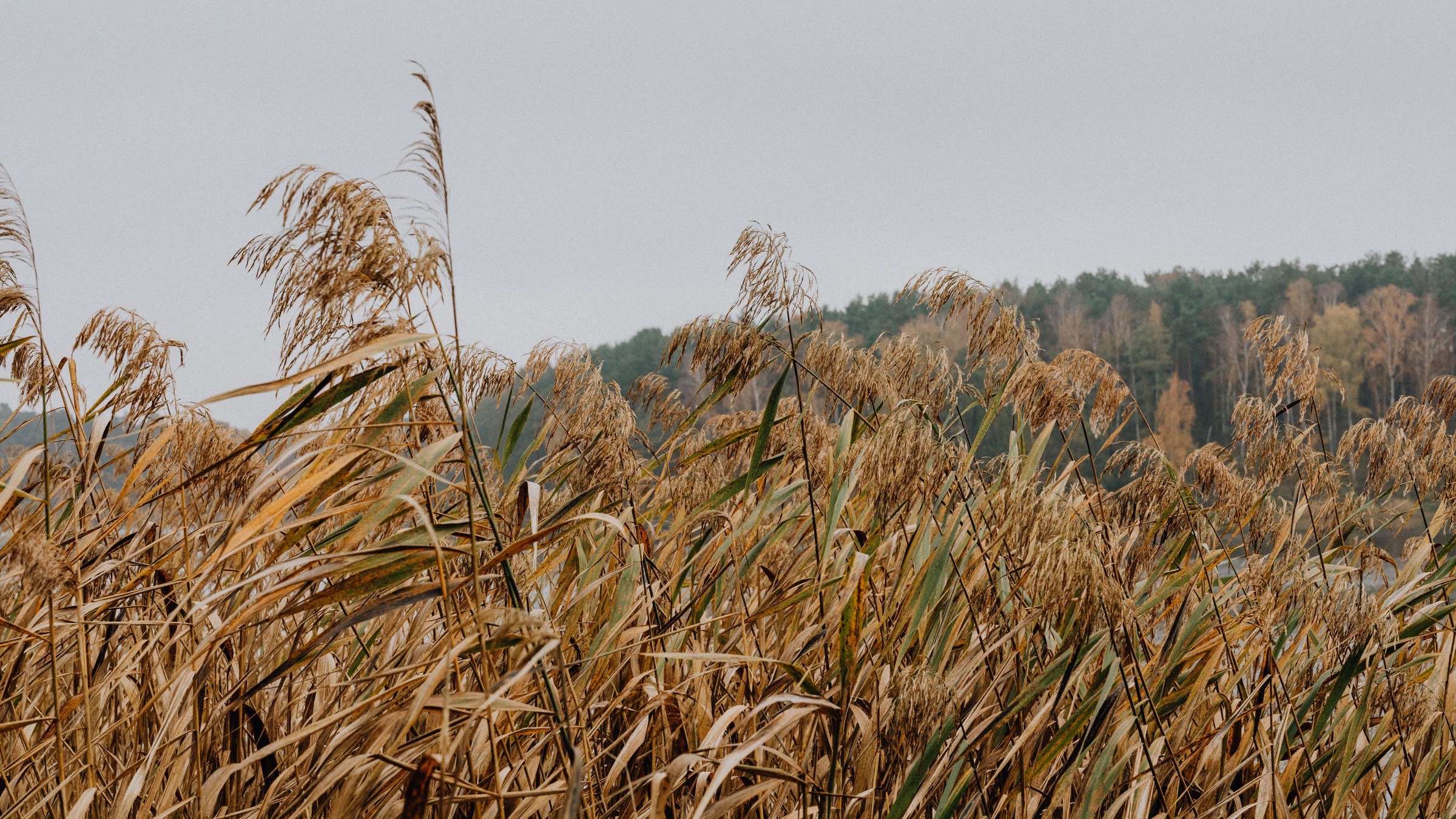
A single silver grass plume rises alone at the upper left of the frame and bends at the waist toward the right. The plumes beneath it all lie toward the same side. The sky is a gray with almost all its color drained out, and on the hill across the river the deep green of conifers and the yellow of turning birches mix like stains. On a sunless overcast afternoon, dry wheat-colored plumes fill the entire lower half of the frame.
The wind was not photographed. Only the thin lines drawn by the tips of the leaves and the angle of the plumes leaning to one side remain, telling what has just passed by. Following the tips of the plumes with the eyes for a long time, the focus keeps slipping, and in the meantime the shoulders move a little farther from the ears and the inhale grows about a beat longer. The sense of the soles touching the floor comes back only then.
The mind that had been straining to hold something down loosens a little, like a grip, while watching that bent back.
If you can see even one thing swaying outside the window, it is fine to rest your eyes on it for about three minutes. Whether a leaf or a clothesline or the hem of a passing person's clothes, you only need to follow it with your eyes while the width of the swaying grows larger and smaller. There is no need to try to figure anything out, and when the wind stops you watch it as it is. Three minutes is short even for a cup of coffee to cool.
You can try the same thing while doing the evening dishes. While following for a moment the shape of the water stream splitting as it strikes a plate, check once whether the jaw has tightened. If it is stiff, note that it is stiff and move on, and if it has loosened, move on from that too. Without any promise that something will get better, knowing just the state of the back teeth is enough.
The plumes by the river were bent but not broken, and the gray sky hangs low above them, unchanged.