Three places moved within three days last week. Saha-gu in Busan signed an integrated care network agreement for disability welfare organizations on the 10th with three organizations, including the Saha-gu Community Rehabilitation Center for the Disabled, the Saha Dubakwi Center for Independent Living, and the Haeon Day Care Center. The same day, Geoje began an intensive drive to identify people eligible for integrated care, and a day later Gwacheon announced that it had put customized welfare teams in place at every dong community service center. Rather than waiting for the system to take effect next March, the framework is hardening now.
With the integrated care system taking effect in March this year, local governments have entered a period in which each must build a system to receive people.
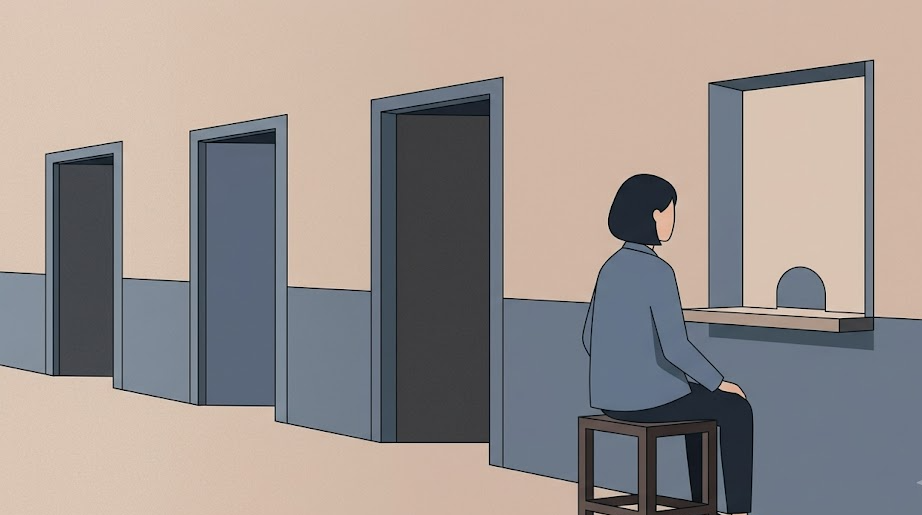
The National Assembly Futures Institute took up this issue in its report "Mid- to Long-Term Restructuring Strategy for the Health and Welfare Service Delivery System." Its assessment is that public health, medical care, long-term care and welfare are each split across different funding sources and operating bodies, so older people have to go back to one desk after another. In a country where the population aged 65 and over passed 20% of the total in December 2024, the sum of these repeat visits grows every year. The report put forward a Korean-style local integrated support system that places an integrated care support center in each city, county and district and completes everything in one place, from application to comprehensive assessment to drawing up a customized care plan.
Some items in the proposal come with a person's job title attached. Establishing care coordinators and integrated case managers as official positions, and building an integrated support information system through which organizations exchange information in real time. For the mid to long term, the report includes an integrated budget in the form of a block grant that lowers the walls between individual programs, easing the barriers to use that depend on the type of welfare center, and shifting performance evaluation toward looking at how a life actually turned out, such as whether a person keeps living at home. A program evaluated by the number of agreements and a program evaluated by whether people keep living at home lead the staff in charge to do different things today.
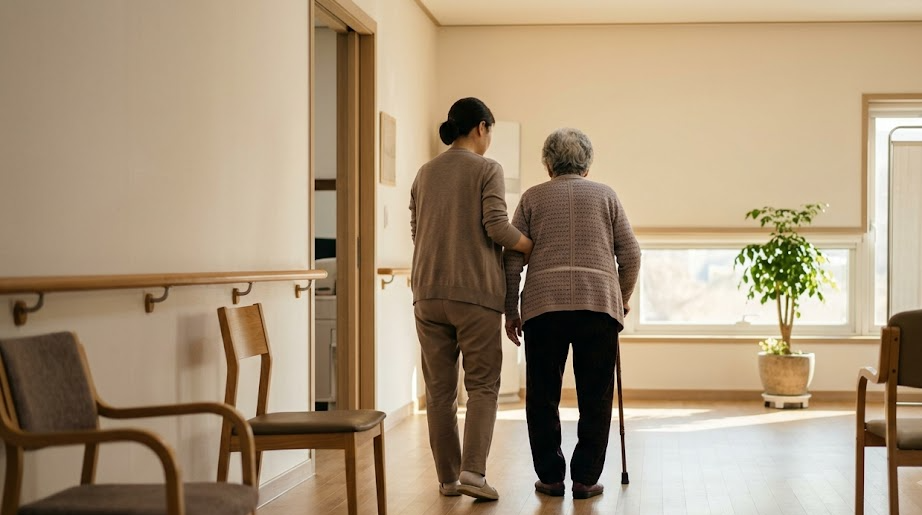
Gwacheon previously ran a "district type" that grouped several hub dong together, and gaps in service opened up between people living in participating dong and those who were not. In switching to a "basic type" covering every dong this time, it assigned social welfare team leaders and nursing staff dedicated to integrated care. The nursing civil servants visit the homes of people aged 65 and over and people with severe disabilities to check their health, and connect them to public health centers or local medical institutions when needed. What differs from before is that someone comes to the home.
Geoje chose not to wait. From the 10th through September 18, it is running a six-week intensive outreach period, using National Health Insurance Service big data to find people who need care. With four partner medical institutions, it is strengthening links so that discharged patients are connected to care services when they return to their neighborhoods. It also reviews progress by myeon and dong and provides one-on-one consulting visits to the staff in charge of integrated care.
Gyeonggi Province is assisting local governments through the Gyeonggido Social Service Agency. In Goyang, Mayor Min Kyung-sun of Goyang Special City and Ahn Hye-young, president of the Gyeonggido Social Service Agency, met on the 11th and signed an agreement on the 2026 integrated care support program. Goyang was selected as a site for the program, and the agreement covers drawing up locally tailored improvement tasks, strengthening links among welfare resources, and applying and expanding the integrated care operating manual in the field.
A new "Care Friends" program to ease the burden on people caring for family members also begins alongside it. A community-centered integrated care system is a core pledge of the ninth popularly elected term, and this agreement was pursued in line with the enforcement of the Act on Integrated Support for Local Care Including Medical Care and Long-Term Care. Icheon also signed an agreement with the same agency on the 4th for manual development and for linking medical care, long-term care and daily care.
Mapo-gu in Seoul reworked the organization itself. On the 12th it announced a reorganization creating a youth policy division and an integrated care division. The aim is to gather scattered but similar functions into a single division.
Under the same name of "integrated care," Saha-gu brought together disability welfare organizations, Gwacheon looks after older people and people with severe disabilities together, and Goyang and Icheon speak of residents without specifying a target group. The National Assembly Futures Institute's proposal is aimed at the problem of older people being scattered across multiple desks. The same name does not make the path a user goes through the same.
The effect of the agreements and reorganizations shows up in the number of desks a user actually passes through. The indicator is how many places a discharged older person went to for a long-term care application and a welfare consultation, and how far that number fell after the reorganization.
Geoje's intensive outreach ends on September 18. Where the people identified are connected will be the first answer.