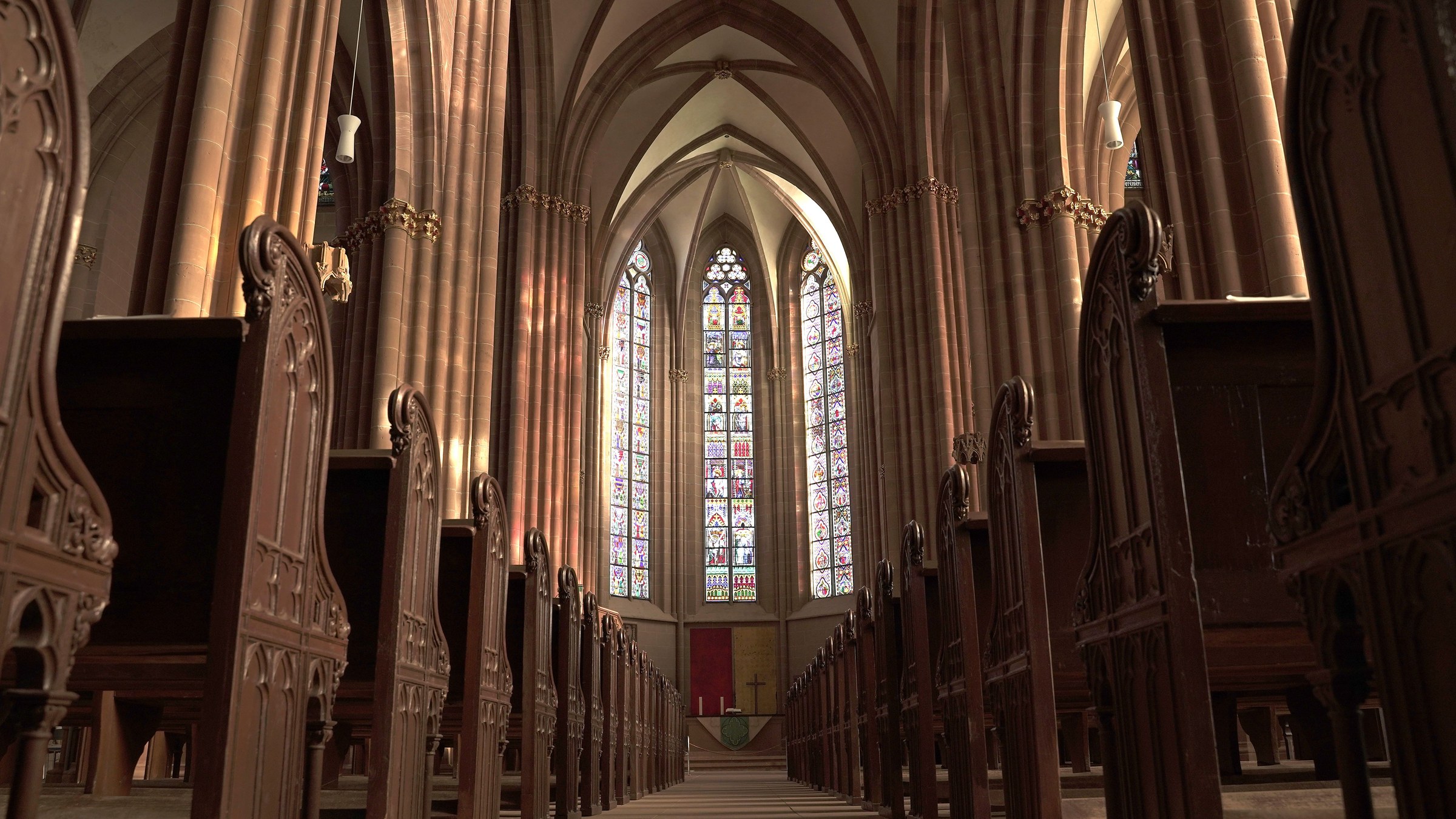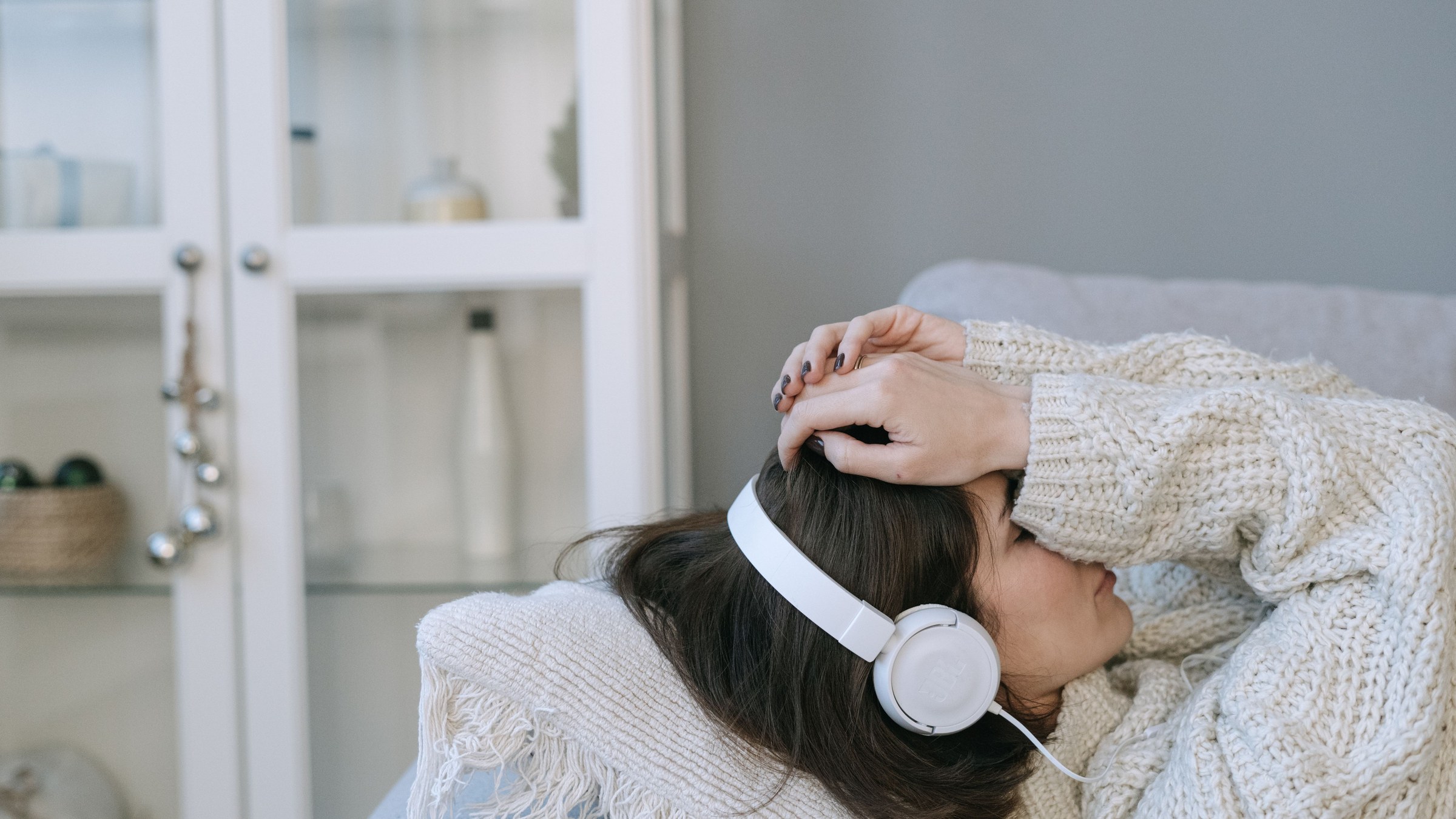
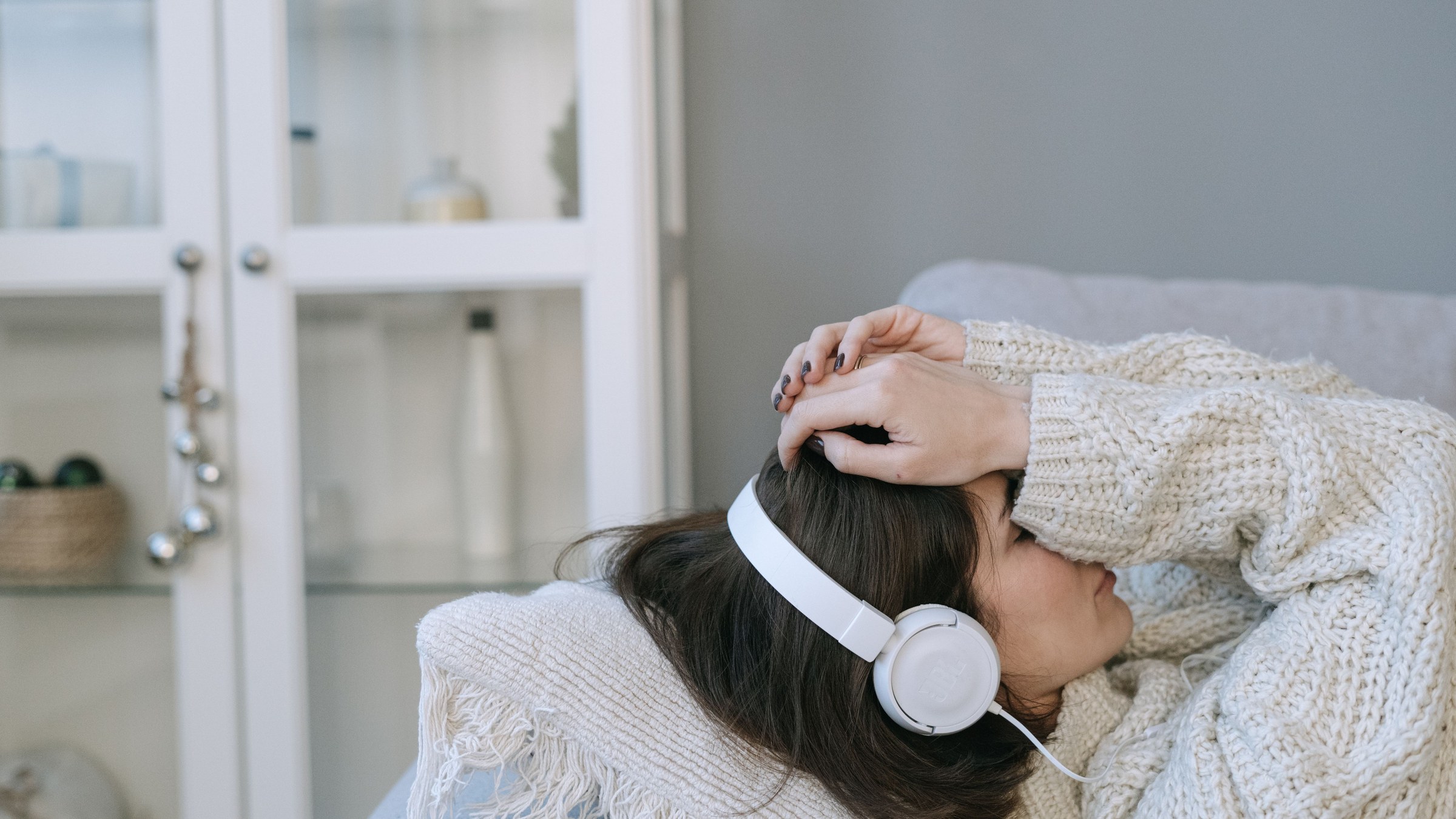
The band of the white headphones runs across the black hair. One arm, its knit sleeve unrolled, has come up over the forehead to rest against the hair, and a faint gray-violet remains on the nails. The tasseled blanket draped over the back of the sofa, the white ceramics inside the glass cabinet behind, the light seeping in from the window are all loosened at the same temperature. Around three or four in the afternoon, the gray just before the shadows lengthen.
Look at a photograph like this for a while and the body responds first. The eyelids grow a little heavier, and the focus that had been holding the screen quietly loosens. The jaw that had been clenched slackens and the shoulders drop half a hand's width. The hands are still resting on the knees, and only later do you notice that the tension between the fingers has vanished at some point.
For as long as our eyes are open, we keep checking something. Wherever the gaze lands, something to handle appears, and so it is only in the moment of closing them that the ears return to their own work.
It would be fine to close your eyes where you are sitting now and count no more than five of the sounds you hear. The low hum of the refrigerator, footsteps passing in the hallway, a car outside the window, the sound of a collar brushing, and your own breath. Once you have counted them all, open your eyes just as you are. It does not even take three minutes.
You can also try the same thing at night after pulling up the blanket. After turning off the light and lying down, while you are counting sounds, just watch whether the interval of the belly rising and falling grows longer than it was during the day. Do not expect anything to get better, and pay attention only to the length.
Once you have counted the fifth sound, the room has grown wider than it was a moment ago.