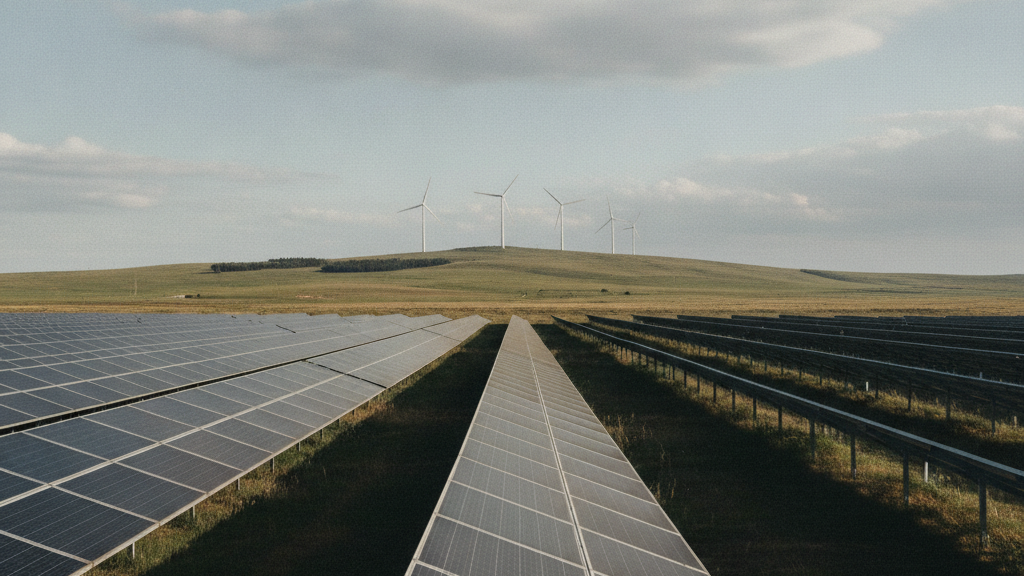
The government announced its "2026 Second-Half Economic Growth Strategy" on July 14, 2026. The centerpiece is the "Korean-style Green Transformation (K-GX)," which ties together renewable energy deployment and industrial decarbonization. Launching the decarbonization transition in five major industries was included as a task. At the same time, steel sites are pointing to where the power for the transition will come from as an actual constraint.
The announcement included a target of accelerating the deployment of 100GW of renewable energy by 2030 and a target of supplying 790 trillion won in policy finance to the climate sector by 2035.
A closer look at the targets leaves a discrepancy. Adding the 87GW of solar and 9GW of wind presented as detailed 2030 targets comes to 96GW. That leaves a gap of 4GW from 100GW, and what fills that gap is not attached to the announcement. Whether the 100GW figure is based on installed capacity also needs to be specified.
Steel is among the industries that consume the most electricity.
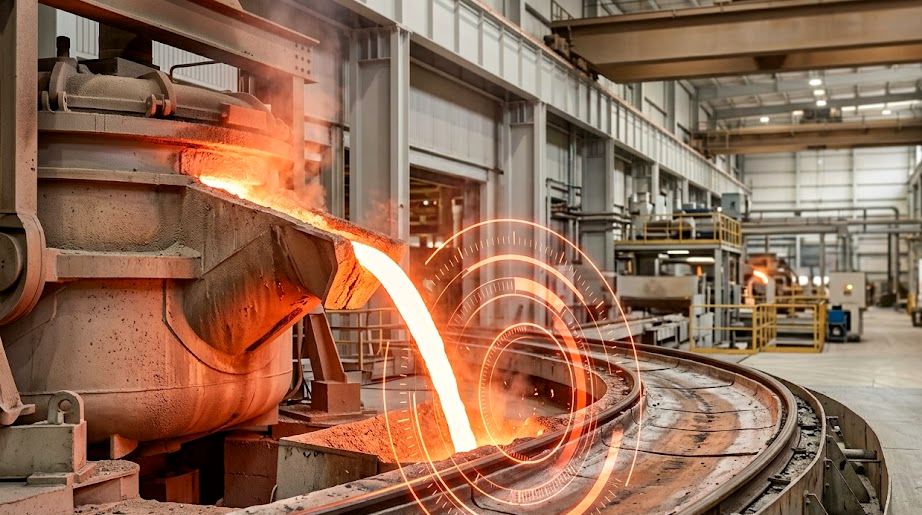
POSCO completed a large electric arc furnace with an annual capacity of 2.5 million tons in Gwangyang, South Jeolla Province, in June 2026 and began production. It set reduction targets in stages at 10% by 2030, 35% by 2035 and 50% by 2040, with carbon neutrality by 2050 as the end point. It is implementing a roadmap that sets hydrogen reduction steelmaking (HyREX) as the goal while applying carbon reduction technologies based on blast furnaces and converters until then.
Hyundai Steel's path is somewhat different. It set targets of cutting carbon emissions 12% from 2018 levels by 2030 and reaching carbon neutrality by 2050. In the near to medium term it plans to build a combined production system running both electric arc furnaces and blast furnaces, and over the long term to move from the "Hy-Cube" system to the "Hy-Arc" system and expand hydrogen reduction steelmaking.
Both companies are moving toward increasing the share of electric arc furnaces. Electric arc furnaces consume more electricity than blast furnaces.
External pressure to hurry the transition has also grown. The EU's Carbon Border Adjustment Mechanism (CBAM) entered full operation in 2026. Domestically, the 2035 Nationally Determined Contribution (NDC) was drawn up last year, and its implementation hangs over the steel industry as a task. There is ample reason to install reduction equipment, but whether the electricity to run that equipment can be secured in time remains unresolved.
The government's response does not stop at energy. Supply chains will be managed in four tiers, from items that can be made domestically to items that can neither be made nor stockpiled nor produced overseas. A new "domestic production tax credit" that cuts corporate and income taxes according to domestic production and sales volume will also be introduced. Lee Hyoung-il, first vice minister of finance and economy, said the government would build supply chains that are not shaken by external factors, based on the lessons of the Middle East war.
More options were also added to the power mix. The government is reviewing designating SMRs as a national strategic technology and will open a Korea-U.S. shipbuilding cooperation center. Rare earths will be newly designated as circular resources, and around 2027 the government will revise standards for separating and collecting waste parts containing critical minerals at the front end when electric vehicles and electronic products are recycled. It set a target of cutting petroleum-based plastics by 30%, and half of the support will go to provincial areas.
Kim Sung-hwan, minister of climate, energy and environment, cited the integration of climate, energy and environmental policy as the biggest change since the ministry's launch. That means policy channels have been consolidated, but when and where the power needed on the ground gets connected still depends on the schedule for the grid and siting.
Points to watch within the year remain. The government set a goal of passing the Strategic Export Finance Support Act through the National Assembly within 2026, and the support measures and allocation sizes for the five major industries will emerge in follow-up announcements. If additional electric arc furnaces are built following the Gwangyang furnace, the plan for supplying the power they require will be the key to implementing K-GX.