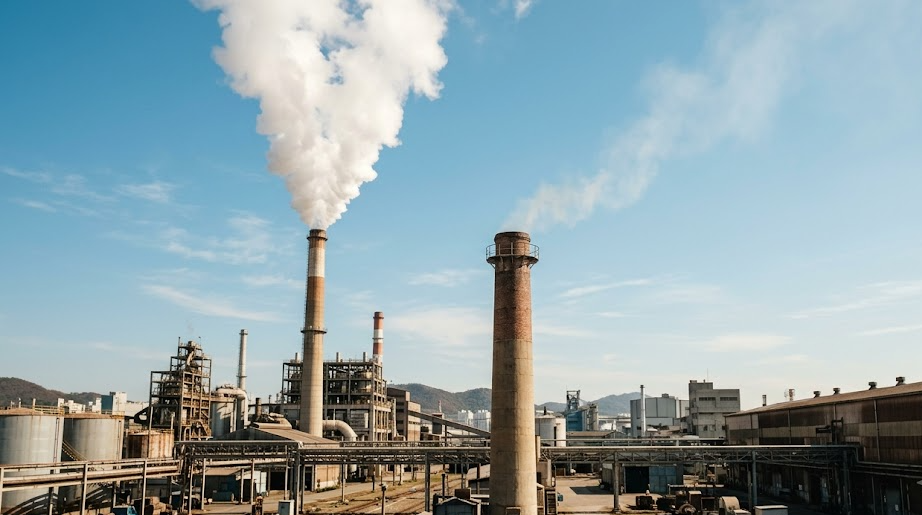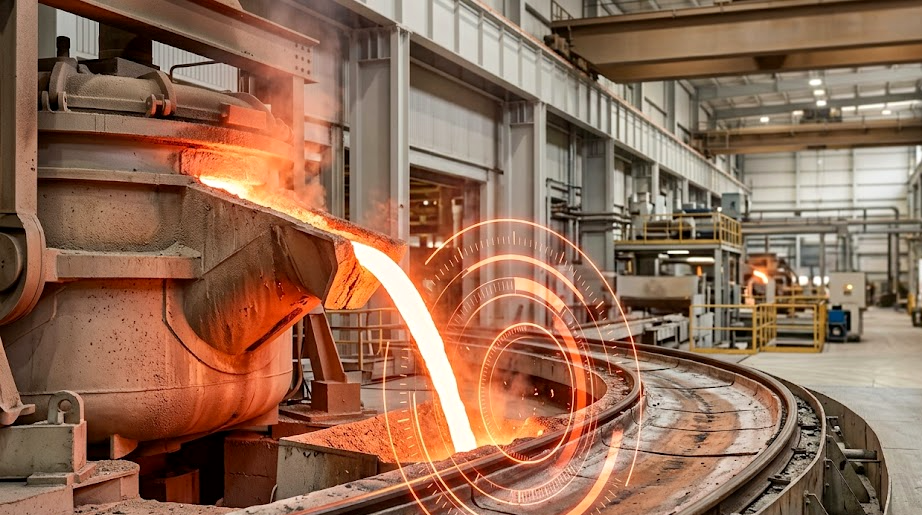
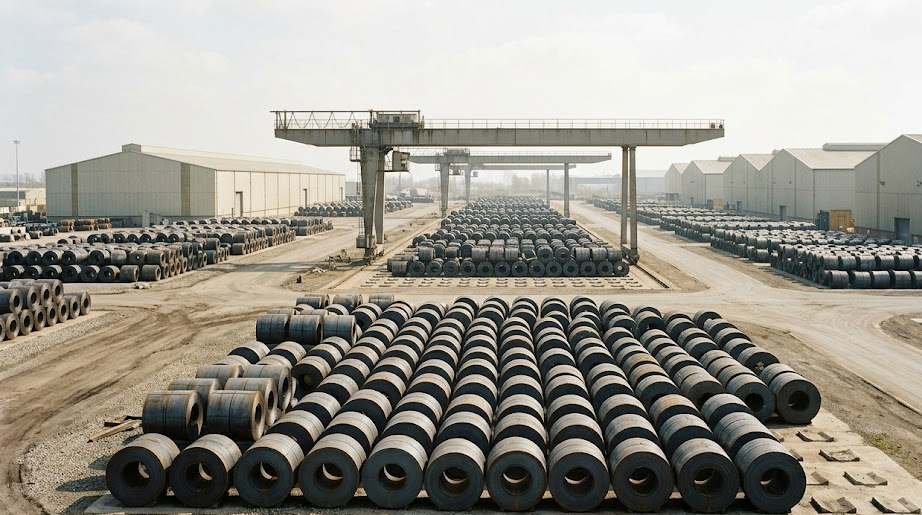
The government will increase the funds it supplies for industry's green and low-carbon transition from 8.7 trillion won in 2026 to 10.6 trillion won. Greenhouse gas emissions from the steel industry, released the same day, fell for a second consecutive year, and production contraction instead of investment in reduction facilities was pointed to as the cause. The size of the decline in emissions and the years covered were not presented together.
If emissions fell because production fell, emissions will come back when production recovers.
The OECD's analysis views that path more narrowly. Its assessment is that as steel overcapacity drags down prices and profitability, the investment resources available to steelmakers shrink, and the low-carbon transition is delayed as a result. Decarbonizing steel requires large-scale funding. A contradiction arises in which companies with reduced profitability are asked to carry out large-scale facility replacement.
The government said it would increase decarbonization support for industries that emit large volumes of greenhouse gases, such as steel. How much of the expanded 10.6 trillion won will be allocated to steel, and in what form it will be disbursed, were not disclosed together.
The president presented "K-GX" at the United Nations. It is an industrial transition strategy the government is drawing up. Sector-by-sector reduction measures, technology development, and investment and financial support plans remain at the drafting stage. As the content of the strategy is filled in, the order in which steel is handled will determine actual implementation.
It is a fact that emissions statistics pointed downward for a second consecutive year. Without distinguishing whether that decline came from facility replacement or from a drop in crude steel production, there is no way to measure the effect of the transition funds either. Whether steel's emissions intensity is disclosed together at the point when K-GX finalizes sector-by-sector reduction measures serves as one yardstick.