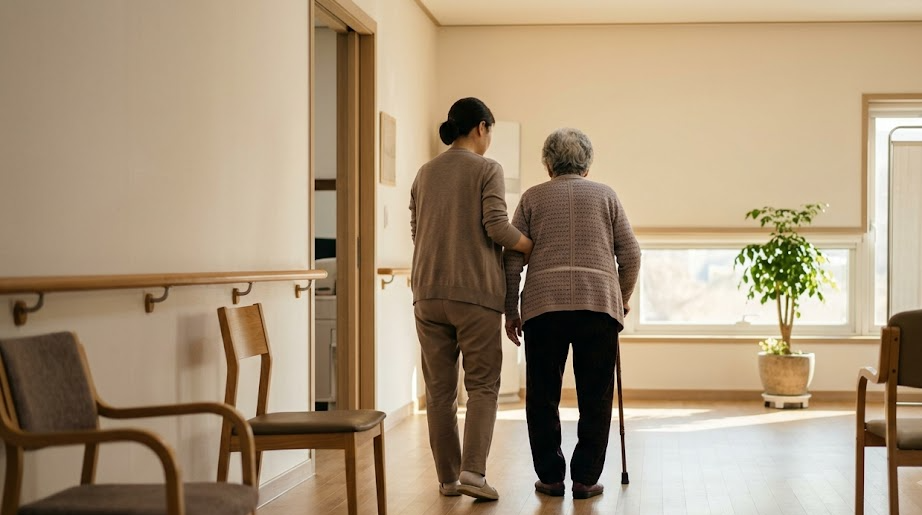

Community-based integrated care, grounded in the Act on Integrated Support for Local Care Including Medical and Long-Term Care Services, has completed 100 days since it opened nationwide this past March. Hyun Soo-yeop, First Vice Minister of Health and Welfare, said on the 14th that the ministry will continue to support the system on both the institutional and financial sides so that it takes root steadily in the field. She added that, as the program is in its early stage, it will keep being revised to reflect views coming up from the field.
Integrated care is designed to take in people who have difficulty getting through a hospital door and people who struggle to get through a day at home at a single window, and connect them to the services they need. The target group is not limited to frail older adults. People who have difficulty with daily life because of a disability or illness are also included in the integrated support group set out in the law.
What Sejong City presented the same day was the procedure that puts that design into actual practice. To run the daily living support program, an implementation project under "Sejong 365 Warmth Integrated Care," the city signed agreements with five organizations that will handle the services. The Sejong Community Welfare Center, the Sejong Senior Club, and the Sejong Regional Self-Sufficiency Center were on the list, joined by the Gajeong Home Care Center and the Heartful Home Visit Care Center. These organizations provide bathing visits, prepare meals, and check on health conditions.
Those eligible to apply are adults aged 65 and over, and people under 65 with severe physical or brain lesion disabilities. The window is the eup, myeon, or dong community service center where the applicant lives. Once an application is received, the organizations under agreement put together services tailored to each person's circumstances and go into the home.
In Anseong, Gyeonggi Province, a site still in the preparation stage was inspected. The vice minister looked over the Anseongmatchum Home Nursing Center as it prepares to open, and the city of Anseong is running a dedicated integrated care team centered on its public health center. Cases do not scatter unless a person in charge has been designated.
There have also been criticisms that the budget for the system is too thin. The government explained that the money attached to integrated care is not in itself a budget for purchasing services, but operating funds used to tie together existing programs such as medical care, long-term care, activity support for people with disabilities, and customized care for older adults. The actual bathing, meals, and nursing go out by drawing on the hands of welfare programs that already existed. If so, success or failure depends less on how much was put in than on how tightly the connections were made.
People who can walk to the community service center window fill out an application. People who cannot walk there, people who never heard that such a system had been created, and people who receive the paperwork but do not have the language to describe their own condition remain outside the list. It is a long-standing experience in the care field that those who need integrated care most are generally concentrated on that side.
Discussion over the scope of the target group also remains. It has been pointed out that policy discussions and pilot programs to date have run mainly around older adults, and as the Sejong case shows, the application requirements for people with disabilities under 65 may be drawn differently from region to region. The law wrote disability and illness together. How that sentence is carried over into eligibility requirements in each city, county, and district's guidance is a matter that will be confirmed over the next several months of implementation.
The Ministry of Health and Welfare said it will take views from the field and refine the system. What will be fixed and how will emerge in the supplementary measures to come, and it is clear that the material for them is the cases that local government teams and partner organizations have accumulated over 100 days.
While the ink dries on Sejong's agreements, Anseong's home nursing center is preparing to visit its first household. Exactly one thing is changing now. What once required going around several windows now starts at a single neighborhood community service center. Who will go out and find the people who could not reach that door is a story that begins from here.