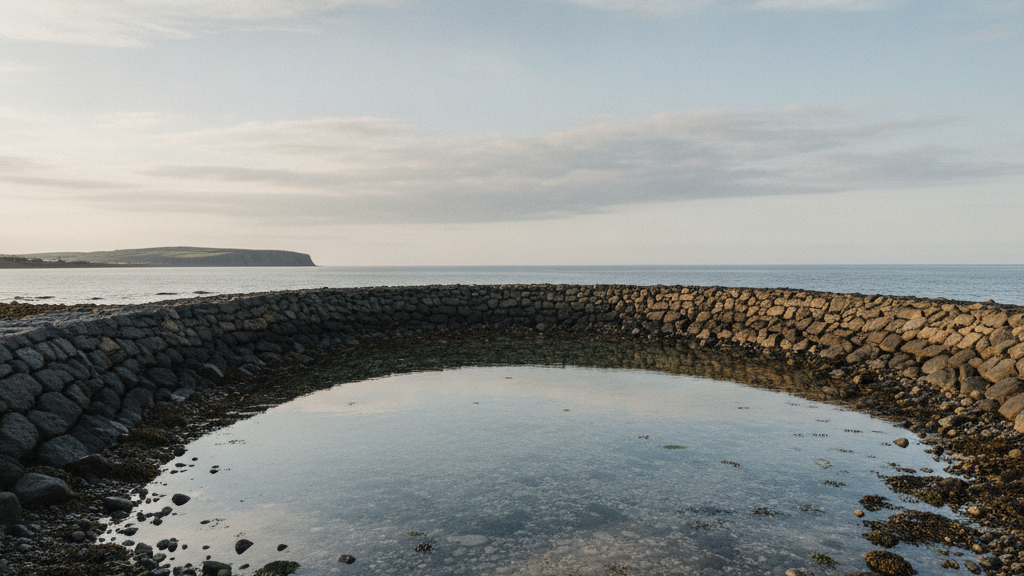
When the water recedes, the black stone wall comes into view. The 17th Geumneung Wondam Festival will be held in July in the waters off Geumneung-ri, Hallim-eup, Jeju. The wondam, which the village fishing cooperative has repaired for generations, serves as the stage itself.
A wondam is a stone-wall net that uses the difference between tides. Fish that come in with the rising tide are trapped inside the stone wall when the water goes out. No nets or boats are used. Basalt is stacked so the stones lock together, letting waves pass through while holding the fish, and the feel in the hands doing the stacking was the technique.
The centerpiece of the festival is bare-handed fishing. Standing in water up to their knees, participants feel for fish with their hands. In the wondam restoration program held alongside it, collapsed walls are stacked again. It is a session for learning with the body how heavy a single stone is and at what angle it must be laid.
What is interesting is that this play was originally labor.
In the days when the sea was managed by the village together rather than divided among individuals, the fish caught in the wondam were shared by the villagers. When the stone wall collapsed, people went out and rebuilt it together. As fishing was mechanized and younger generations left the village, the wondam lost its use, and walls knocked down by typhoons were left alone for long stretches. Keeping up the remaining walls now falls mostly to elderly haenyeo and members of the fishing cooperative.
Reviving the wondam through a festival brings friction. When many people come in, the stone wall is stepped on and shaken. The moment it becomes a tourism program, the wondam can stop being a fishing structure and turn into an experience site.
Yet if it is left untouched, the wall falls apart in the waves. Should it be protected by use, or closed off to be protected? That is the question the Geumneung fishing cooperative has been holding on to for seventeen years.
The programs run according to the tides. Since the hour the water leaves the wondam is the hour of the event, it is better to check that day's low tide time before visiting. Because visitors walk on the rocky shore, shoes with thick soles are needed. Bare feet are not recommended.
The water held inside the stone wall goes past lukewarm to warm on a midsummer afternoon. The feeling of reaching into that shallow water and taking hold of a single fish is hard to put into writing. When the water rises again, the wall is submerged and the sea goes flat. Whether those two hours or so are worth the trip to Hallim is something to decide after putting your feet in.
Event Information
Date: July 2026, held according to the tides
Venue: Wondam area, Geumneung-ri, Hallim-eup, Jeju-si, Jeju
Host: Geumneung-ri Fishing Village Cooperative