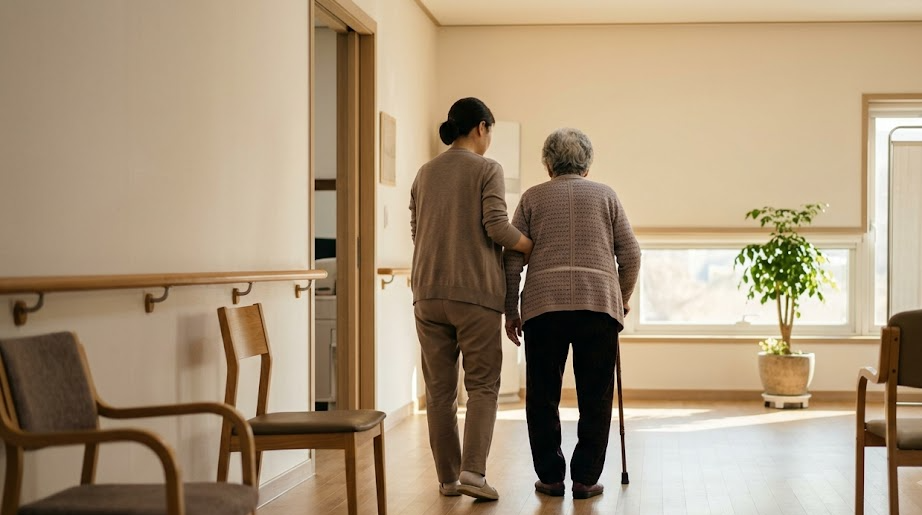
The Jeonju mayoral transition committee, the Citizen Sovereignty Open Jeonju Committee, said on the 23rd that it is drawing up an outline of care and welfare policy aimed at a "city responsible for citizen care." The committee's care and welfare subcommittee has set a line that even with tight finances, it will not cut back on care and welfare, which reach citizens' daily lives directly. It is refining plans toward filling in the budget starting with essential areas. The subcommittee chair is Ko Seon-mi.
When local government budgets tighten, care has been the item easiest to touch. Even if one program disappears, the city does not stop right away. Jeonju's declaration that it will overturn that practice and put care on the baseline means that Mayor-elect Jo Ji-hun's ninth popularly elected administration will give care priority in drawing up the budget.
The main line of welfare policy has been set as making sure support is not cut off at any stage of life. It means seeing the span from the moment of birth to the last period of life as a single line. The subcommittee is reviewing 22 pledges.
The items under review span childbirth and child-rearing, the growth of adolescents, youth independence, care and jobs for older people, women's safety and rights, the mobility and health rights of people with disabilities, and the prevention of isolation among single-person households. Detailed plans on the list include giving preschool children a "Jeonju Child Dream Allowance," the phased introduction of a system letting children and adolescents ride buses for 100 won, and a program providing sanitary products with no conditions attached. How much will go to whom remains at the review stage.
On the older people's side, a smart senior care system, an everyday-life safe companion service, and the expansion of public and social-participation jobs were named as central tasks. In policy for women and people with disabilities, plans to introduce specialized gender-equality administration and to strengthen support for victims of sexual crime and stalking are under review. A system to carry proposals from a barrier-free infrastructure council that includes people with disabilities themselves through to actual implementation is also being discussed.

The subcommittee is also preparing a reorganization plan. When care and welfare are split up department by department, one person has to go around several windows. Work to lower administrative partitions so that people can be served at once in the field is under way alongside it.
In March this year the government put into full operation an integrated care system under which older people who need care receive medical and welfare services together in the homes where they live without moving to a facility, and July 4 will mark 100 days since it took effect nationwide. In line with the enforcement of the Integrated Care Support Act, local governments across the country are building systems that run through medical care, care, welfare and housing. In a survey in which five experts in social welfare and medicine reviewed the results of the first 100 days and the points needing work, the fragmentation of an administrative system in which services do not connect to one another was mentioned most often.
The population indicators in the background are clear. The share of people aged 65 and over passed 20% in 2025 and is projected to reach around 40% in 2050. The total fertility rate stood at about 0.75 in 2024, among the lowest in the OECD. Recipients of long-term care insurance for older people have gone from about 210,000 in 2008 to more than 1.2 million, and more than two in every ten people aged 65 and over live alone.
In the region, cooperatives have filled this gap. The Jeonju Medical Welfare Social Cooperative, which started as a study group in 2001, was founded in 2004 and converted into a social cooperative in 2014, has grown to 2,356 member households and 351 employees. The Integrated Care Supporters Health Keepers it has organized work in 35 neighborhoods of Jeonju.
The HbA1c of an older resident born in 1945 who lives alone came down from 8.7% to 7.9%, and then to 7.3%. Regular visits by the health keepers continued through that period.