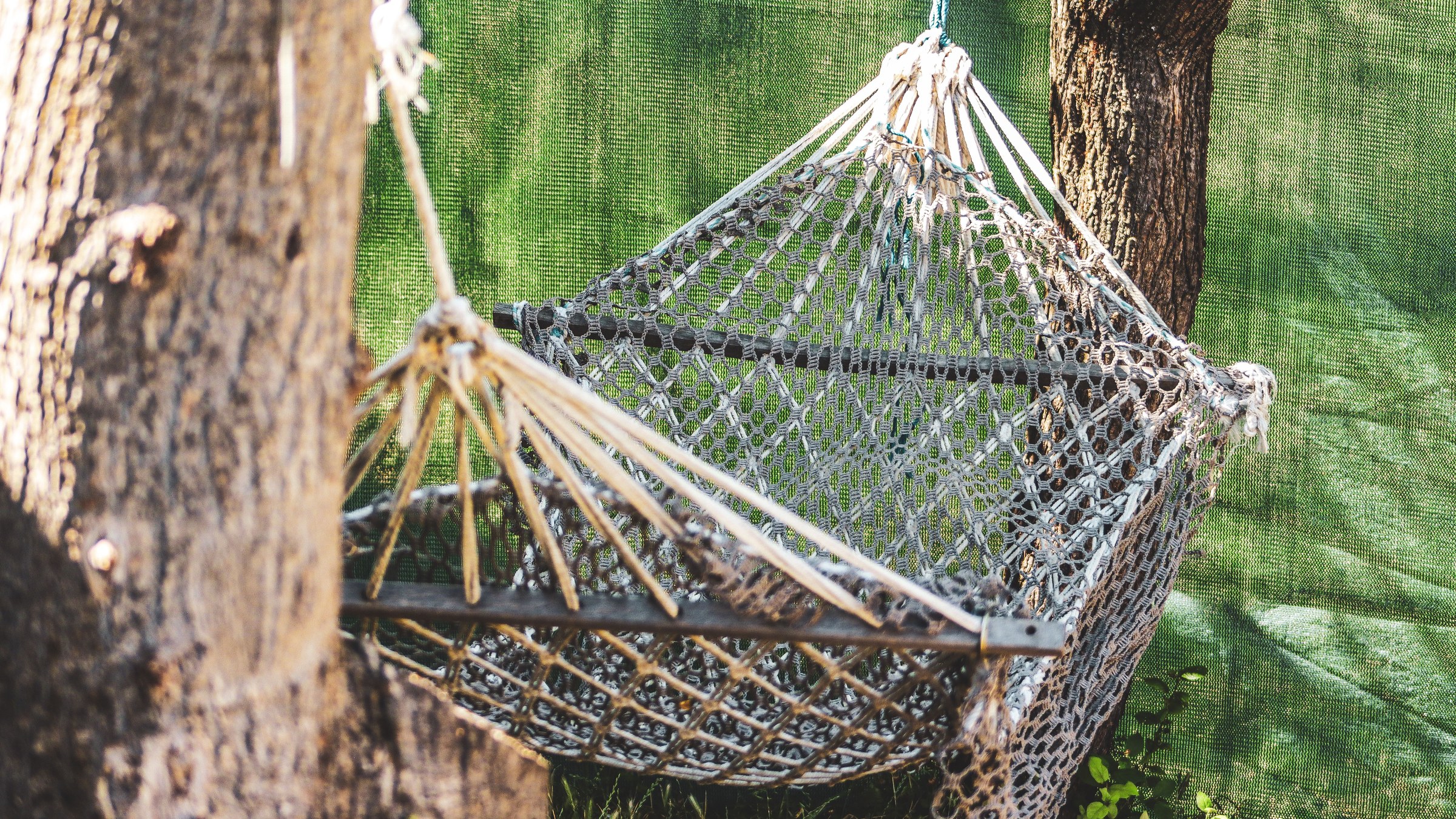
An old net hammock hangs between two rough-barked trees. Afternoon sunlight spreads over the green shade cloth covering the back, and the light leaks out little by little through the loose knots. The rope ends have come undone here and there and hang like tassels, and the hammock, with no one sitting in it, sags a little in the middle.
Look for a while at the hollow curve the net makes and the shoulders drop a hand's width on their own. The breath drawn in runs longer than usual, and the sense of the soles touching the ground comes back late. The eyes settle their focus on one knot and then let it slip.
Through the day the mind kept holding on to something. The body quietly says that even what could have been let go stayed in the grip.
Try closing your eyes for about fifteen minutes. You do not have to fall asleep, so how about leaning your back against the chair and resting both hands on your knees. Set an alarm and you will not have to work at keeping the time.
On days when those same fifteen minutes are hard, the wait at the stop on the way to work can be used instead. Instead of checking again and again in the direction the bus comes from, lower your eyes halfway and look only at the height your two shoulders are at now. Whether the side holding the bag strap is raised higher, whether the back of the neck has tightened in the morning air and risen with it. It does not matter if nothing changes after you check, so simply knowing today's height is enough.
The hammock sways slowly with the wind even while it is empty.