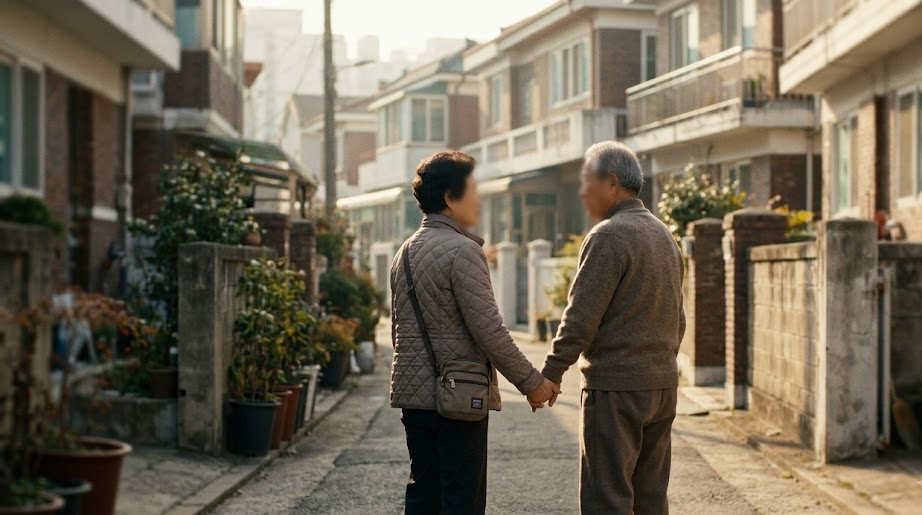
The person who rings the doorbell and waits for the door to open, and the person who opens it, are both older adults. As of the end of April this year, more than 30,000 older adults are taking part in the Integrated Care Support Senior Jobs Program, looking after the days of older residents in their own neighborhoods. On June 7, the Ministry of Health and Welfare released the results of an analysis of how the program is being run. The disclosure follows the enforcement of the Act on Integrated Support for Community Care Including Medical and Long-Term Care, shortened to the Integrated Care Support Act.
Participants number 30,675. The Integrated Care Support Act took effect on March 27 at the level of cities, counties and districts nationwide. The act is built around delivering medical care, long-term care, care services and housing as a single package. Home-based medical services such as home visit treatment, home visit nursing and chronic disease management come bundled with home visit care, home visit bathing, day and night care, emergency care and emergency safety management, and housing support.
What the system aims at is the home a person already lives in. To get by without moving to a hospital or a facility, someone has to knock on the door every day. The program has handed that role to older participants.
The work participants take on is concentrated in health management. That accounts for 26,419 people, or 86.1% of the total. Well-being checks, health status monitoring, medication support, companionship and hospital escort all fall under this category. Next come meal support with 2,043 people (6.7%), identifying households in crisis with 1,145 (3.7%), improving the home environment with 545 (1.8%), and hygiene support with 523 (1.7%).
The names differ by region. Daegu has "lonely death prevention gatekeepers," and in Jeonju, "integrated care supporters" ask after residents and check their health. Jeju's "hospital escort managers" go all the way into the exam room, and "Gochyeodeurim" in Miryang, South Gyeongsang Province, repairs homes and installs safety fixtures. Gangwon's public blanket laundry collects bedding and looks at how the household is getting by at the same time.
Behind this is population. The population aged 65 and over reached the 1 million mark around 2025, passing one fifth of the total. Health insurance spending related to older adults rose from 37.5 trillion won in 2020 to 52.1 trillion won in 2024, and long-term care insurance spending rose from 8.9 trillion won to 14.8 trillion won over the same period. As care demand swells, new workers have to be created, and those workers were found among older people.
[Illustration: a simple geometric composition placing one person's home at the center, with several strands of support such as medical care, long-term care, housing and meals converging from the outside inward | Caption: Integrated care, which bundles multiple services so they can be received at once without leaving home]
The ministry has signaled procedures to refine the work so it does not rest on goodwill alone. This September, a job manual laying out what participants do and how far their duties extend will be released. In October, a session will be held to explain it to local governments and implementing agencies. From 2027, the ministry is pursuing a plan to reflect integrated care items in evaluations of implementing agencies.
Experiments continue on the housing side as well. Daedeok-gu in Daejeon runs "Neulbomchae," a care-assured housing complex that combines housing, medical care and care services in one building. In Sangju, North Gyeongsang Province, a medical welfare social cooperative opened the second cohort of its training course for senior health care instructors. While the system comes down from above, the work of training people is going on alongside it in the regions.
Questions remain. On what basis the figure of 30,675 was compiled, and how many hours a week these people work and how much they are paid, were not included in this announcement. The fact that those doing the caring also have aging bodies is another matter the manual will have to handle. Whether this is addressed in September's manual and October's briefing remains to be seen.
Still, the scene on the alleyways has changed. In the past, an older person living alone could have their door stay shut for days with no one noticing. Now a neighbor of about the same age passes that door every morning. The 30,000 are the people who have set out to knock on it.