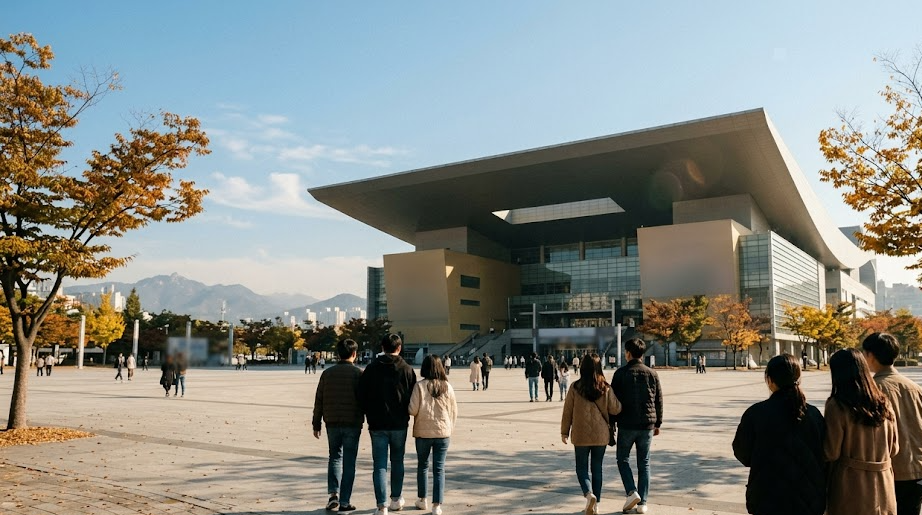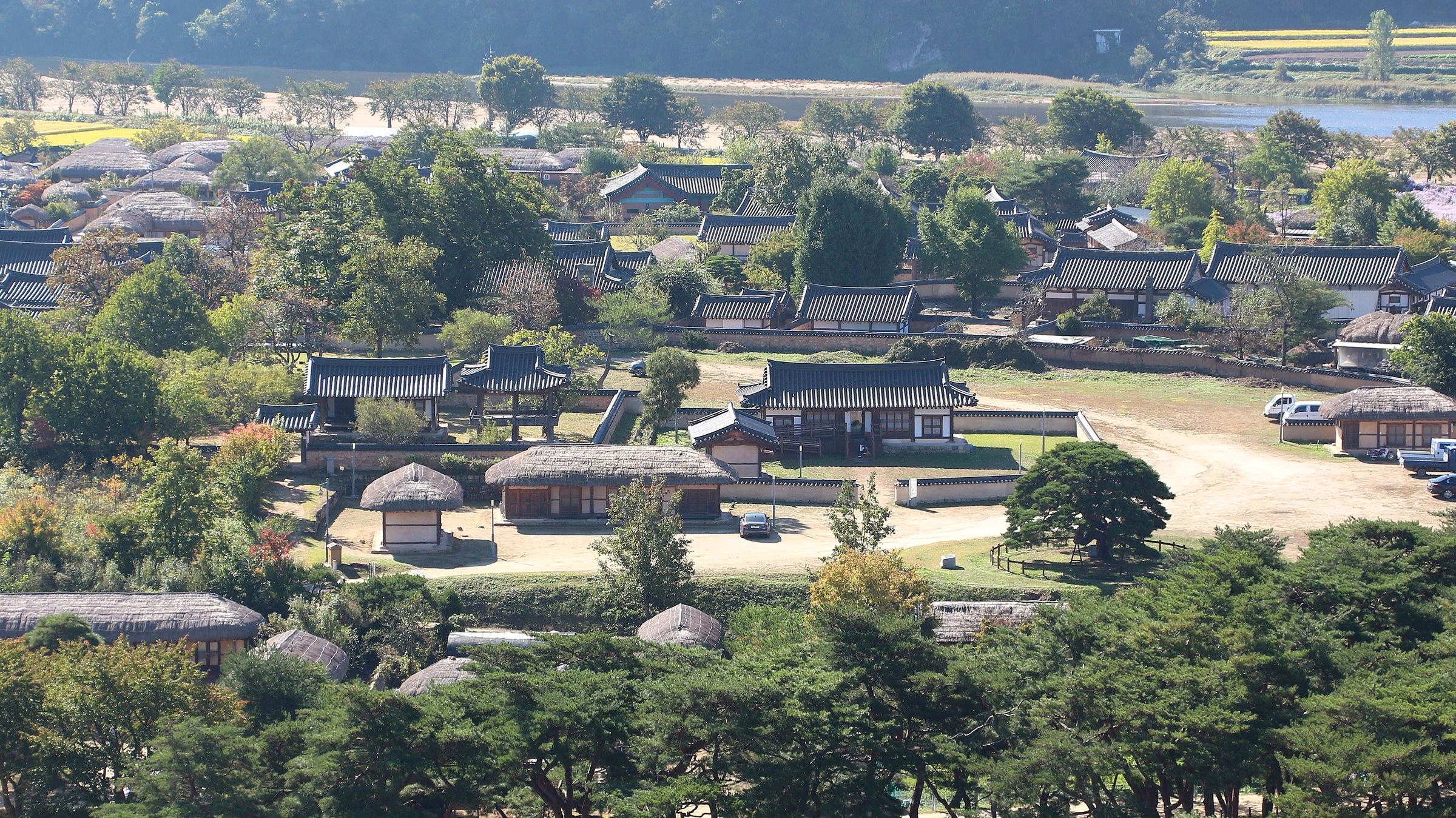
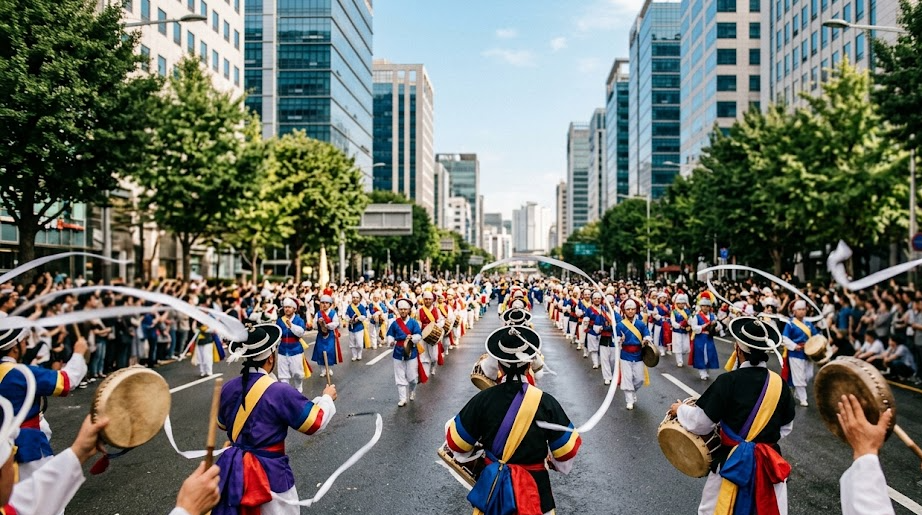
The National Gugak Center will hold Korean Music Week for 10 days from June 5, the second "Korean Music Day," through June 14. The venues are spread across the Gwanghwamun Square area in Seoul, the National Gugak Center in Seocho-dong, and its affiliated centers in Namwon, Jindo and Busan. On the opening day, June 5, a traditional performing arts street procession of 1,300 people will continue through the Gwanghwamun area from 10 a.m. to 2 p.m.
The character of the procession is evident in the list of participants. About 100 members of pungmul clubs from middle and high schools nationwide, about 250 members of pungmul troupes from some 20 universities including Seoul National University and Pusan National University, and the traditional music corps of the Ministry of National Defense military band battalion will stand in one line. They will be joined by about 500 members of regional preservation societies, including the eight major nongak preservation societies of Gangneung, Samcheonpo and Pyeongtaek.
What will spread across the main street for four hours is the metallic sound of the kkwaenggwari, the low tone of drum skins pressed and springing back, and the friction of the white paper at the tip of the sangmo cutting through the air. The program includes a performance by tightrope walker Nam Chang-dong, as well as gijeopnori, gossaum, mask dance and pungmul. When Nam Chang-dong, also known by the old name eoreumsani, steps onto the rope, the audience will stand on the pavement blocks and tilt their heads back to look up at him.
At the Gwanghwamun Square performance ground, a special program on the theme of Arirang will run for three days from June 5. On the first day, the country's three major Arirang preservation societies, on the second day, master instrumentalists and singers, and on the last day, the Korean music bands "Chodong" and "Iro" will take the stage in turn. There is also an explanation that it commemorates Na Un-gyu's film of a century ago, but what the three-day lineup aims at is closer to presenting Arirang's past, present and future together on one stage.
If there is sound that has come out onto the street, there is also sound that has withdrawn indoors and been finely polished. At the Yeakdang of the National Gugak Center, "Jongmyo and Sajik - The King's Altar, the People's Land," which brings Jongmyo Jeryeak and Sajik Jeryeak onto a single stage, will be performed on June 11-12, with former National Gugak Center director Kim Young-woon providing commentary. "Sanjo" at Umyeondang and the participatory performance "Gwanjo II - Reflecting on Myself" at Pungnyu Sarangbang will be held for three days from June 9, over the same period.
The regional schedule begins a day earlier than Seoul. At the National Gugak Center of Namdo in Jindo, South Jeolla Province, the "2026 Gut Music Festival," which gathers Jindo Ssitgimgut, Donghaean Byeolsingut and Jeju Keungut, will be held for three days from June 4. The National Center for Korean Folk Performing Arts in Namwon, North Jeolla Province, has arranged a Korea-China traditional arts exchange performance by inviting the Peking Opera Theater and acrobatic troupe of Shandong Province, China, and in Busan, a Namsadangnori performance and the special exhibition "Garden of Pungnyu" are reported to have been prepared.
Hands-on booths such as a sangmo-spinning challenge and making Korean instruments out of snacks will line one side of the square. Binding the strictness of ritual music and the clamor of the square within the same week carries tension. The moment the rhythms the preservation societies have kept are placed onto a march down the main street, that form wears away little by little, but sound that remains inside a glass case without wearing away eventually goes unsung by anyone.
Admission fees and booking methods have yet to be confirmed and announced. The National Gugak Center will carry out this week under the acting directorship of Hwang Sung-woon. At 10 a.m. on June 5, the asphalt of the Gwanghwamun main street will take in the vibration of hundreds of straw shoes and sneakers stepping down at once. To find out what sound remains after that vibration passes, you have to be standing beside that procession on the day.