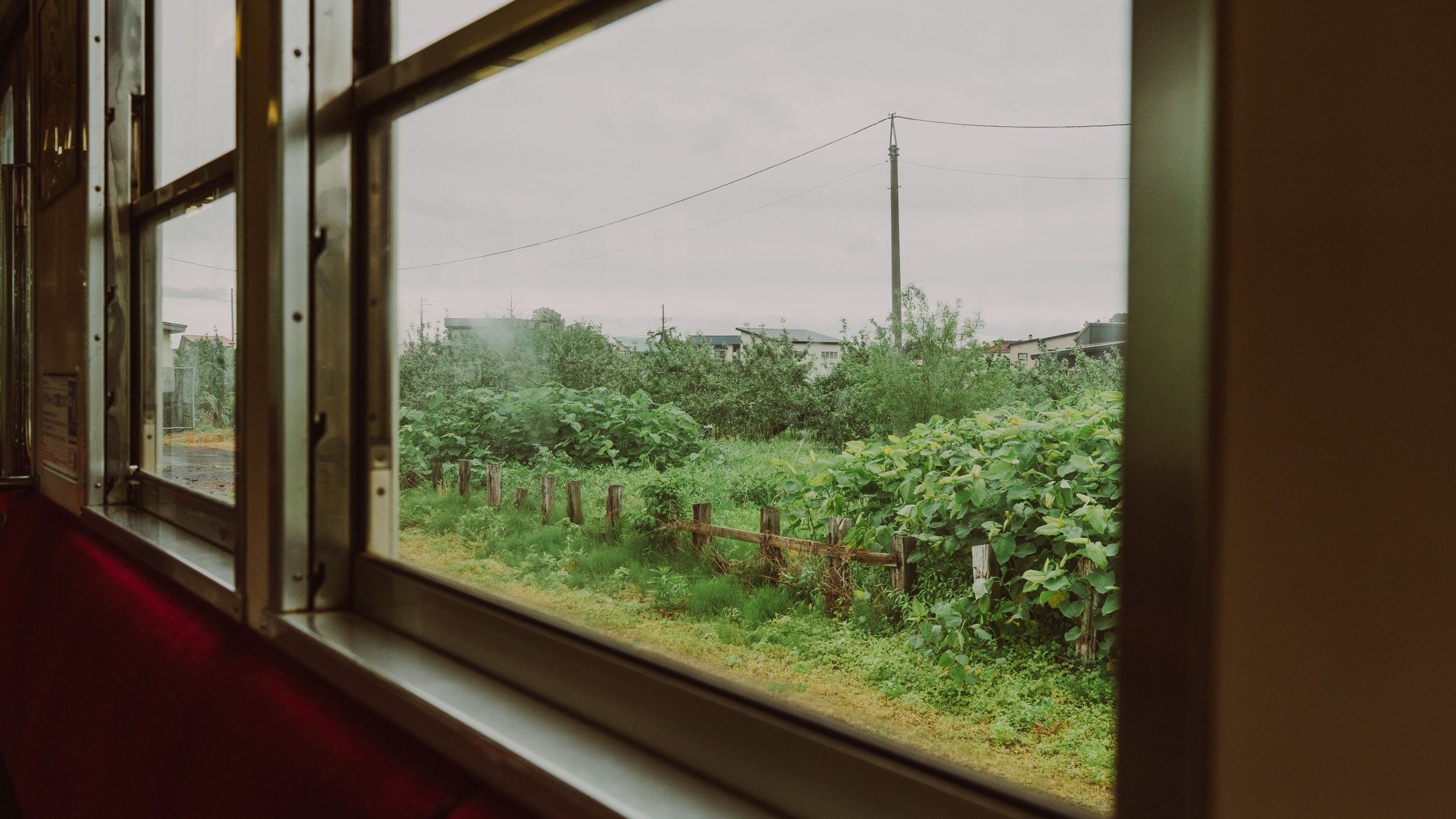
An old wooden window frame cuts the picture horizontally. The light of an overcast afternoon lies thinly on the glass and mutes the colors by one layer, and outside the window hang a stand of wet green grass, a weathered post fence, a single utility pole and a drooping wire. The red seat that juts in a little at the bottom shows the wear of long sitting.
Sit in a car like this and your shoulders drop a few centimeters. Rest your elbow on the frame and the lukewarm grain of the wood meets your skin, and the faint vibration of the floor comes up through the soles of your feet. Your breath grows a little longer along with the green outside the window, without your having to steady it.
But the eyes keep trying to grab hold of something. A roof going by, a break in the fence, a village blurred in the distance. The habit of naming things and storing them away works even during a rest.
What if you loosened your focus for just three minutes. Leave the whole pane of glass in a blank stare instead of chasing a single point, and the scenery slips sideways without settling in your eyes. Rather than counting what you missed, let it drift by.
The same three minutes open at your fingertips while folding laundry in the evening. As you fold a towel in half and line up the corners, leave your eyes loose around the edge of the folded pile instead of following the pattern of the cloth, and meanwhile check whether your back teeth are touching each other. If your jaw is clenched, leave it as it is and simply notice. The laundry dwindles, and the fold lines break off and continue like the fence outside the window.
The train keeps going, and the window empties for a moment and fills with green again.