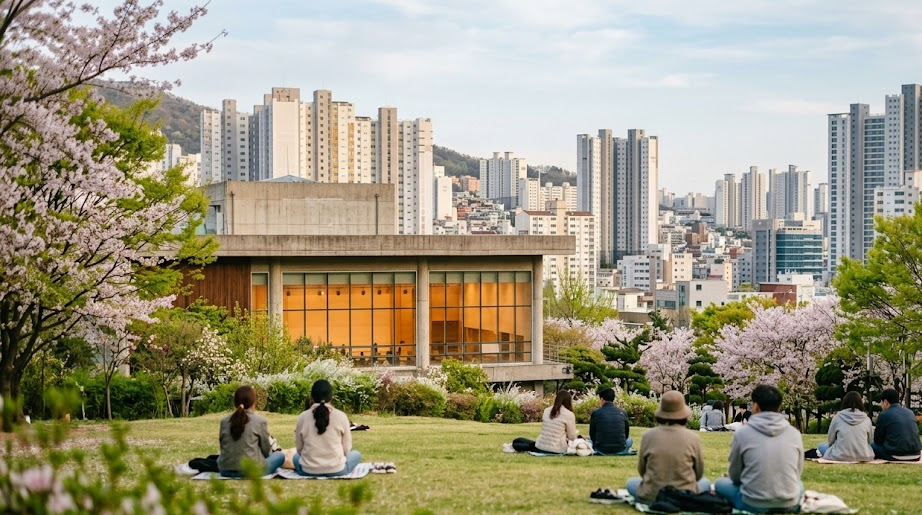
The practice of waiting for people who have been through a disaster to come forward is changing. The Ministry of Health and Welfare and the National Center for Mental Health announced on the 22nd that they will hold an international conference as part of the "2026 Trauma Healing Week" program. At the event, which ran through the 24th at the National Center for Mental Health in Gwangjin-gu, Seoul, participants discussed a system that digitally links the entire process from identifying people who have experienced a disaster through follow-up care, with artificial intelligence analyzing their condition and connecting them to specialists.
The conference was organized jointly by the Global Collaboration on Traumatic Stress (GCTS), the Korean Society for Traumatic Stress Studies (KSTSS) and the National Center for Mental Health. It is the second international conference held by GCTS, following the first in South Africa in 2024. The experts taking part are understood to come from some 40 countries.
The topics covered were wide-ranging. They included the spread of treatment for post-traumatic stress disorder, military trauma, mental health in war and among refugees and in conflict zones, trauma in children and families, wounds arising from racial discrimination, trauma related to sexual violence, and the climate crisis and mental health. The program list showed just how many different forms the mark left by a disaster on a person's life can take.
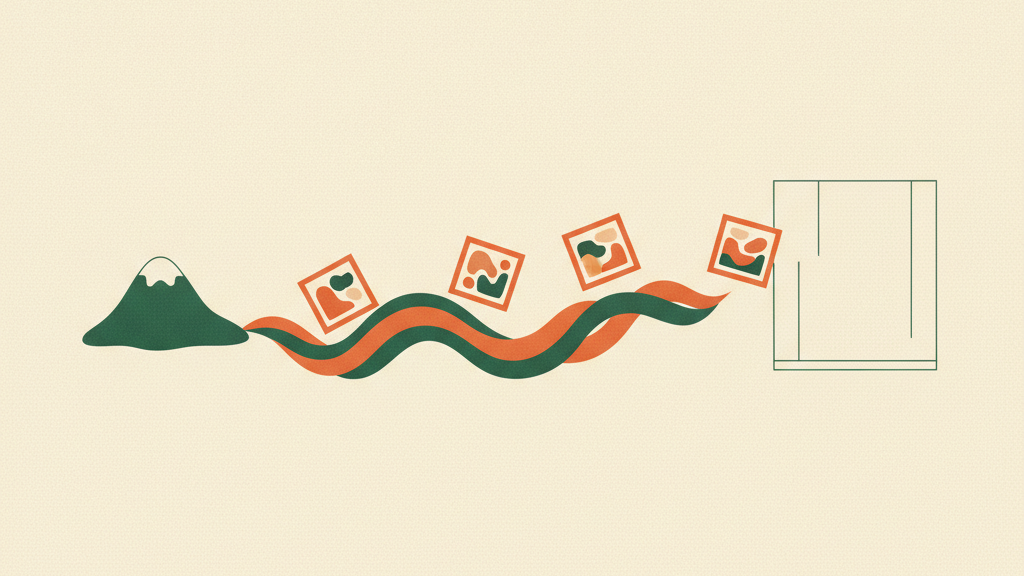
The symposium on "Disaster Mental Health Management Using Digital Technology," held on the 24th, was at the center of the discussion. Oh Seung-hoon, principal researcher at the Electronics and Telecommunications Research Institute, presented a system he developed that digitizes the process running from identifying people who have experienced a disaster through assessment, counseling and follow-up care, with AI analyzing their condition and automatically matching them with specialists. The system converts levels of depression, anxiety and post-traumatic stress (PTSD) into numerical values based on voice and text, and includes a function that tracks changes so that a person's condition can be monitored over a long period.
A few weeks after a disaster, the voices asking for help grow fewer. It is not because the wounds have gone away. It is because there is no strength left to speak. Technology that keeps recording a person's condition and detects changes has been designed to fill that stretch of silence.
Suk Jung-ho, a professor of psychiatry at Gangnam Severance Hospital and president of the Korean Society for Traumatic Stress Studies, put forward a different approach. It combines biomarkers such as salivary cortisol and heart rate variability (HRV) with questionnaires on depression, anxiety and PTSD, together with a customized intervention protocol. It separates people experiencing acute stress from those experiencing chronic stress centered on burnout and intervenes differently in each case, and it presented methods that can reach people without meeting them face to face, such as VR-based content for psychological stabilization and educational programs.
It was not only what technology expands that was discussed. Lee Na-bin, a researcher at the Korea Trauma Education Research Institute, pointed out that remote counseling carries risks including leaks of personal information, security vulnerabilities and delays in responding to crisis situations. She added the conditions that must be in place alongside it: the counselor's technical capability, procedures for prior consent, an independent counseling environment free from interruption, and an emergency contact system. If there is no way to check what state the person on the other side of the screen is in, the connection cannot help.
The experience Korea has built up is also being passed on to the international community. Chae Jeong-ho, a professor of psychiatry at the Catholic University of Korea, and Sim Min-young, former head of the National Center for Disaster Trauma, are scheduled to share how Korea's disaster mental health response and its systems changed after the Sewol ferry disaster. Lee Hyung-hoon, Second Vice Minister of Health and Welfare, said at the opening ceremony on the 22nd that Korea would share its experience in disaster mental health and build a system grounded in scientific evidence. A session on trauma management related to international conflict was also held.
Technology only reads a person's condition, it does not take the place of recovery. Shortening the time it takes to meet people again is closer to the practical goal of this discussion. The presentations delivered in the auditorium in Gwangjin-gu remain at a stage that has not crossed the threshold of empirical validation and institutional adoption, and no specific implementation plan has been finalized. Even so, one premise became clear this time: they will not wait until people who have been through a disaster knock on the door themselves.