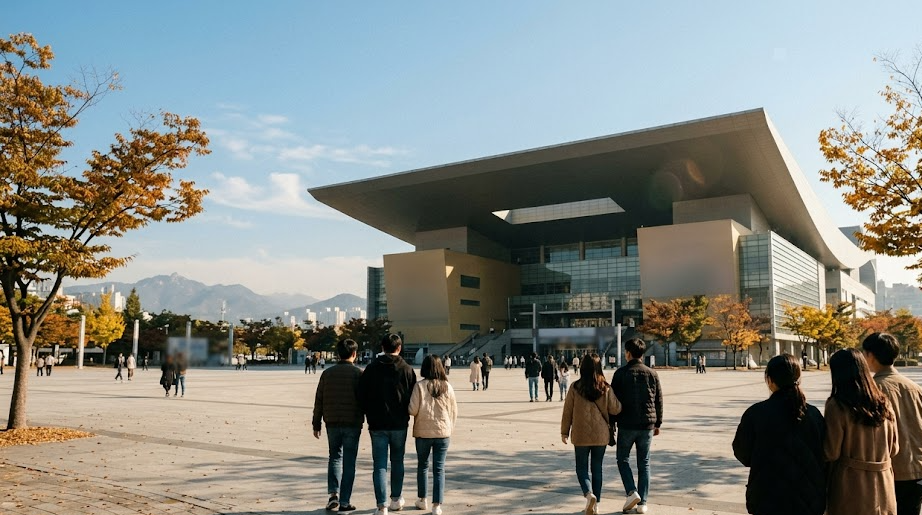
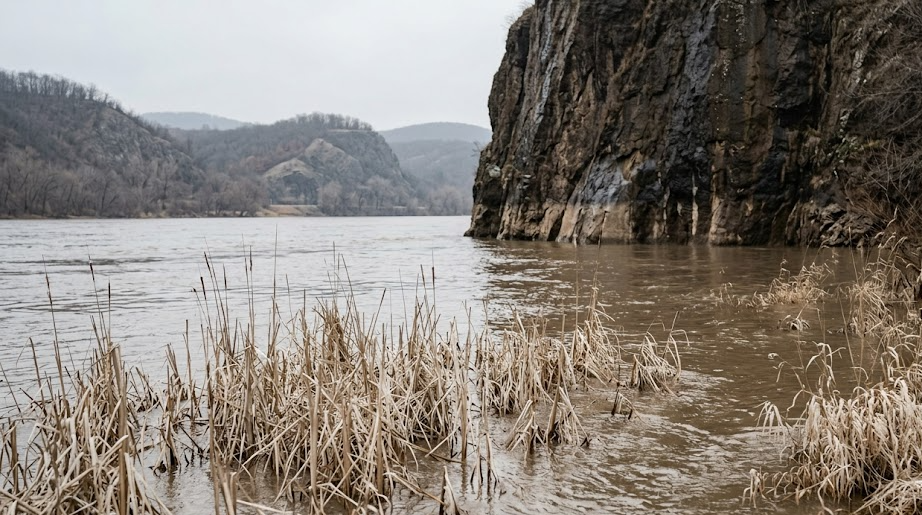
The Korea Heritage Service released an official promotional video and poster on April 10, 100 days before the 48th session of the UNESCO World Heritage Committee. The session runs from July 19 to 29 at BEXCO in Busan. On the same day, the city of Busan began putting event messages on the Gwangan Bridge media facade and on bus information displays. On the day the festival's opening was switched on, Korea's newest World Heritage site was under water.
The Bangudae Petroglyphs in Ulsan were placed on the World Heritage List last July. Even after the inscription, this rock is submerged over and over. When the water goes down, fine soil settles in a thin layer on the wet sandstone surface, and the engraved lines grow that much fainter.
Knowing what those lines are changes the meaning of the submersion. Gray whales, humpback whales and right whales are carved there, and the stages from hunting to hauling and butchering remain in order. On the Cheonjeon-ri inscriptions and petroglyphs, which make up the World Heritage property together with it, letters left by people of Silla are carved over prehistoric patterns on a single rock. A surface that has endured thousands of years is shaken each season by water that people made.
Since joining the World Heritage Convention in 1988, this is understood to be the first time Korea has hosted the Committee itself. The official emblem was unveiled on March 25, and it carries the curve of the tiled roof of Jeongjeon Hall at Jongmyo. The staging of the official events is handled by general director Won Il. He is a certified trainee of the national intangible heritage "Piri Jeongak and Daechwita," and served as general director of the 2019 National Sports Festival and artistic director of the World Music Festival at the Asia Culture Center in Gwangju.
The promotion is dense. Posters go up at 19 locations including the National Palace Museum of Korea and the National Museum of Korea, Seoul Station and Yongsan Station, and the former Seoul Station building. From April 14, videos introducing Korea's 17 World Heritage sites will be released one after another. The videos released earlier put together Hwaseong Fortress in Suwon, Jeju Volcanic Island and Lava Tubes, and the Archaeological Area of Agrigento in Italy.

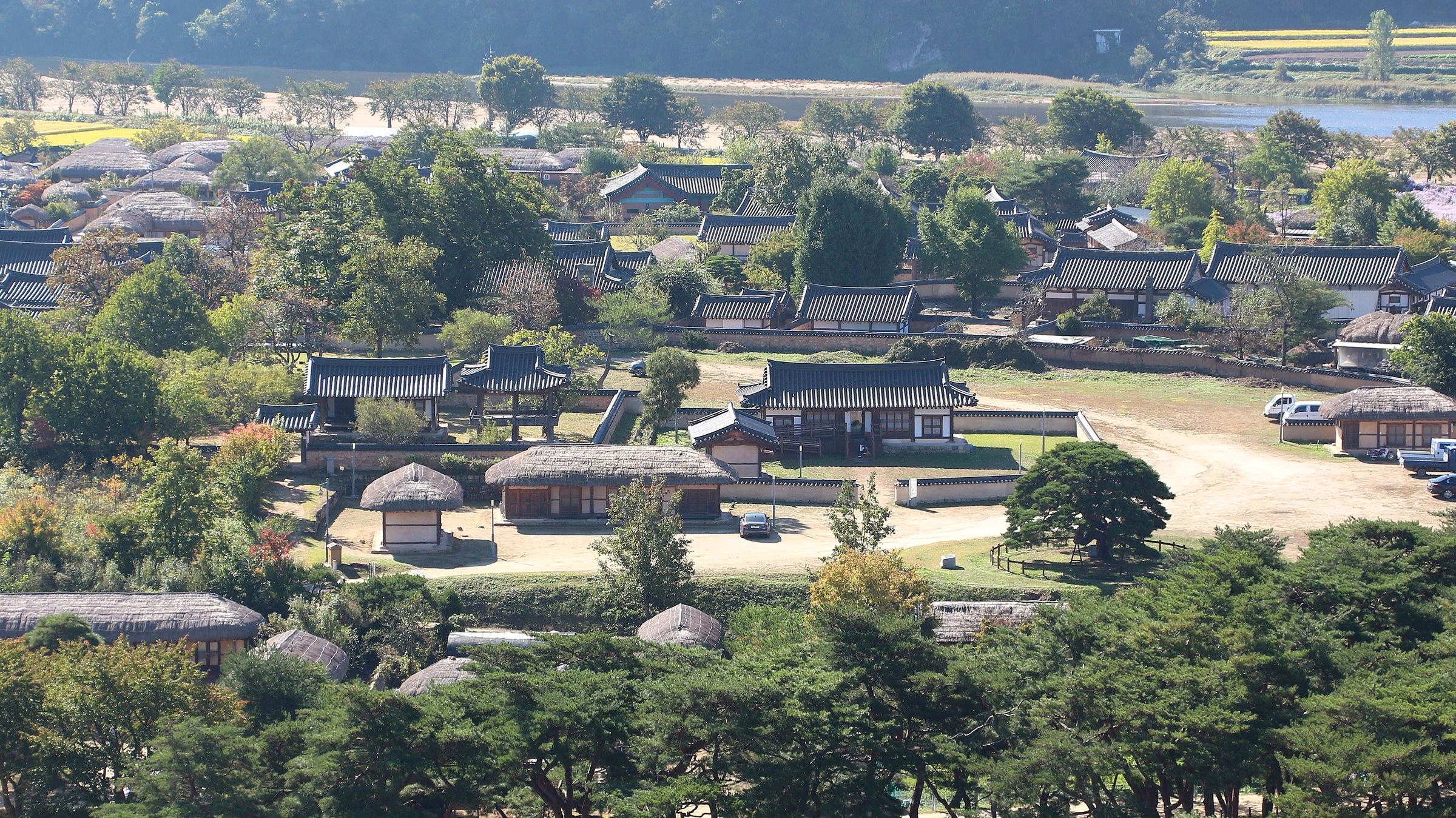
In that same Jeju that appeared in the video, something else is going on. Two households in Hanjangdong village, Gosan 1-ri, Hangyeong-myeon, were ordered to remove by the end of May a connected vinyl greenhouse they had put up and mandarin hybrid saplings they had planted. The greenhouse and the saplings were put in two years ago. If they do not comply, it leads to a criminal complaint.
This land is Zone 1, the most tightly regulated part of the historic and cultural environment preservation area of the national historic site "Gosan-ri Site, Jeju." Building a house, putting up a greenhouse and planting trees all have to go through individual review by the Heritage Committee. Residents say the soil dressing of this farmland was finished in the 1970s. The year artifacts were first found is 1984.
The western part of Hangyeong-myeon is land where designated zones are stacked in several layers. The Gosan-ri Site, the Suwolbong volcanic ash deposits, which are a Global Geopark and a natural monument, Chagwido, the site marking Father Kim Dae-gun's landing in Jeju, and the Sanyang Gotjawal are gathered there, and a World Heritage zone, a cultural property protection zone and an absolute preservation zone under the Jeju Special Act are designated on top of one another on the same land. The population of the area covered by the Jeju Gosan Agricultural Cooperative is falling, apart from Sanyang-ri, which adjoins the Jeju Global Education City. In Seongeup Village in Seogwipo, too, a notice on revising designated zones and permission standards came out in March.
Preservation is the work of drawing lines, and inside the lines there is always someone's daily life. In Ulsan water covers the heritage, and in Jeju the heritage covers the fields. The two local governments' policies on the progress of the flood countermeasures and on the demolition order have not been settled. For the July meeting in Busan to be recorded as a successful festival, it will not do for these two scenes to stay outside the promotional videos.
Among the 17 videos being released from April 14, it is worth checking what face the Bangudae Petroglyphs appear with. Whether it is the rock surface on a day the water has gone down, or the water surface on a day it is submerged. Walk along the Bangucheon stream between winter and spring and you can tell. On rock that has been wet and then dried, the smell of earth stays a very long time.