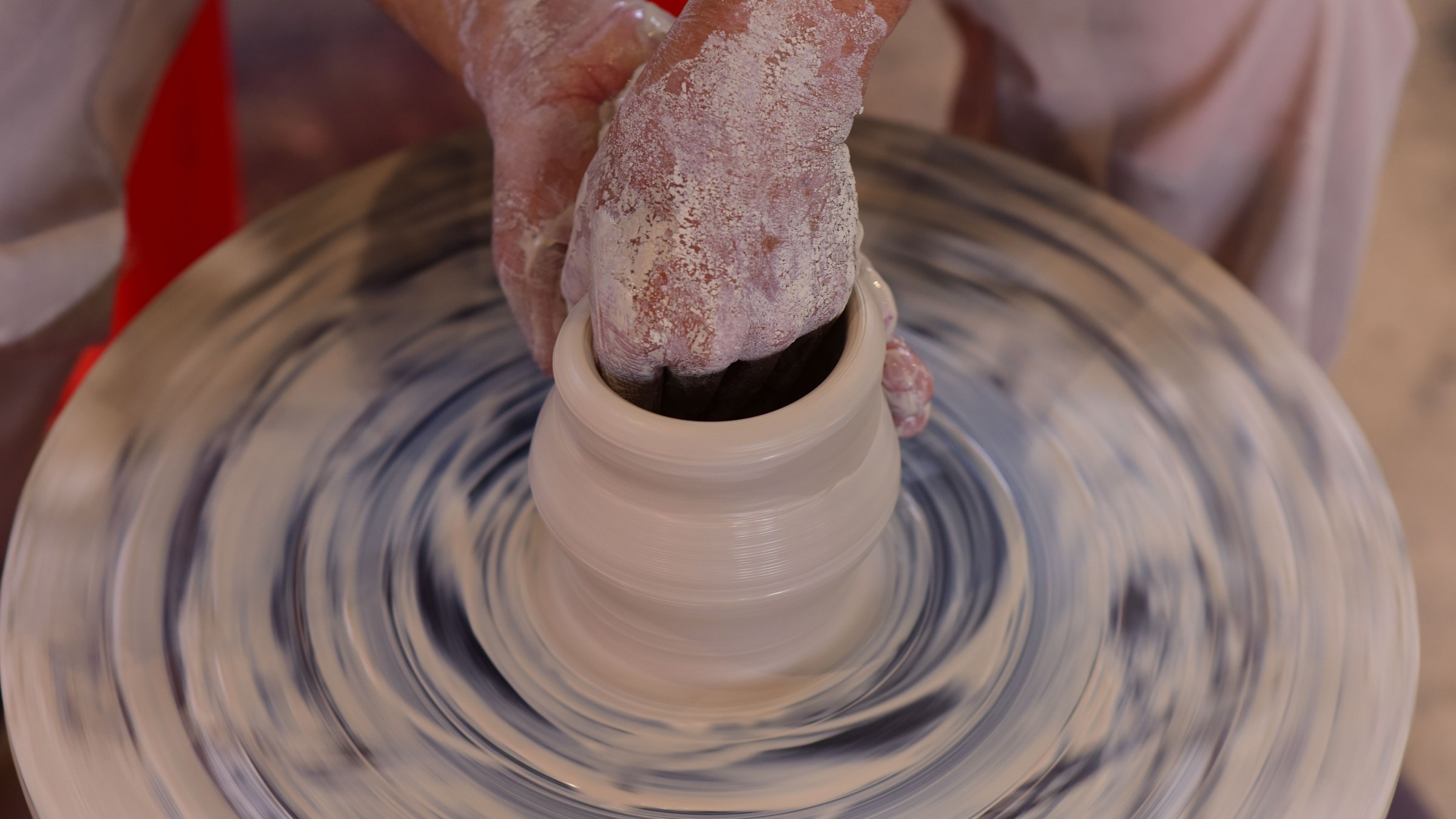
The wheel head turns and the pattern along its rim is drawn out long. A grain of mixed gray and navy flows in circles, and at the very center only one wet bowl is sharp. The backs of the hands, where the slip has dried, are cracked white, and the fingers have gone inside the lip of the bowl and are pushing the wall up from within.
In the photograph the only thing not moving is the hands. The wheel turns and the clay rises, but the hands stay in place. This single frame holds the fact that what makes the form is not force but the place where the hands stay.
Pottery is an old craft and also the most immediate of crafts. Before it goes into the kiln, the fate of the vessel is all but decided by the pressure of the fingertips over a few seconds. The time it takes to set those few seconds into the body is what we commonly call seasoning.
The red cloth in the background, the blurred floor, the fold of clothing over the shoulder have all fallen back out of focus. The blurrier the world becomes, the clearer the hands become.
Outside the wheel head, on a wooden shelf spattered with slip, a used-up sponge and a cut length of fishing line lie where they were left. They are things that were held until a moment ago and then set down. Only in that corner, where the turning has stopped, do the tools show their own shape, and it becomes clear that the flow at the center of the frame was in fact broken by many pauses. Completion does not come only while the wheel is turning.
Looking at the photograph again, the wall of the bowl is still low. What will rise after this scene is known only to those two hands.