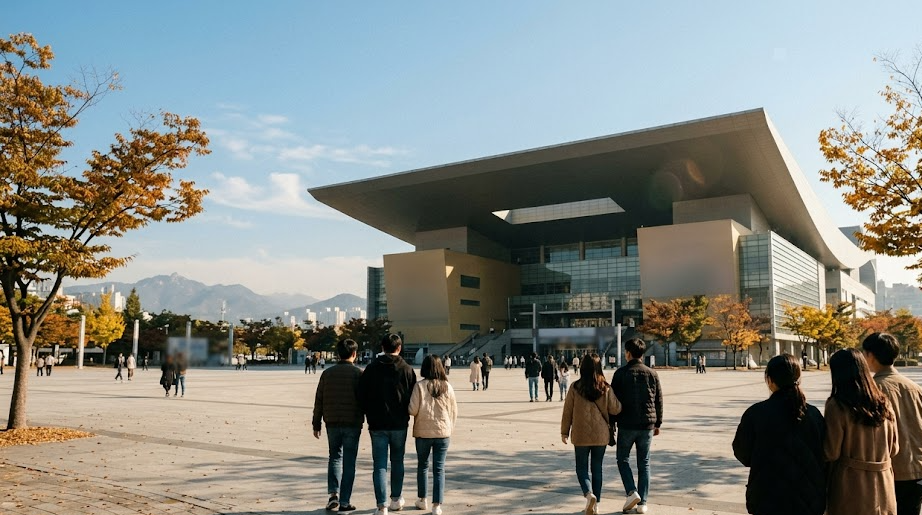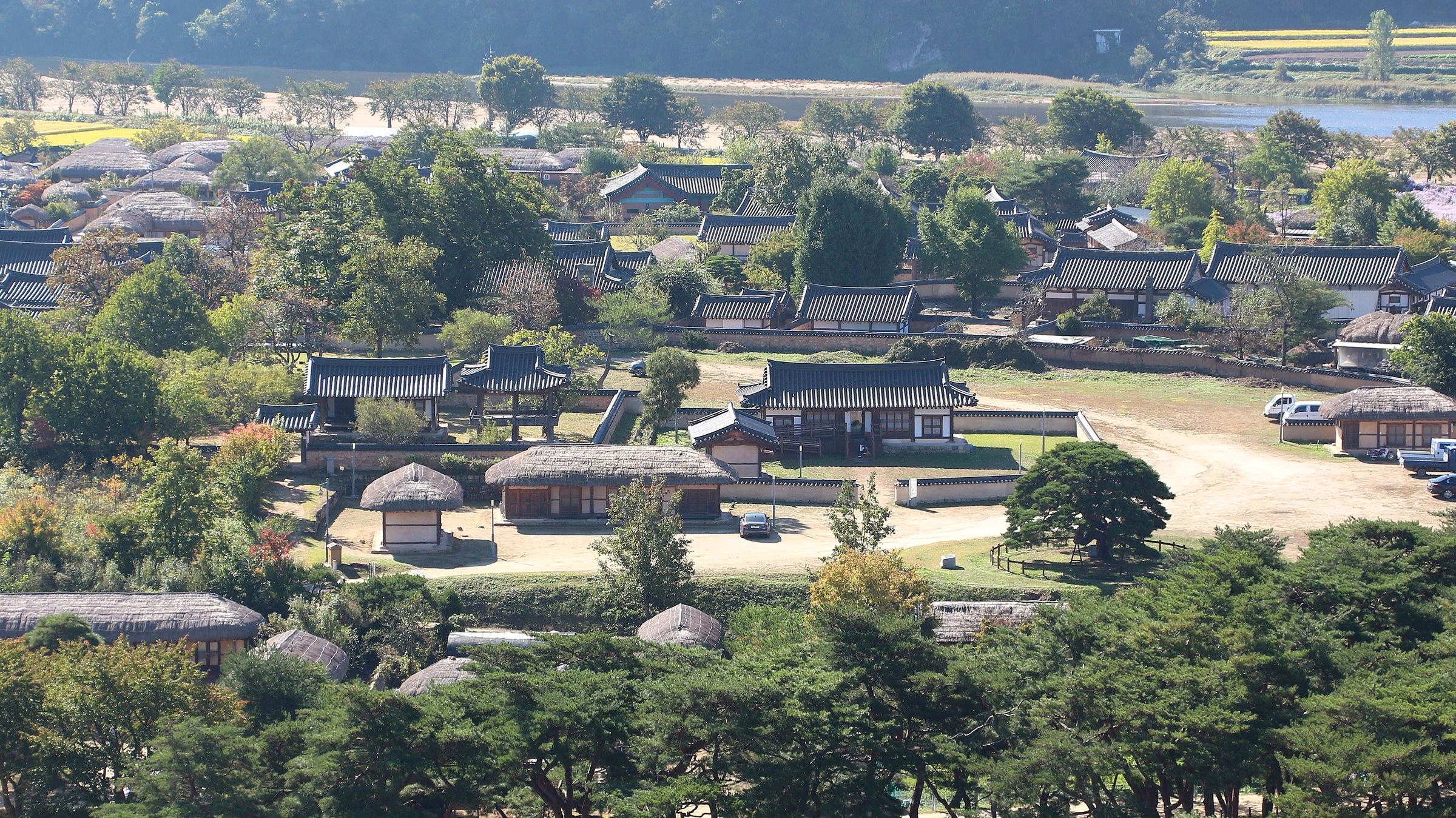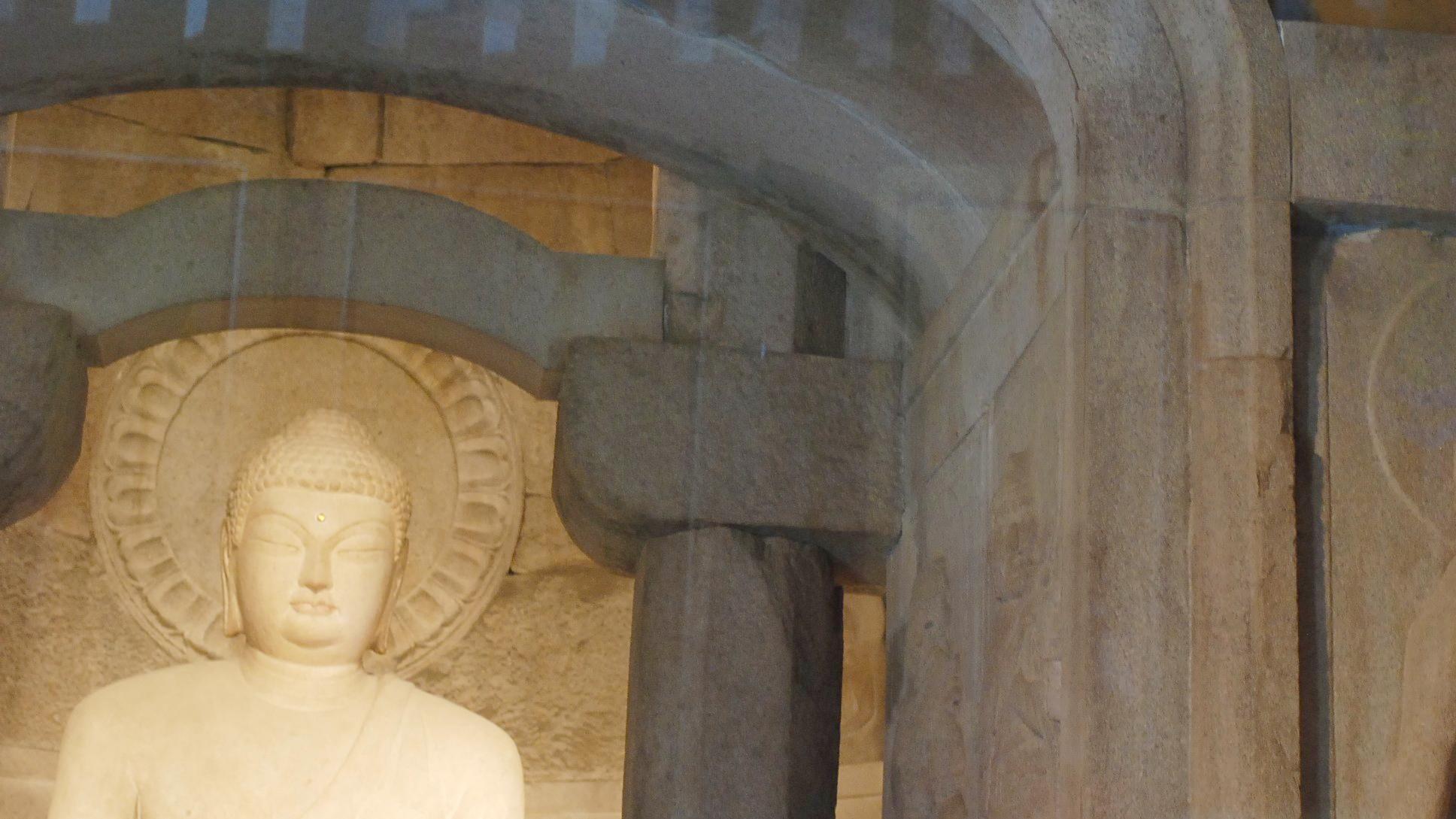
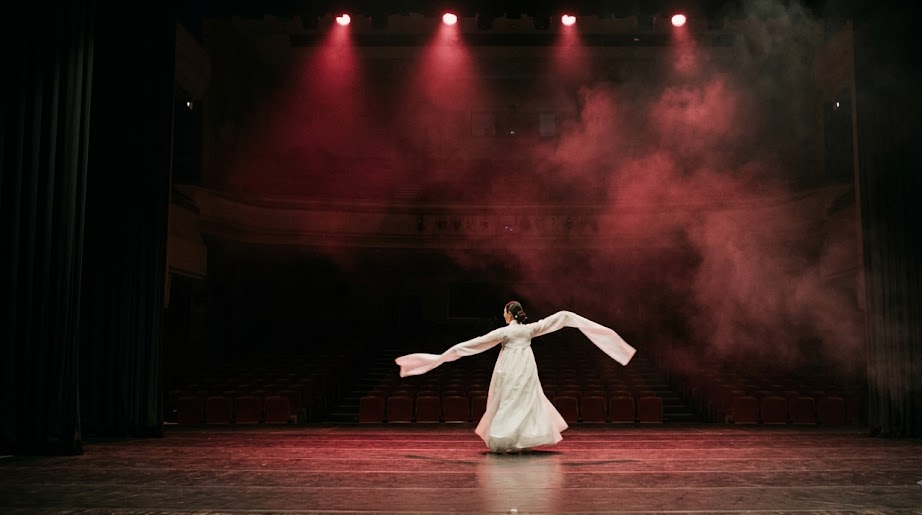
The National Intangible Heritage Center of the Korea Heritage Service is staging 'Sanhwabi (山火賁)' as its 2026 opening performance. It runs at 4 p.m. on the 11th at the Eolssumaru Grand Theater, with all seats free. The title comes from the twenty-second hexagram of the Book of Changes, and it points to a neat beauty laid over the essence. The image of fire burning at the foot of a mountain became the framework of the performance itself.
The performance is divided into seven themes: breath, sound, line, light, play, rite and harmony. Breath is opened by Piri Jeongak and Daechwita. The first wave of sound blown out by the brass nabal and the taepyeongso shakes the air of the auditorium, and Seodo sori takes over after it. Holder Kim Kwang-sook, who has transmitted the songs of Pyeongan and Hwanghae provinces, unfolds that texture on stage with the pieces known as 'Sanyeombul' and 'Jajin yeombul'.
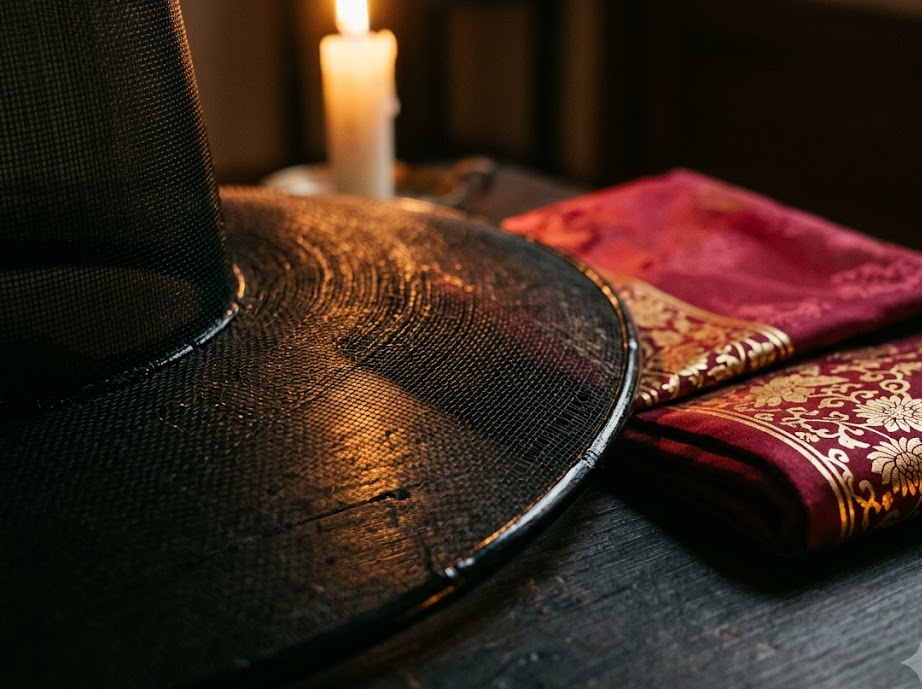
Line is taken by Gatil. It is an attempt to move onto the stage a single thin curve, the rim of a black gat woven from horsehair and bamboo strips split as fine as thread. Light brings together Geumbakjang and Taepyeongmu. The footwork of holder Yang Sung-ok, who transmits the Kang Seon-yeong school of Taepyeongmu, and the fingertips that press gold onto silk are placed under the same lighting.
Play unfolds most boisterously. Park Jeong-wook, holder of Baebaenggut of Pyeongan Province under the Five Provinces of North Korea, takes the stage. Baebaenggut is a comic narrative song of the Seodo region, in which a single singer switches between the voices of several characters and carries the whole drama. Into this leaps the lion mask of Bukcheong Saja Noreum, shaking its fur.
In rite, Jongmyo Jeryeak and ilmu follow, and a segment is prepared in which the audience goes up on stage and joins in. It is a design that lets the auditorium pass through, with their bodies, ritual music that has held its fixed form for 500 years. In the closing harmony, the entire cast sings Arirang.
The stage is not filled by traditional holders alone. Kang Eun-il, who formed Haegeum Plus and has moved between classical, jazz and pop, and Han Sol-ip, who has worked mainly with traditional percussion and the unra (雲鑼), take part. 64 Ksana, an alternative electronic band of three members, Jundo, Ezo and Won Jae-yeon, mixes techno and shamanic ritual music together. Choreographer Choi Jin-han's contemporary dance company 'Ttan Ttantta Dan' and Yeonhui Jeom Churi, whose name means a shop that deduces and thinks about yeonhui, also take the stage.
As background to the planning, the growing international interest in Korean material was mentioned. Cases such as the film 'KPop Demon Hunters' and BTS's new album 'Arirang'. Between the way of keeping the original form inside a glass case and the way of burning it again with a contemporary sensibility, this performance chose the latter. How far that choice preserves the original form can only be gauged after the stage is over.
'Sanhwabi' does not stop in Jeonju. It will be programmed again as a commemorative performance for the 48th session of the World Heritage Committee, held on July 23 and 24 at the BEXCO Auditorium in Busan. Whether the Jeonju and Busan stages will have the same composition has not been made known.
This stage by the National Intangible Heritage Center, led by Director Park Pan-yong, can be seen only with an advance reservation. Inquiries: 063-280-1500. The moment the first sound of Daechwita strikes the ceiling of the grand theater, the audience can see for themselves what light the fire at the foot of the mountain burns with.