The National Museum of Korea received 6,507,483 visitors over the course of 2025, ranking third among museums worldwide in attendance. The figure comes from the "2025 Visitor Figures" survey released on March 31 local time by The Art Newspaper, a British art publication. Only two institutions placed ahead of it, the Louvre with 9,046,000 and the Vatican Museums with 6,933,822. The British Museum with 6,440,120 and New York's Metropolitan Museum of Art with 5,984,091 followed.
In the previous survey the museum stood at eighth. Numbers rose from 3.8 million in 2024 to 6.5 million in a single year, an increase of more than 70%. The Art Newspaper wrote that "the most spectacular growth came in South Korea," and assessed that the sheer number of added visitors ranked among the highest as well.
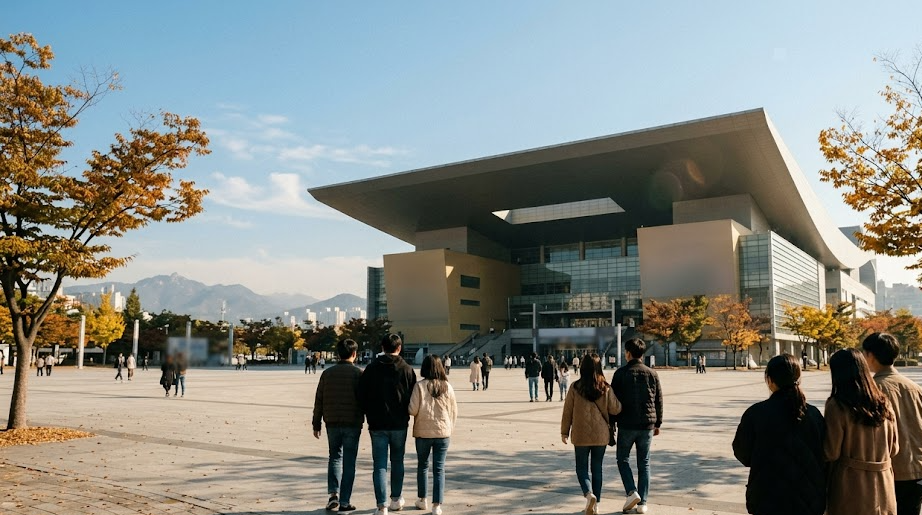
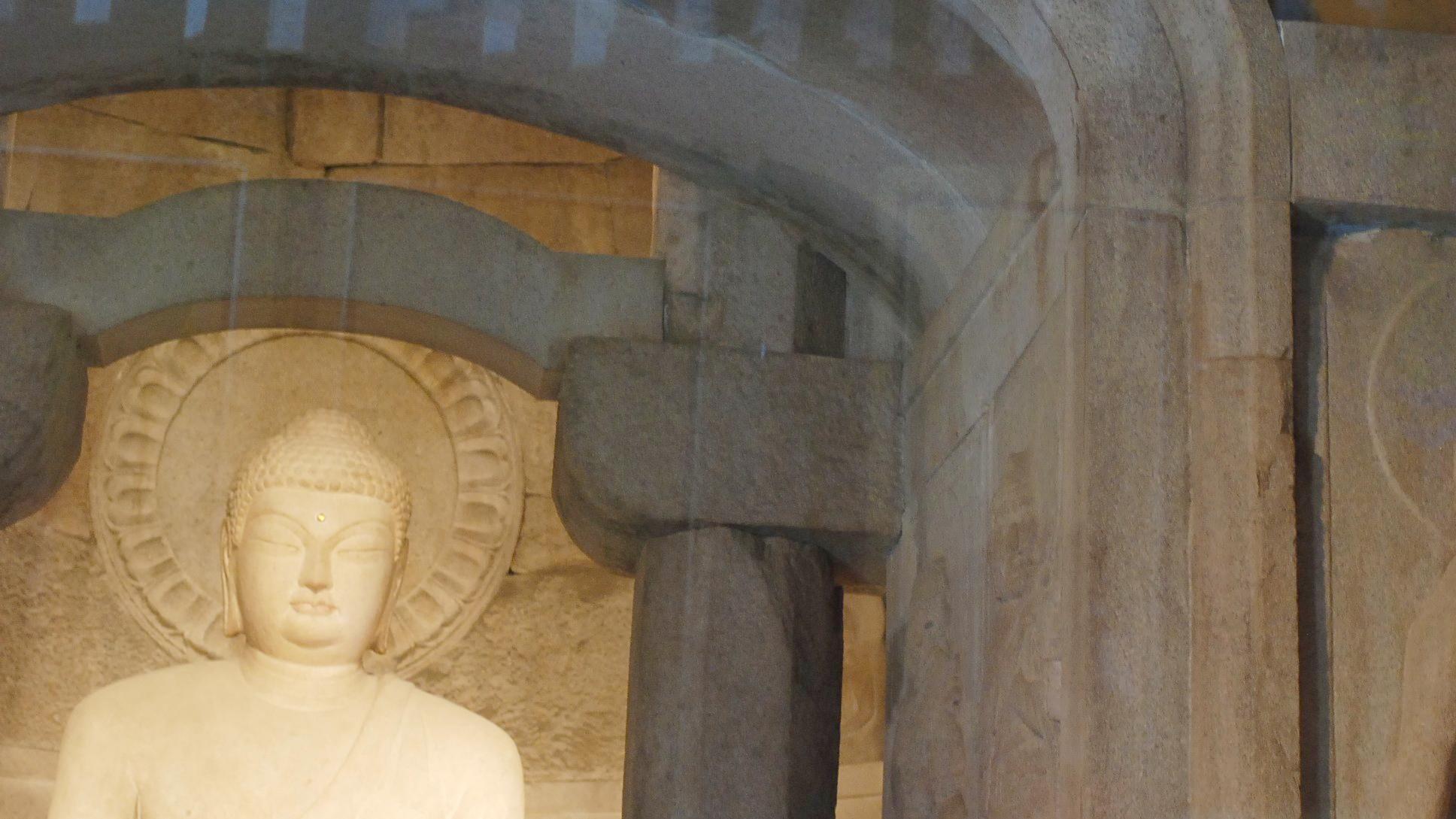
A ranking table is a cross section of one year. Anyone who has walked through the building in Yongsan, Seoul, will recall other things. The dry sound of shoe soles on the granite floor, the wind coming in through the open colonnade, the low temperature of the dark room holding only two Pensive Bodhisattva statues. Over the past several years, a design that makes visitors sit for a long time in one space has taken hold, in place of viewing that lingers a few seconds before an artifact and moves on to the next case.
The Room of Quiet Contemplation and the Oegyujanggak Uigwe Gallery, permanent exhibition renovations built around a single theme, along with the Digital Immersive Gallery and the sensory exhibition hall "Space_Between," are the products of such attempts. Youth participation events such as the "2025 NMK Costume Play" and the "Museum Cultural Feast" continued as well. The museum has begun treating itself as a place to spend a day rather than a facility to look around briefly.
Special exhibitions posted results to match. "Our Yi Sun-sin" drew 407,045 visitors and "From Impressionism to Early Modernism, Collectors of Light" drew 230,893. There was a response abroad too.
A touring exhibition of works donated by the late chairman Lee Kun-hee opened at the National Museum of Asian Art of the Smithsonian Institution in Washington, D.C., and drew about 80,000 visitors.
Regions outside the capital area moved as well. The Gyeongju National Museum opened the special exhibition "Silla Gold Crowns, Power and Prestige" to coincide with the APEC summit and ranked 39th with 1,976,313 visitors for the year. The Buyeo National Museum ranked 78th with 950,862 and the Gongju National Museum 89th with 868,555.
The Seoul branch of the National Museum of Modern and Contemporary Art ranked 35th with 2,112,210 visitors, up 28% from the previous year. The surveying organization explained that the national museums in Jinju, Cheongju and Iksan also showed meaningful growth.
Yoo Hong-june, director of the National Museum of Korea, said the result came as interest in Korean traditional culture and cultural heritage led to museum visits amid the spread of K-culture. It is worth noting that what held that interest was free admission, in place since 2008. As the experience of entering without buying a ticket and sitting for an hour or two became routine, the museum turned from a destination requiring an entire day into a stopover on the way somewhere else.
That condition is about to change. On March 30, in its "2027 Budget Compilation Guidelines," the government stated that fees for national facilities would be brought in line with costs, formalizing a policy of charging admission at the National Museum of Korea. It is a reversal 19 years after admission became free.
How much the fee will be, when it will begin and who will receive discounts are to be decided. What remains is how to handle the tension between the principle that users share the costs of conservation and operation, and the result of 6.5 million that came about because there was no barrier.
The trend is continuing this year. First-quarter visitors in 2026 numbered 2,023,888, 44.8% more than the 1,398,094 over the same period last year. "Unfolding the Daedongyeojido" opened on February 12, and the Painting and Calligraphy Gallery reopened on February 26.
A Thai art exhibition is scheduled for June, "Our Table" for July, an exhibition of works from the Kunsthaus Zürich in Switzerland for November, and an exhibition on Marie Antoinette for December. Before the time comes when a ticket may be required, a spring of walking the long colonnade in Yongsan at no cost is passing now. There are still hours when the bench in front of the Pensive Bodhisattvas sits empty. Early afternoon on a weekday, the air of that room once the crowds have gone is worth experiencing at least once.