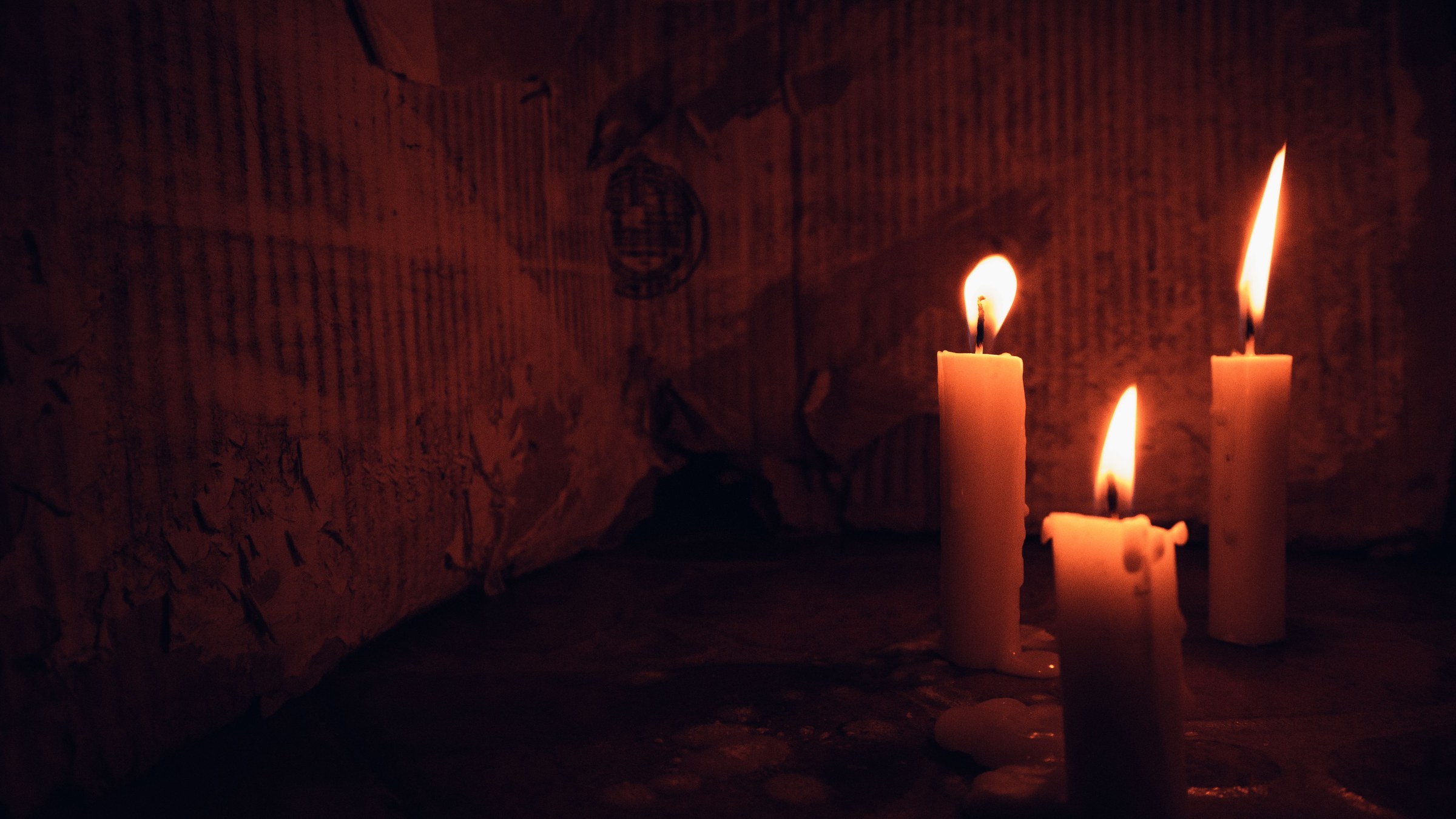
Three white candles stand in a dark room. The wall is papered with old paper, and that surface, where faint vertical lines of writing remain, takes on a red tint in the light. The wax that ran down the sides of the candles has hardened into a small pool on the floor, and the corners the light does not reach stay black.
Watching a scene like this, the body leans forward a little on its own. The shoulders drop, and the eyes settle at a point neither far nor near. The breath quiets, and the hands rest on the knees, holding nothing.
All day the mind kept straining to hold on to something. The moment when that straining force drains away comes in a dusk like this.
Let us light one candle and spend about three minutes looking only at the flame. What if we followed the wavering grain with our eyes without trying to still it, and simply watched the short round trip of the wick tilting and coming back. It does not matter if we lose count.
We could also carry that same gaze over to the evening dishes. It is enough to note, between the sounds of the water, how much force is in the fingers gripping the bowl, and whether the knuckles that tightened for fear of slipping loosen at the moment the plate is set down. Without trying to release the force, we notice only as much as is there now. And where that force remains when we give our wet hands a final rinse.
The flame kept burning even while it flickered.